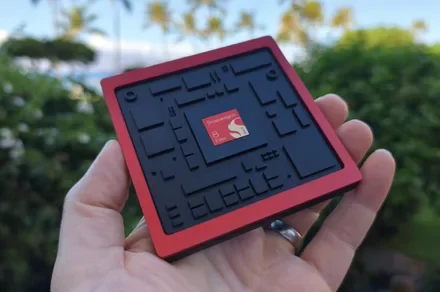
If you were hoping your next Android phone might come with a friendlier price tag, you may want to temper your expectations. Qualcomm just confirmed it’s raising chip prices starting September 1, and CEO Cristiano Amon didn’t dress up the reason. “Cost went up, prices are going to go up,” he told CNBC. Qualcomm chips power a huge share of the world’s Android phones, so a hike at the source is likely to reach store shelves eventually.
Rising costs go beyond memory
Qualcomm’s own earnings report points to a broad jump in costs across wafer fabrication, assembly, testing, packaging, and memory. Amon called the resulting hit to margins a temporary problem the company is fixing with price increases, though he did not say what margin the company is targeting. Reports last week suggested a double-digit price increase is likely, with a separate leak claiming that Qualcomm’s next flagship chip could cost phone makers upward of $300.
Qualcomm’s smartphone chip revenue fell 20 percent year over year to $5.1 billion, which the company attributed to sales in China hitting their lowest point. Amon also cited broader affordability issues making low-end and mid-tier phones less competitive, and said even in the premium segment, where Qualcomm dominates, buyers are increasingly choosing cheaper or older flagships because of rising memory prices.
Phones are becoming a smaller piece of the pie for Qualcomm
Qualcomm’s Apple business is also shrinking faster than planned. Amon said supply constraints will push its share of the modem inside the next iPhone well below its earlier estimate of 20 percent. Non-handset sales, including chips for cars, data centers, and smart glasses, are on pace to make up 60 percent of Qualcomm’s revenue next year, marking a rapid shift for a company still best known for its smartphone chips.
Qualcomm recently signed a deal to supply BMW with digital cockpit chips, part of its push toward $10 billion in automotive revenue by 2029, and Amon said the company remains on track to hit $5 billion in data center revenue next year.
Phones were already getting pricier because of memory costs across the industry. Now the chip inside them is set to cost more too, for reasons that stretch beyond a single component, and Qualcomm has made clear it isn’t the one absorbing the difference.