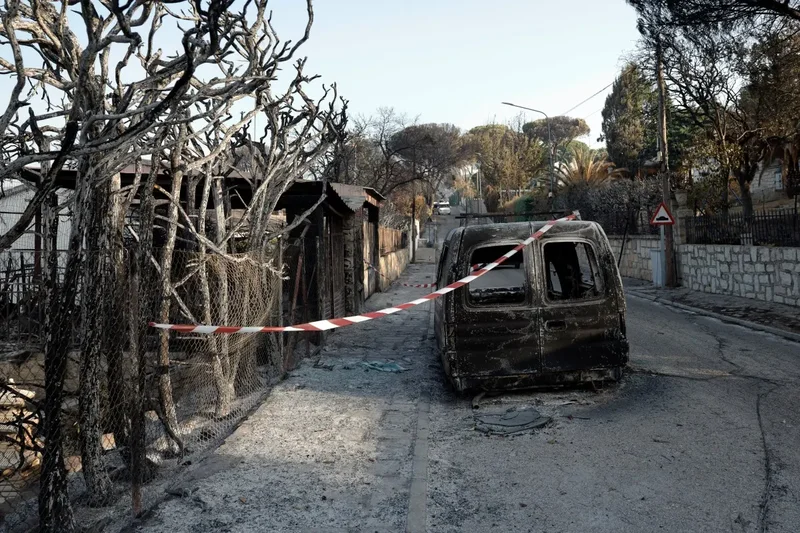
"Night-time weather conditions have made it possible... to cool the area and reinforce the perimeter, which is clearly stabilised, with no spread for several days, few smoking spots and almost no flames left," the prefecture of the Madrid region said.
There were no longer any "active fronts," they said, specifying that only around a thousand people remained evacuated.
But authorities warned that the ongoing heatwave threatens a resurgence of fire in areas west of Madrid, where more than 25,000 hectares (61,776 acres) have already gone up in smoke.
READ ALSO: Should you cancel your holiday in Spain due to the wildfires?
"The meteorological risk of fire remains very high, even extreme in some areas, and efforts will focus on maintaining the stability of the perimeter, monitoring for new outbreaks and cooling hot spots," the Madrid regional authority said.
The most critical area on Thursday morning was the area near the San Juan reservoir, about 60 kilometres from the centre of the capital, forcing two towns to remain evacuated.
At least one hundred houses have been destroyed according to an initial assessment, but that figure is expected to rise.
🚒 Desplegados en el incendio de #IFFermoselle.
— UME (@UMEgob) July 29, 2026
Nuestros efectivos trabajan durante la noche en misiones de ataque directo 🔥 y defensa de la población de Zafara #Zamora pic.twitter.com/puJOspSF2i
Unfortunately, another new fire broke out on Wednesday in Fermoselle, western Spain, just a few kilometres from the Portuguese border, forcing the evacuation of more than 600 people, emergency services said.
A total of 11 areas were evacuated, and residents of two others were ordered to shelter in place, the services said. Authorities have not yet released the number of hectares burned, but several roads have been closed.