Thai cuisine has long been celebrated for its bold flavours, but beyond a balance of sweet, sour, salty and spicy lies another defining characteristic: many of Thailand’s traditional recipes were created with wellness in mind.
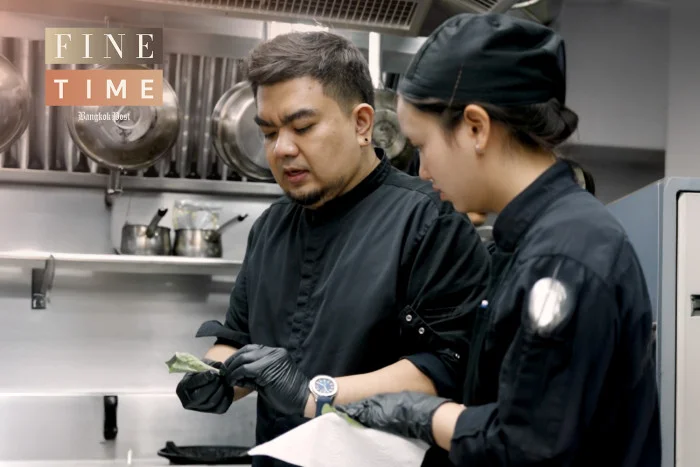
Chef Zetrong
To uncover the medicinal wisdom hidden within everyday Thai dishes, Chef Zetrong Valasura Na Lampang offers a unique perspective shaped by a family with deep roots in traditional Thai medicine.
Chef Zetrong’s father is a practitioner of Thai traditional medicine, and this upbringing has led him to view authentic Thai cuisine through the lens that “food as medicine”. A collision where ingredients are chosen not only for flavour but also for their therapeutic properties.
Through a selection of traditional Thai dishes, Chef Zetrong reveals the surprising nutritional and healing benefits that have long been woven into the country’s unique culinary heritage.
Some dishes you may know already, some dishes you might not. Here are seven that showcase how eating healthy can mean eating completely Thai:
Miang Kham
Miang Kham
Perhaps one of Thailand’s healthiest snacks, miang kham packs an extraordinary variety of herbs into a single bite. Wrapped in fragrant wild betel leaves, each parcel combines fresh ginger, lime, shallots, toasted coconut, peanuts and chilli.
Every ingredient contributes something different — from anti-inflammatory ginger and vitamin C-rich lime to aromatic herbs that aid digestion. When prepared with minimal sugar and salt, the snack becomes a naturally balanced source of fibre, healthy fats and antioxidants.
More importantly, the wild betel leaves that are commonly used as the wrapper have been traditionally valued for supporting digestion while adding a distinctive peppery aroma.
Nam Prik with fresh vegetables
Nam Prik with Fresh Vegetables
At the centre of many Thai meals is nam prik, a chilli dip served alongside an assortment of raw and blanched vegetables. Whether it’s the classic shrimp paste version (nam prik kapi) or a milder mackerel dip (nam prik pla too), the vegetables are just as important as the dip itself.
Think of it as Thailand’s version of chips ’n’ dip. The colourful vegetables provide fibre and vitamins, while fish-based versions add lean protein. Traditionally, spicy nam prik is also paired with vegetables coated in coconut milk, whose natural fat helps soften the heat of chilli — a clever culinary solution passed down through generations.** **
Kaeng Liang (Photo: Ajinomoto)
**Kaeng Liang **
Few soups are as comforting — and nutritious — as kaeng liang. This clear herbal soup brings together pumpkin, ivy gourd, bottle gourd, leafy greens and other seasonal vegetables in a pepper-forward broth.
Rich in vegetables and herbs, the soup delivers vitamins, minerals and dietary fibre while the warming pepper stimulates circulation and digestion. It’s a dish many older Thais have grown up eating, prized for being both gentle and deeply nourishing.
Hor Mok
Hor Mok
Unlike many curries, hor mok is steamed rather than fried. Fish is blended with egg, curry paste and a modest amount of coconut milk before being steamed inside banana leaves until light and custard-like.
Steaming eliminates the need for added oil while preserving moisture. Combined with high-quality fish protein and eggs, hor mok offers a nutrient-dense meal that’s particularly suitable for older adults seeking protein without heavy fats.
Salad Marupong
Salad Marupong
If you’re still craving a salad to feel healthy, this is Thailand’s answer.
Rarely found outside traditional kitchens, Salad Marupong is an old Thai salad recorded in royal cookbooks. Instead of western mayonnaise dressings that are made from eggs and oil, the Thai creamy dressing is made from coconut milk infused with fragrant herbs such as lemongrass and galangal before being tossed with local vegetables.
The dressing delivers flavour without feeling overly rich, while the abundance of fresh vegetables provides fibre and micronutrients. It’s a reminder that Thai cuisine had its own sophisticated approach to salads long before Western versions became commonplace.
Kaeng Ya (Photo: Thaifoodmaster)
Kaeng Ya
A dish unfamiliar to most foreigners, kaeng ya is built around fish and an abundance of medicinal herbs, including cha-plu leaves and other local plants.
The chef describes it as “medicine in the form of curry”. Its wide variety of herbs reflects an older style of Thai cooking in which meals were intentionally designed to support health through natural ingredients.
Khanom Hin Fon Thong
Khanom Hin Fon Tong
Far more than a sweet treat, Khanom Hin Fon Thong is an example of how traditional Thai desserts were once designed with both enjoyment and practicality in mind. Made from rice flour, coconut milk and sugar, the dessert’s defining ingredient is finely ground charred coconut shell, which gives it its distinctive dark colour.
While desserts are typically associated with indulgence, this storied recipe reflects an older philosophy of food as healthful. The activated carbon from burnt coconut shells was believed to help absorb toxins and ease digestive discomfort.
Historically, it was said that travellers carried Khanom Hin Fon Thong on long journeys — not only because it was filling and energy-dense, but also because it was thought to help protect against stomach ailments caused by unfamiliar food or untreated water. It served as both sustenance and a form of portable preventive medicine, embodying the ingenuity of traditional Thai culinary wisdom.
Principle of balance
While many culinary traditions separate sweet and savoury into different courses, Thai cooking brings contrasting flavours together on a single plate, allowing sweet, sour, salty and spicy to complement one another in every bite.
That same balance also extends to texture. Soft curries and relishes are paired with crisp vegetables, while dishes like Pad Thai are finished with crunchy bean sprouts, creating harmony not only in flavour, but also in the eating experience.
Every ingredient has a role, and every dish is designed to restore balance.
Thai cuisine reflects a centuries-old belief that food should do more than satisfy hunger — it should nourish, protect and heal.