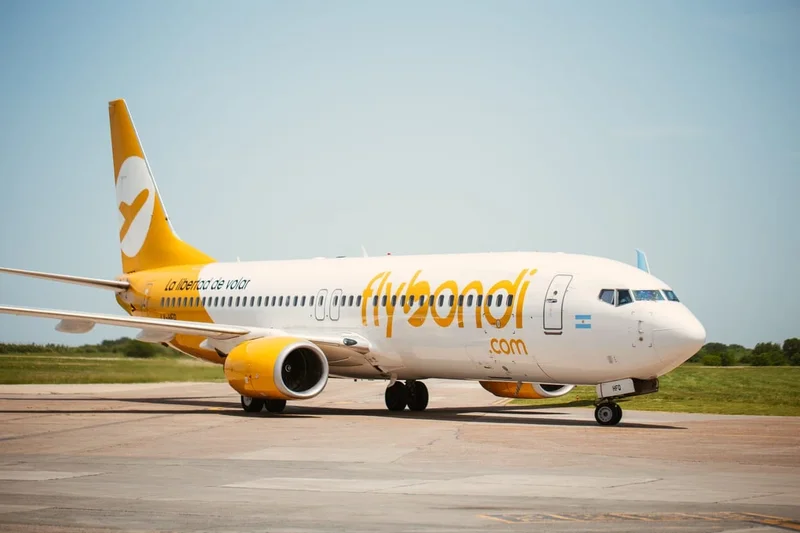
Flybondi Sales Blocked in Brazil After 79% of Flights Axed
Argentina · Business
Flybondi flight cancellations reached 79% in Brazil during July 2026, prompting the country’s civil aviation regulator to impose a precautionary restriction on the Argentine low-cost carrier’s ability to sell new tickets. Brazil’s National Civil Aviation Agency (ANAC) announced the measure on July 29 after finding that Flybondi had cancelled the vast majority of its scheduled services between July 1 and 27, leaving passengers stranded across its Brazil network.
What ANAC’s Restriction Actually Means
The Brazilian regulator’s order took effect immediately on July 29, 2026, and blocks Flybondi from selling new tickets in Brazil. The measure also bars the airline from opening new destinations or increasing flight frequencies in the country. Tickets already issued remain valid, meaning passengers with existing bookings can still travel if their flights operate.
ANAC stated the precautionary measure was necessary due to signs of deterioration in the company’s operational capacity and risks to passengers. The regulator pointed to a sharp reduction in operations, discrepancies between Flybondi’s registered flight network and the flights actually operated, and a rise in complaints over refunds, flight changes, and passenger assistance.
The Buenos Aires-Aeroporto Internacional do Galeão (Rio de Janeiro) route was temporarily left out of the restriction. However, ANAC warned that this route could face the same measure unless Flybondi proves by August 3, 2026, that it has made the required operational adjustments. The restriction functions as a consumer protection firewall, limiting the number of travelers exposed to potential last-minute cancellations while the airline addresses its operational problems.
The Scale of the Disruption
ANAC’s official data shows Flybondi cancelled 79% of its flights between July 1 and 27, 2026. Argentine newspaper Clarín, citing data shared by a senator, reported 290 cancelled flights versus just 102 operated during the month, representing a 74.8% cancellation rate based on its reporting cutoff.
The crisis was not confined to Brazil.
For foreign travelers and expats who rely on low-cost carriers to move between Argentina and Brazil, the disruption severed a key budget link. Flybondi had positioned itself as an affordable option on cross-border routes, making the sudden void particularly painful for cost-conscious passengers during the Southern Hemisphere’s winter holiday period.
Flybondi Flight Cancellations: Background and Financial Strain
While the specific cause of the July 2026 Brazil cancellations has not been confirmed by ANAC, the airline has faced broader financial and operational difficulties.
The financial warning signs had been flashing for months. Clarín reported that ANAC had already issued fines totaling AR$54.7 million (~US$10,700) across 38 separate proceedings, with 22 more cases pending and potential sanctions exceeding AR$450 million (~US$88,200). In July alone, Flybondi had four bounced checks totaling AR$559 million (~US$109,600). ANAC had opened an administrative proceeding in January 2026 over repeated cancellations, indicating regulators were watching the airline closely well before the Brazil meltdown.
Passenger Rights Under Brazilian Law
Travelers affected by the Flybondi flight cancellations have clear protections under ANAC Resolution 400, Brazil’s primary passenger rights framework. If a flight is delayed by more than four hours, cancelled, or interrupted, passengers may choose among three options: free rebooking on the next available Flybondi flight, rerouting on another airline at no extra cost, or a full refund.
The refund must be processed within seven days of the passenger’s request. Critically, the rebooking obligation extends to placing passengers on competitor airlines if Flybondi cannot provide a suitable alternative in a reasonable timeframe. This provision is especially relevant given the scale of the cancellations.
Foreign travelers should contact Flybondi directly through its customer service channels to exercise these rights. If the airline fails to comply, passengers can file a complaint with ANAC’s consumer protection platform. Keeping records of all communications, booking references, and receipts for expenses incurred due to cancellations is strongly advised for any subsequent claims.
The Bigger Picture for Argentina’s Low-Cost Airline Market
Flybondi is part of Argentina’s “aerolíneas low cost” segment, which emerged after the government liberalized the aviation market to encourage competition with state carrier Aerolíneas Argentinas. Alongside competitors like JetSMART, Flybondi helped drive down fares and expand route options for budget-conscious travelers across the Southern Cone.
However, the airline’s repeated operational failures are now testing the sustainability of that model. The high cancellation rates and regulatory sanctions raise questions about Flybondi’s financial health and its ability to maintain reliable service. For investors watching Argentina’s aviation sector, the episode underscores the fragility of low-cost carriers operating in a country with chronic economic volatility and currency controls.
The ANAC restriction in Brazil also highlights how quickly regulatory tolerance evaporates when passenger protection becomes a systemic concern. Brazil’s aviation market is one of Latin America’s largest and most competitive, and regulators there have shown little patience for carriers that cannot meet basic operational reliability standards, regardless of their business model or country of origin.
What Happens Next
Flybondi faces an August 3, 2026 deadline to present ANAC with a credible plan to stabilize its Brazil operations. If the regulator deems the plan insufficient, ticket sales on the Buenos Aires-Rio de Janeiro route will be suspended, effectively freezing the airline’s ability to generate new revenue from its most important international market.
In Argentina, the pressure is also mounting. A senator has requested formal reports from ANAC regarding the constant cancellations, signaling potential political scrutiny beyond the regulatory sphere. The combination of fines, bounced checks, and operational chaos suggests Flybondi’s path back to normal operations will require not just operational fixes but a significant injection of liquidity.
For travelers holding Flybondi tickets for upcoming travel, the safest course is to monitor the airline’s flight status daily and explore backup options on other carriers. The ANAC restriction does not cancel existing tickets, but the underlying operational instability that triggered the measure remains unresolved as of the deadline.
Frequently Asked Questions
Are my existing Flybondi tickets still valid?
Yes. ANAC’s restriction applies only to new ticket sales. Tickets already issued remain valid, and Flybondi is obligated to honor them or provide rebooking or refund options if flights are cancelled.
What are my rights if my Flybondi flight is cancelled?
Under ANAC Resolution 400, you can choose free rebooking on Flybondi’s next available flight, rerouting on another airline at no extra cost, or a full refund processed within seven days of your request.
Why did ANAC restrict Flybondi’s ticket sales in Brazil?
ANAC cited signs of deterioration in Flybondi’s operational capacity, a sharp reduction in flights, discrepancies between its registered network and actual operations, and a rise in passenger complaints over refunds, flight changes, and assistance.
Sources & Further Reading
Diario do Grande ABC · Gazeta do Povo · ANAC