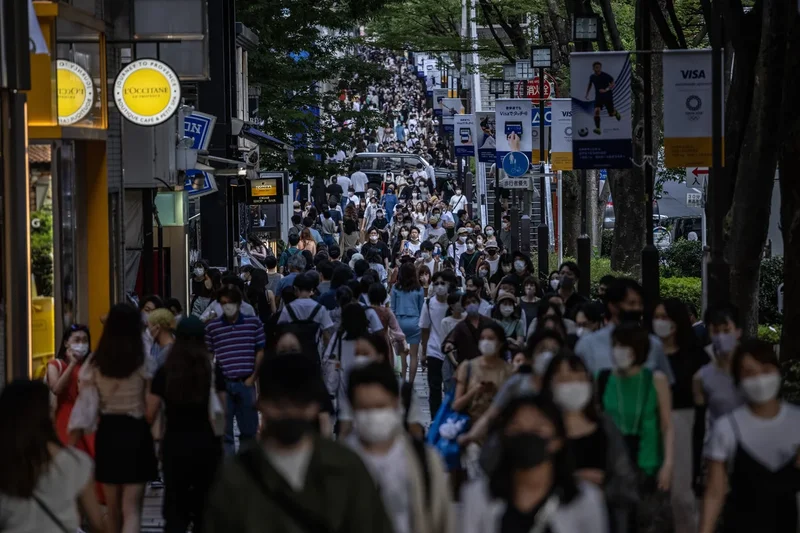
Japan’s population has fallen below 120 million for the first time in more than 40 years, as the country struggles with a falling birthrate and a rapidly ageing population.
Government data released on Wednesday showed that the number of Japanese nationals living in the country stood at 119.74 million as of 1 January, down 0.76 per cent from a year earlier.
It marks the 17th consecutive year that the Japanese population has declined since peaking in 2009 and is the first time the figure has fallen below 120 million since comparable records began in 1968.
The latest figures from the ministry of internal affairs and communications also showed the sharpest annual decline in both numbers and percentage terms since records began.
Japan’s total population, including foreign residents, stood at 123.77 million, down 563,048 people from the previous year.
The country’s demographic challenges have been building for years. Government data released in June showed Japan’s fertility rate fell again in 2025 to 1.14 children per woman, marking the tenth straight annual decline and another record low.
The country recorded just over 670,000 births last year, while more than 1.59 million people died, resulting in a natural population decrease of more than 923,000.
According to the World Bank, Japan has the world’s second-oldest population after Monaco, with a median age of nearly 50.
While the number of Japanese nationals continued to fall, the number of foreign residents reached a record high. More than 4.03 million foreign nationals were living in Japan as of January, the first time the figure has crossed the four-million mark.
Population growth was recorded in only three prefectures – Tokyo, Osaka and Chiba – while the remaining 44 prefectures saw their populations shrink.
The figures come as Japan continues to search for ways to reverse its falling birthrate and encourage more people to marry and have children.
Earlier this month, the Tokyo metropolitan government said 265 couples had married after meeting through its AI-powered dating app, TOKYO Enmusubi, which launched in September 2024.
As of 30 June, the service had 16,000 registered users and had led to 760 couples entering what officials described as “serious relationships”.
Japanese authorities have introduced a range of measures in recent years to tackle the country’s demographic decline, including expanding childcare support, housing subsidies and government-backed matchmaking programmes.
Earlier this year, Kochi prefecture also began offering subsidies of up to 20,000 yen to help young single residents pay for approved dating apps in an effort to encourage marriage.