Uruguay · Business
Uruguay cruise season results for 2025-2026 show 242,086 passengers and an estimated US$13 million in direct spending, the Ministry of Tourism reported. The figures arrive as the country works to keep passenger volumes stable even with fewer ship calls than the previous year.
By the Numbers: Passengers and Port Calls
The season ran from October 2025 to March 2026, with 132 vessels docking at Uruguay’s two main cruise hubs. Montevideo, the capital and primary commercial port, handled 100 ship calls, while the upscale resort city of Punta del Este received 34 calls.
An additional 35 technical calls were projected for Montevideo, where vessels stop for supplies, crew changes, or minor repairs without disembarking large numbers of tourists. The total passenger count of 242,086 translated into an average spend of roughly US$53.70 per person.
That per-passenger figure reflects direct onshore spending on tours, dining, shopping, and transport. It does not capture indirect economic effects such as port fees, fuel provisioning, or longer-term destination marketing value.
A Softer Season in Context
Compared with the 2024-2025 season, the latest figures represent a decline in total ship calls. The prior season saw approximately 200 calls overall, with nearly 150 in Montevideo and 50 in Punta del Este, according to Cruise Industry News.
Uruguayan authorities had anticipated the drop. One official report indicated cruise arrivals were expected to be about 10% lower than the previous season. The Ministry of Tourism framed the 2025-2026 season as an effort to preserve passenger volumes despite fewer vessels.
Global cruise lines continue to rotate itineraries and adjust capacity across South America. Uruguay’s ability to hold passenger numbers near previous levels, even with fewer ships, suggests larger vessels or higher occupancy rates on the calls that did take place.
Why Montevideo and Punta del Este Matter
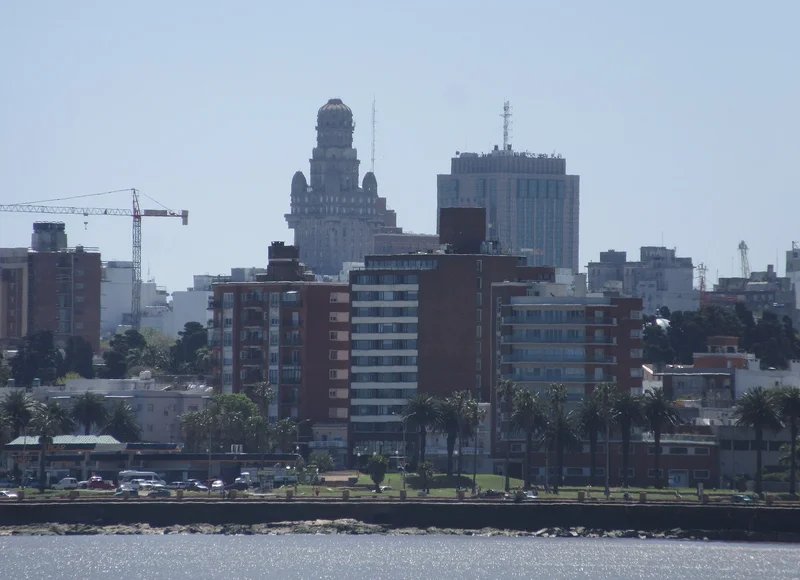
Montevideo serves as the country’s main turnaround and technical-call port. Its location on the Río de la Plata estuary makes it a logical stop on South Atlantic routes connecting Brazil, Argentina, and Chile. The port’s proximity to the city center lets passengers walk to historic markets, museums, and the Ciudad Vieja old town within minutes.
Punta del Este, about 130 kilometers east of Montevideo, offers a different profile. The resort city is known for high-end retail, beaches, and the iconic sculpture ‘La Mano’ emerging from the sand. Cruise visitors here tend to spend on premium excursions, restaurants, and galleries.
Together, the two ports give Uruguay a dual offering: one urban and cultural, the other leisure-focused. For cruise lines, this variety allows a single country to serve both transit calls and luxury stopovers on the same itinerary.
What the US$13 Million Means for Foreign Investors
Direct passenger spending of US$13 million flows into local businesses such as tour operators, restaurants, craft markets, and transport services. For a foreign investor, this signals a predictable seasonal demand spike that supports hospitality and retail cash flows.
Uruguay’s stable legal framework and investment-grade status make it an outlier in the region. The cruise season adds a layer of consumer-facing activity that benefits real estate near port zones, especially in Montevideo’s Ciudad Vieja and Punta del Este’s peninsula, where foot traffic rises sharply from October to March.
Port services also create business-to-business opportunities. Technical calls require ship chandlers, waste disposal, fresh-water supply, and logistics coordination. Foreign operators in maritime services can view the 35 projected technical calls as a niche but recurring revenue stream.
The government’s emphasis on keeping passenger volumes stable, even as ship calls dip, suggests a strategy focused on yield rather than volume. Higher-spending passengers on larger vessels can sustain or grow per-call revenue, a metric that matters for retail tenants and concessionaires at the ports.
Infrastructure and the Outlook Ahead
Uruguay’s port infrastructure has seen gradual upgrades, though capacity constraints remain a topic of discussion in shipping circles. Montevideo’s cruise terminal sits within a working cargo port, which can limit the aesthetic appeal but keeps operational costs competitive.
The Ministry of Tourism and the Ministry of Transport and Public Works have signaled continued investment in port services and destination promotion. Keeping Uruguay on South American cruise itineraries requires coordination with regional competitors such as Buenos Aires, Argentina, and Brazilian ports like Rio de Janeiro and Santos.
For foreign investors, the cruise season is not a standalone story. It intersects with Uruguay’s broader tourism strategy, which targets high-value visitors from North America and Europe. A steady cruise season reinforces the country’s brand as a safe, accessible entry point to the Southern Cone.
Regional Comparisons and Investor Takeaways
In the South American cruise market, Uruguay competes with larger economies but offers distinct advantages. Political stability, clear property rights, and a dollar-friendly economy reduce the risk premium that investors often assign to emerging markets.
The US$13 million in direct spending may appear modest, but it is concentrated in a few coastal zones over a five-month window. This density amplifies its impact on seasonal businesses. A restaurant or shop in Punta del Este can earn a significant share of annual revenue during the cruise window.
Investors looking at Uruguay’s tourism sector should watch two indicators: the number of ship calls and the average passenger spend. The 2025-2026 season shows that even with fewer calls, spend per passenger can hold steady. That resilience matters when modeling returns on hospitality or retail investments near the ports.
Frequently Asked Questions
How many cruise passengers visited Uruguay in the 2025-2026 season?
Uruguay’s Ministry of Tourism reported 242,086 cruise passengers during the 2025-2026 season, which ran from October 2025 to March 2026.
How much did cruise passengers spend in Uruguay?
Total direct tourist spending was estimated at US$13 million, averaging about US$53.70 per passenger across the season.
Which ports in Uruguay handle cruise ships?
Montevideo and Punta del Este are the two main cruise ports. Montevideo handled 98 calls plus technical stops, while Punta del Este received 34 calls during the 2025-2026 season.