The
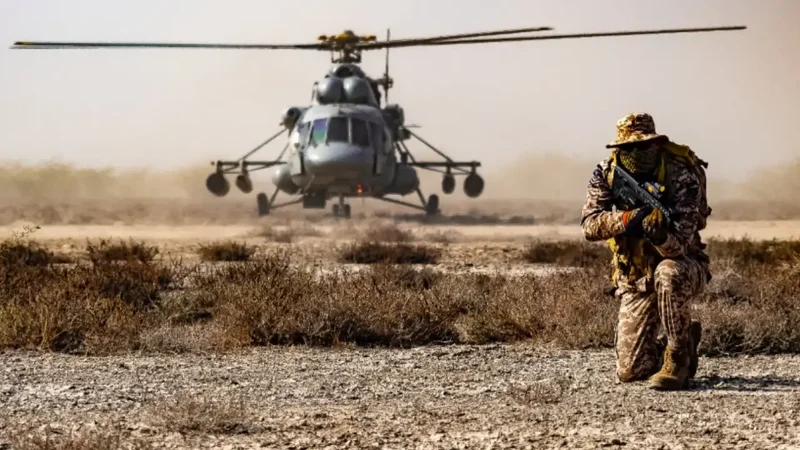
Indian Air Force has issued a Request for Information (RFI) for manâportable loitering munitions. These weapons are to equip the Garud special forces, providing them with a new precision strike capability. The RFI seeks indigenous solutions under the Make in India initiative and sets clear technical benchmarks. The system must be manâportable, have a minimum range of 40 kilometres, remain airborne for more than two hours, and be capable of carrying both highâexplosive and highâexplosive antiâtank warheads to take on different types of targets. This option will provide the air forceâs special forces with independent strike options.
Loitering munitions are designed to combine the functions of a surveillance drone and a guided weapon. Once launched, they can loiter over target areas, transmitting realâtime imagery and strike when a suitable target is identified. This âfind, fix, finishâ capability reduces the sensorâtoâshooter timeline and allows operators to abort missions if conditions change. For the Garud special forces, such systems will be particularly useful in difficult terrain such as in the mountains or in jungles , as well as in urban environments where the chances of collateral damage is deemed too high.
The option of launching drones also gives these units an organic strike capability in situations where conventional support may be limited or delayed. The emphasis on portability ensures that these systems can be deployed quickly by small teams without the need for heavy launch platforms.
Currently, the heaviest weapon with special forces units is man-portable the anti-tank guided missile. These weapons usually tend to have a range of 4-5km. A man-portable loitering munition will not only enhance the distance at which these weapons can engage a target. Such a system will also give the special operations team eyes in the sky. The ability to reconnoiter an area will also provide these top tier units the ability to better execute operations and have much better situational awareness behind enemy lines. A system with such a range can provide a small team the range and precision lethality of artillery.
The Garud special forces units were raised in 2004 as a force that can protect air bases from terrorists, conduct counter insurgency operations, perform combat search and rescue, as well as for reconnaissance missions. Loitering munitions will thus provide members of this elite group to execute their operations more effectively across the spectrum.
Manâportable loitering munitions have proven their worth in recent conflicts. Systems such as the American Switchblade, Polandâs Warmate, and Turkeyâs Kargu have been used extensively in the RussiaâUkraine war, demonstrating their effectiveness against both armoured targets and field fortifications. Israelâs Harop system, though larger, has also shown the operational utility of loitering munitions in contested environments.
The IAF has also emphasised resilience against GPSâdenied environments and electronic warfare, highlighting the importance of survivability against technologically advanced adversaries.
Once inducted, the manâportable loitering munitions will improve the options in the Garud special forces unit's quiver. Loitering munitions will allow special forces to conduct standâoff strikes with minimal collateral damage, providing a leap in capability.