The ANC in Johannesburg has attributed its loss in the 2016 local government elections to former president Jacob Zuma's Nkandla scandal but says President Cyril Ramaphosa's Phala Phala controversy will not derail its ambitions in the 2026 municipal polls.
Speaking to the Mail \& Guardian last week, ANC Johannesburg regional secretary Sasabona Manganye said internal issues, chief among them the Nkandla scandal, had contributed to the party's poor electoral performance in 2016.
"Our own internal research in 2016 told us that the fellow from Nkandla affected us. You even had national issues contributing to people either not voting or not voting for the ANC."
In 2016, the ANC lost its outright majority in Johannesburg after a Democratic Alliance-led coalition, backed by the Economic Freedom Fighters, prevented the governing party from forming a coalition government.
Manganye said the Nkandla scandal played a significant role in the ANC's defeat.
In March 2016, the Constitutional Court ruled that Zuma had failed to uphold, defend and respect the Constitution by refusing to comply with the public protector's remedial action regarding upgrades to his private Nkandla residence.
The court ordered the National Treasury to determine the reasonable amount Zuma should repay for non-security features at the property, including the swimming pool, described as a "firepool"; the cattle kraal; chicken run; amphitheatre; and visitors' centre.
After the judgment, Zuma apologised to the nation, saying the matter had caused "a lot of frustration and confusion, for which I apologise on my behalf and on behalf of the government". "It all happened in good faith and there was no deliberate effort or intention to subvert the Constitution on my part. The judgment has helped me and my colleagues to reflect deeply on the entire matter."
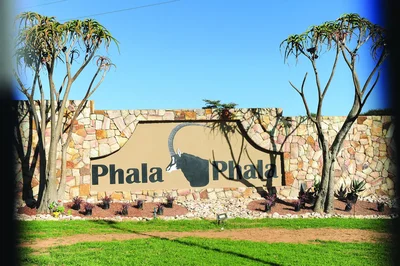
A decade later, the ANC is once again heading towards local government elections under a cloud, with Ramaphosa's Phala Phala saga becoming one of the biggest political crises of his presidency.
The scandal, which centres on the theft of about $580 000 in cash from his Phala Phala game farm in Limpopo, has been seized upon by opposition parties who want the president held accountable.
Manganye, however, said Phala Phala was not the same as Nkandla and was unlikely to influence voter behaviour in the same way.
"When we look at our research, there is nowhere that Phala Phala is mentioned as one of the reasons people would not vote for the ANC," he said.
"The good thing about Phala Phala, unlike Nkandla, is that there are people who are being held accountable. The matter is before the courts, Parliament has committees that have been established to hold the president accountable. The good thing is that there are processes in place.
"The people want accountability because I don't think we must come to a conclusion that the president is either wrong or right regarding the Phala Phala issue. There are still processes under way that will tell us whether there was any wrongdoing."
Manganye said the ANC's renewal programme was aimed at rebuilding public confidence in the party rather than simply addressing its internal challenges.
"We have introduced a renewal programme for the organisation. The renewal of the ANC is not only about the ANC and its internal dynamics; it is about ensuring that we become a better vehicle to deliver services to the people. We do not renew the ANC for ourselves but for the people."