Multiple lines of evidence point to Late Paleolithic human harvest of mammoths—from embedded stone projectile points to cut marks and fractures on mammoth bones associated with human settlements. Not to mention, human bone isotopes reveal mammoth meat in Paleolithic diets.
Still, scientists have wondered whether massive bone accumulations discovered at various sites were from human hunting or from natural disasters, after which mammoths were scavenged. Today, a study published in Current Biology implicated humans.
Woolly mammoths (Mammuthus primigenius) roamed in sex-segregated herds through the vast steppe grasslands that once extended through North America and Eurasia. The prevalence of male rather than female mammoth remains has been interpreted as males more often dying because of risky behavior that caused them to fall through thin ice or drown in pools, according to earlier research.
In the new study, a collaboration of more than 50 researchers representing universities and museum collections throughout the world analyzed the genomes of 521 woolly mammoth specimens from Europe, Asia, and North America. Of the specimens, 100 had been concentrated in bone piles, whereas the rest were dispersed in natural settings.
The results were striking. The remains from natural settings were mostly male (66 percent), whereas the big pileups were mostly female (70 percent). No matter the geographic locale, all bone piles with more than five individuals showed a female bias in sex ratio, suggesting that “human activity was the primary driver behind (them),” according to senior study author David Díez del Molino of Stockholm University.
Read more: “What Happens When Giants Disappear from Ecosystems?”
It’s possible that Paleolithic people preferentially took down the smaller-bodied females, although a female herd headed by a matriarch likely “had group defenses that would have made encounters with herds equally or even more risky,” cautioned lead author Hannah M. Moots, a postdoc at Stockholm University. She hypothesized that the sex bias could also reflect movement patterns of the mammoths that put females in more predictable contact with humans.
Regardless, the mammoth pileups appear to have been the work of humans. If the mammoths had died naturally in the steppe, you’d expect to see carnivore tooth marks or traces of gnawing on the bones, which were largely absent.
Hunter-gatherer societies used mammoths for much more than just food. They turned mammoth ivory into tools and art and mammoth bones into scaffolds for circular huts. And so, male or female, a mammoth was worth its weight in gold to early humans.
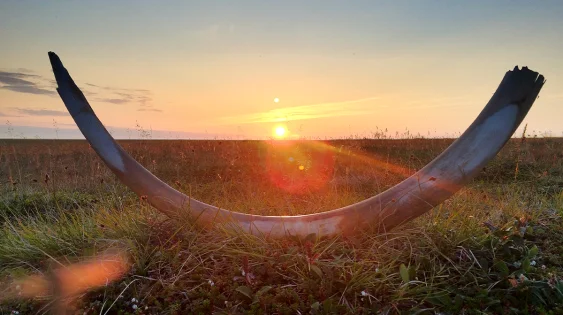
Lead image: A mammoth tusk found on Wrangel Island. Photo by Love Dalén.