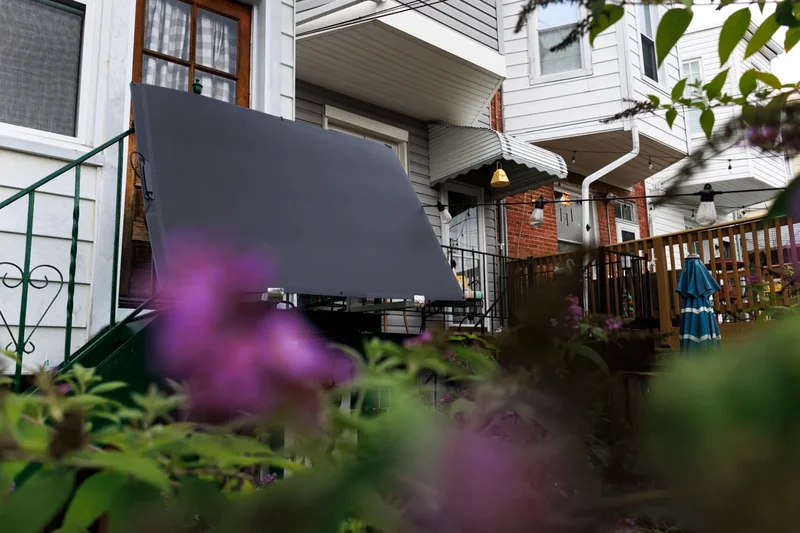
Plug-in solar panels will become legal in Great Britain from 27 August, opening the way for supermarkets, DIY chains and electrical retailers to begin selling the small-scale solar systems to the public.
Lidl, B&Q, Currys and Amazon are among the household names that have been working with the government on plans to bring plug-in solar to the British market. Asda, Screwfix and Wickes have also taken part in talks about the technology, while Iceland was named in an earlier government announcement.
However, shoppers may not find plug-in solar panels on shelves as soon as the regulations change. Retailers must first source products that meet the government’s new safety requirements, and most of the companies involved have yet to announce a product range, price or firm launch date.
Here is what we know so far about where plug-in solar panels could be sold.
Read more: Best solar panels, explained
Will Lidl sell plug-in solar panels?
Lidl was one of the first retailers publicly linked to the rollout.
In March, the government said Lidl and Iceland were working with ministers, alongside solar equipment manufacturer EcoFlow, to bring plug-in solar products to the UK.
The prospect immediately raised the possibility of solar panels appearing in Lidl’s famous middle aisle. Similar balcony solar kits are already available through Lidl in parts of Europe, where the technology is more established.
However, a UK launch does not appear to be imminent. The Independent understands that Lidl is still in the early stages of exploring the technology and has not confirmed a launch date.
The supermarket has also yet to reveal which product it might stock or how much a system would cost.
Early reports suggested that a Lidl system could cost around £400.
Read more: **Lidl plug-in solar panels, explained **
Will B&Q sell plug-in solar panels?
B&Q has given one of the clearest indications that it plans to sell the devices.
The DIY retailer joined a government roundtable on plug-in solar in June, alongside Amazon, Asda, Currys, Screwfix and Wickes.
B&Q chief executive Graham Bell said the retailer was working with the government and suppliers to ensure any products it offered were safe, compliant and straightforward to install.
“We look forward to making plug-in solar available to our customers as soon as possible,” he said following the roundtable.
B&Q already sells portable solar panels and battery generators. These products can power compatible appliances or charge a portable battery, but they are not the same as plug-in solar panels designed to feed electricity into a home through a mains socket.
The retailer has not yet announced a product, price or launch date.
Read more: How do plug-in solar panels work and how are they installed?
Will Currys sell plug-in solar panels?
Currys was also named by the government as one of the flagship retailers supporting plans to bring plug-in solar to British homes.
The electrical retailer took part in the June discussions, although it has not yet announced which products it might carry or when they could become available.
Michelle Gorringe-Smith, director of new categories at Currys, said the company was “delighted to be working with the Department for Energy Security and Net Zero to bring plug-in solar panels to the market.”
Currys would be a natural outlet for the technology because it already sells a wide range of domestic electrical products and some portable energy equipment. Nevertheless, its participation in government talks should not be treated as confirmation that a particular kit will be available from 27 August.
Read more: **Best solar chargers, tested **
Will Amazon sell plug-in solar panels?
Amazon has publicly welcomed the introduction of self-installed plug-in solar systems.
“This is a fantastic opportunity to make renewable energy more accessible to people around the UK,” John Boumphrey, Amazon’s UK and Ireland country manager, said in the government’s announcement following the retailer roundtable.
“Enabling households to generate their own power with self-install plug-in solar panels is a practical step that supports household budgets and delivering against net zero goals.”
Amazon already lists products described as balcony solar kits, microinverters and portable solar panels. Buyers should be cautious, however, because products designed for other European countries will not automatically comply with the new British rules.
A device appearing in Amazon search results does not necessarily mean it is approved for connection to a UK mains socket. Shoppers should look for clear confirmation that the complete product meets the government’s UK plug-in solar specification rather than relying on an adaptor or buying individual components separately.
Amazon has not yet announced a dedicated range of compliant products or confirmed when they might become available.
What about Iceland, Asda, Screwfix and Wickes?
Iceland was named alongside Lidl in the government’s original March announcement. It has not yet confirmed whether plug-in solar panels will be sold in its supermarkets, through its website or through another retail arrangement.
Asda, Screwfix and Wickes attended the government’s June roundtable but did not make individual public commitments to stock the products.
Screwfix and B&Q are both owned by Kingfisher, although that does not necessarily mean they will sell the same products or introduce them at the same time.
For now, these retailers are best described as being involved in discussions rather than confirmed sellers.
Will EcoFlow sell plug-in solar panels?
EcoFlow is a manufacturer rather than a high-street shop, but it could be one of the first recognisable brands to launch a compliant system.
The company already sells balcony solar products in Europe and was named by the government in March as one of the manufacturers helping to bring the technology to Britain.
EcoFlow’s UK communications representative said at the time that making the systems available in shops would improve access to solar for people living in flats and rented homes.
However, consumers should not assume that an existing European EcoFlow product can simply be connected to a British socket. Any system sold for that purpose will need to comply with the technical and electrical requirements introduced for the British market.
When will plug-in solar panels go on sale?
The legal changes come into force in Great Britain on 27 August, but it’s not a guaranteed nationwide retail launch.
As The Independent previously reported, only products that comply with the government’s interim specification will be covered by the new exemption.
Compliant plug-in solar devices will have a maximum rated output of 800W, with one device permitted per electrical circuit. The new rules apply to solar generation and do not cover plug-in batteries that draw electricity from the home, store it and feed it back later.
Retailers will need to make sure their products, plugs, microinverters, cables, mounting equipment and instructions meet the required standards. This could mean that the first compliant products arrive gradually rather than appearing in every participating shop on the day the law changes.
How much will plug-in solar panels cost?
The government’s final impact assessment uses an estimated retail cost of approximately £400 to £600 for a complete system, with £500 as its central assumption.
Government modelling also suggests that a compliant 800W system could save a household around £70 to £110 a year. The higher figure is based on panels facing south at a 30-degree angle, while a vertically mounted east- or west-facing system could save closer to £70.
These figures are illustrative rather than guaranteed. Actual savings will depend on shading, location, energy prices, the direction and angle of the panels and how much electricity the household uses while the system is generating.
Read more: Are plug-in solar panels worth buying in the UK?
What should shoppers check before buying?
Consumers should wait for products that clearly state they are compliant with the new British electrical requirements.
An imported balcony solar kit, portable panel or power station is not necessarily suitable for feeding electricity into a home through a mains socket. Buyers should also check whether they need permission from a landlord or freeholder and whether the proposed mounting position is secure, unshaded and permitted under local planning rules.
B&Q, Currys, Amazon and Lidl are among the most likely places to eventually offer plug-in solar products, but none has yet published a confirmed range, price and launch date. Shoppers should therefore treat claims that a particular system will be available from 27 August with caution unless the retailer has confirmed it directly.