In early October 2025, Michelin awarded Keys to 2,457 hotels worldwide. In India, 36 received recognition.
Hotels aspire to many benchmarks over their lifetime. Broadly, these fall into two categories. The first is self-determined: Once a threshold of polish and luxury is met, a hotel is classified as a three, four or five-star property. This hierarchy, while demanding, is largely within the hotel’s control.
The second category is far more elusive — where certain accolades distinguish the best among the best. At the very top of this sits the Michelin Guide. Known globally for its restaurant stars, Michelin has recommended hotels since the early 1900s. In 2024, it formalised this with the introduction of Michelin Keys — a three-tier recognition for hotels delivering experiences beyond the ordinary. Inspectors assess properties across five criteria: architecture and interior design; quality and consistency of service; overall personality and character; value for price; and meaningful contribution to their setting.
In India, there are 14 one-Key, 20 two-Key, and two three-Key properties. To understand what truly separates these tiers, I tried some inspector-style role-play: experiencing services from one hotel in each category — a destination retreat, a metropolitan legacy hotel, and a palace hotel — mapping each experience against Michelin’s five criteria.
One Michelin Key experience at Six Senses Vana, Dehradun
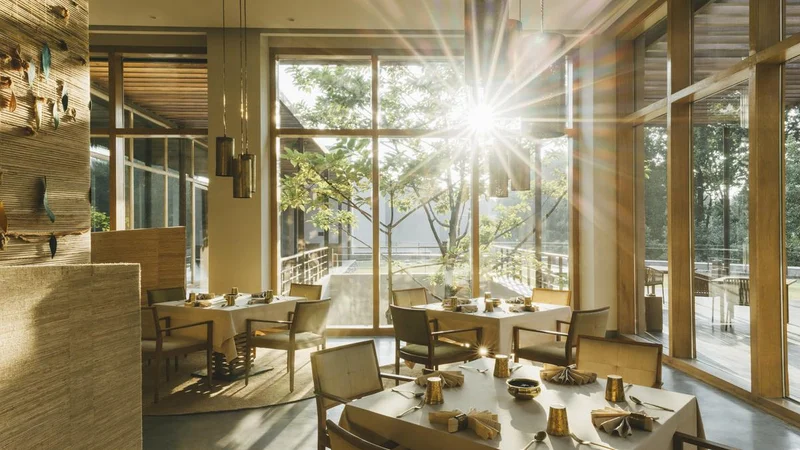
Approaching Vana, nothing prepares you for what lies within. Barely minutes from urban chaos, the property reveals itself as a sealed oasis. Phones are restricted, photography and outside food are prohibited. Guests or vanavasis are asked to wear identical white kurta pyjamas, subtly reinforcing equality while eliminating decision fatigue. The experience begins with a wellness assessment, leading to a personalised daily programme spanning Ayurvedic, Tibetan, and natural healing therapies. Initially apprehensive, I found that surrender was encouraged, essential, and deeply rewarding. Architecturally, Vana is modern and restrained. It is notably contemporary; a contrast to the ancient Indian philosophies practised within. This dissonance may not work for everyone, but it feels intentional.
Where Vana truly distinguishes itself is its food. Contrary to expectation, meals are abundant, indulgent and rooted in Ayurvedic principles and seasonal, local sourcing. Wellness here is holistic: physical therapies, digital detox, craft practices, meditation spaces, with a deep spiritual undercurrent. The retreat operates with quiet precision through exceptional service. Over 200 staff members knew my name without ever having met me. At roughly USD $1,000 or around ₹95,000 a night, inclusive of meals and treatments, I arrived expecting a luxury resort. I left having experienced something transformative.
Two Michelin Keys at The Imperial, New Delhi
Hidden beside Connaught Place, The Imperial is discreet yet impossible to miss. Walking in feels like stepping through decades at once. Chandeliers glow, uniforms recall old cinema, and time seems to slow. “Welcome to the Grand Dame,” someone says. And it lands. Not because of age alone, but because of authority. This is a hotel that shaped the idea of luxury in India rather than chased it.
The Imperial blends Victorian, Art Deco, and colonial styles with confidence. Its most extraordinary asset lies beyond architecture: an art collection of over 5,500 works displayed across corridors and floors, curated by theme and geography. The hotel has borne silent witness to history, hosting political conversations that shaped modern India. Table No. 14 at the 1911 restaurant, Jawaharlal Nehru’s preferred table, remains preserved. Antiques abound — silver cutlery, century-old furniture, heritage doors — yet nothing feels untouchable.
The spa, restaurants, and bars extend this immersion with confidence. From historically rooted dining to Patiala Peg’s celebration of a uniquely Indian drinking legacy, the hotel doesn’t reference history, it commits to it. Service is warm and personal; you’re addressed by name, remembered across spaces. The spa is a Mughal Suite that feels like an ancient hammam. The Akoi family has owned it independently since the 1930s, resisting acquisition, which gives it a family-run warmth most luxury chains simply can’t replicate.
Three Michelin Keys at the Taj Lake Palace, Udaipur
Floating in Lake Pichola, reachable only by boat, the 18th-Century palace feels unreal. Originally a royal summer palace, now meticulously preserved, the Lake Palace is an extraordinary amalgamation of Mughal, Rajasthani, and European influences. Makrana marble, jharokhas overlooking water, hand-painted walls, and quiet courtyards create a sense of suspended time. The palace engages the senses effortlessly: jasmine-scented corridors, a flautist’s music drifting through halls. Almost every room faces the lake; those that don’t, overlook tranquil gardens. Exclusivity here is absolute as no non-residents are allowed.
Dining environments are spectacular, though the food — while excellent — does not quite match the setting’s grandeur. More than a hotel, the Lake Palace is a living heritage site. Its preservation sustains local livelihoods and safeguards a floating architectural marvel. Would I pay around ₹95,000 a night to feel like a Maharaja? Absolutely. This is a definitive Three-Key property — perhaps beyond.
The verdict
Living at these properties clarified something essential. Michelin Keys are not a linear ladder of luxury, but a measure of how completely a hotel fulfils its own ambition.
A one Key hotel does one thing exceptionally well and does it with conviction. Six Senses Vana’s is a controlled ecosystem built around inward transformation. Its excellence lies in precision. Vana earns one key because it executes its vision, not because it attempts universality. That same structure, however, may feel more disciplined than some guests expect from a vacation — a trade-off that comes with such philosophical clarity.
A two Key hotel operates at a broader scale of cultural relevance. The Imperial is not just a place to stay; it is a custodian of memory. Its excellence extends beyond the guest experience into preservation, storytelling, and access. Its central location and accessibility mean it is not always as exclusive as one might expect, yet it balances luxury with public life, history with functionality. Two Keys recognise this dual responsibility — the ability to be both exceptional and enduring within a living city.
While a three Key hotel transcends hospitality altogether. The Taj Lake Palace is not merely well-run or beautifully designed; it is irreplaceable. Its value cannot be replicated, only preserved. Geography, history, architecture, and exclusivity converge to create something that exists beyond management or service. Three Keys are reserved for places where the experience is inseparable from the site itself — where removing the hotel from its context would destroy its meaning.
None of these is inherently “better” than the other. They simply operate on different planes. What Michelin ultimately recognises is not excess or expense, but inevitability the sense that a hotel has become the best possible version of what it could ever be.
Other hotels with Michelin Keys in India
Here are the hotels that were awarded one Michelin Key
Here are the hotels with two Michelin Keys
Here are the hotels that were awarded three Michelin Keys
Published - July 31, 2026 12:59 pm IST