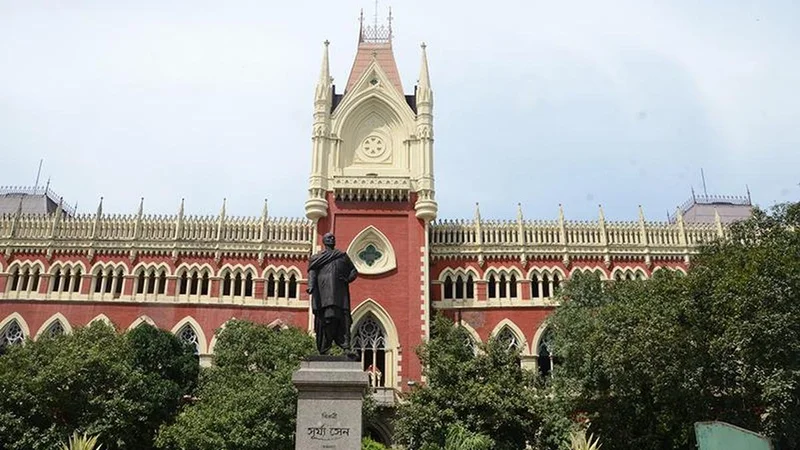
The Calcutta High Court has ordered five dedicated fast-track courts—three in Kolkata and two in Port Blair—to exclusively try NEET paper leak cases, to expedite criminal proceedings and ensure time-bound adjudication of one of India's biggest education scandals.
The designated courts shall conclude trial and pronounce final order or judgment of cases under the Public Examinations (Prevention of Unfair Means) Act, 2024, preferably within a period of three months from the date of filing of charge-sheet, an order of the high court stated.
The move comes amid a nationwide push to fast-track prosecution in public examination fraud cases, amid nationwide students' protests against the NEET paper leak dust-up, which culminated in Dharmendra Pradhan's resignation as Union Education Minister.
The controversy prompted the Centre to treat paper leaks as organised criminal offences that undermine the integrity of competitive examinations affecting millions of students, with Prime Minister Narendra Modi announcing last week that fast-track courts would be set up to try exam malpractice cases.
The administrative order, dated July 29, issued by the Registrar of the Calcutta High Court named Bench-I, City Sessions Court, Calcutta as the designated court to deal with matters in the state of West Bengal for trial and adjudication of cases investigated by the state agencies concerning offences prescribed under Sections 10 and 11 of the said Act.
The order designated the Special CBI Court No 2, City Sessions Court, Calcutta to adjudicate cases probed by central agencies, and named the Additional Chief Judicial Magistrate, 1st Court, Calcutta to deal with matters relating to investigation, judicial inquiry, cognisance, trial and adjudication of cases investigated by the state agencies and for commitment concerning offences prescribed under Sections 10 and 11 of the said Act.
The court of Additional District &Sessions Judge, Port Blair, and that of Chief Judicial Magistrate, Port Blair, will hold fast-track trials in exam malpractice cases registered in the Andaman and Nicobar Islands which fall under the Calcutta High Court's jurisdiction, the order said.
"It is made clear that the rank and position of the aforesaid Designated Fast Track Courts are not equal to that of 88 Fast Track Courts functioning in the State of West Bengal as permanent feature of administration. As such, Judicial Officers presiding in designated Fast Track Courts are in no way upgraded/downgraded from their original position in the cadre they are borne," the order clarified.
The dedicated courts are expected to handle cases investigated by agencies such as the CBI and state police in connection with paper leaks of public exams, reducing delays that typically accompany complex conspiracy and organised crime prosecutions involving multiple accused, voluminous documentary evidence and digital forensic material.
The development assumes significance because the NEET controversy has evolved beyond allegations of isolated malpractice into a broader debate on the credibility of India's public examination system, an observer of court matters said.
Investigators have alleged the involvement of organised networks, middlemen and facilitators in procuring and distributing confidential examination material, prompting demands for stronger legal and institutional safeguards, he added.
Published - July 31, 2026 01:23 pm IST