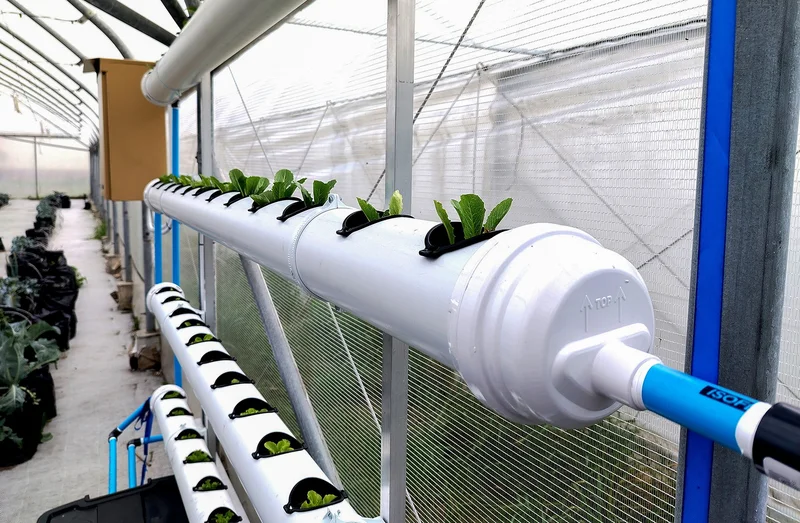
Humanitarian and development organisation Islamic Relief South Africa and its partners are providing two South African schools with the agricultural tools to grow food sustainably.
In Cape Town, they have partnered with the University of the Western Cape (UWC) and sustainable technologies company Green New World to install vertical solar-powered hydroponic systems at Pelican Park High School. While one system has already been installed, 11 more will be installed at the beginning of August, according to the schoolâs deputy principal, Rodney Prince.
In Ulundi, in KwaZulu-Natal, Islamic Relief SA and Green New World are providing greenhouse tunnels to James Nxumalo Agricultural High School and, at a later stage, 12 vertical solar-powered hydroponic systems, said Islamic Relief SA marketing coordinator Safwaan Mohamed.
The projects aim not only to educate learners on unconventional and sustainable farming methods but also to empower women in Pelican Park and Ulundi.
Growing crops without soil
The vertical solar-powered hydroponic systems were designed by Ridaa Manuel, the founder and director of Green New World. While Manuel acted as the lead engineer, he was assisted in the design and roll-out of the systems by graduate trainees in UWCâs Energy Storage Graduate Programme, which he coordinates.
Manuel explained that in essence a hydroponic system grows crops without soil. It cycles water and nutrients through the system to the crops, which grow five times faster than in conventional farming because their roots are constantly supplied with nutrients. The systems designed for the schools will be completely off-grid â a solar panel charges a battery that in turn powers the pump that distributes the nutrient-rich water through the system, he said.
Sustainability features include:
- It is emission-free;
- Its closed-loop watering system uses 90% less water than conventional farming; and
- The system is automated and therefore self-watering.
According to Pelican Park High Schoolâs farm manager, Clifford Caesar, the system also addresses challenges such as a shortage of land and soil degradation, as it requires little space and no soil.
Islamic Relief SAâs Mohamed said users can also access data about the system using an app.
How the project came to be
According to Manuel, the project began as a response to the needs of an Islamic Relief SA programme targeting women who take care of orphans. The programme needed a modular system that would not only provide food for the caregivers but also a source of income.
âIn South Africa, historically weâve had quite strong agricultural projects. So we looked at agriculture and how that can be a solution to food insecurity as well, and we looked at unemployment, as well as the unemployment statistics with regards to women,â Mohamed said.
âAnd so looking at all of this, we looked at how we can create a project that is climate-smart, but beyond that can also tackle food insecurity, and thatâs how this project came to be,â he said.
Manuel explained that the systems were designed vertically to fit into the womenâs backyards. They were solar-powered because the women could not afford electricity, and they recycled water because the women struggled with access to water. Because of safety concerns, the systems were moved to Pelican Park High School, he said.
Agricultural training to educate and empower
At Pelican Park High School, the hydroponic systems will be incorporated into the schoolâs agricultural management lessons, Prince said.
Learners at James Nxumalo Agricultural High School, meanwhile, will be taught how to grow crops, such as spinach and tomatoes, in the greenhouse tunnels, principal Mzwakhe Dubazane said.
There are plans at both schools to train women in agriculture. Mohamed said that 50 women from each of the schoolâs surrounding communities will be recruited for training in basic agricultural practices alongside learners. Preference will be given to parents and guardians of children at the school, he said.
Learners and participants will be taught how to fully operate the hydroponic systems, the advantages of hydroponics and why this is the farming of the future, Manuel said. On completing their training, the women will receive a certificate from the South African Institute of Entrepreneurship, Mohamed said. Twelve of the 50 women will be selected to do advanced training in agriculture and entrepreneurship, he said, so they could farm on a larger scale.
âThey will be able to go back and then see if they want to or can have these hydroponic systems at their homes. And then sell this produce from their homes. This will benefit the community because theyâll be able to produce food that is cheaper than what youâd find at a supermarket,â Mohamed said. DM