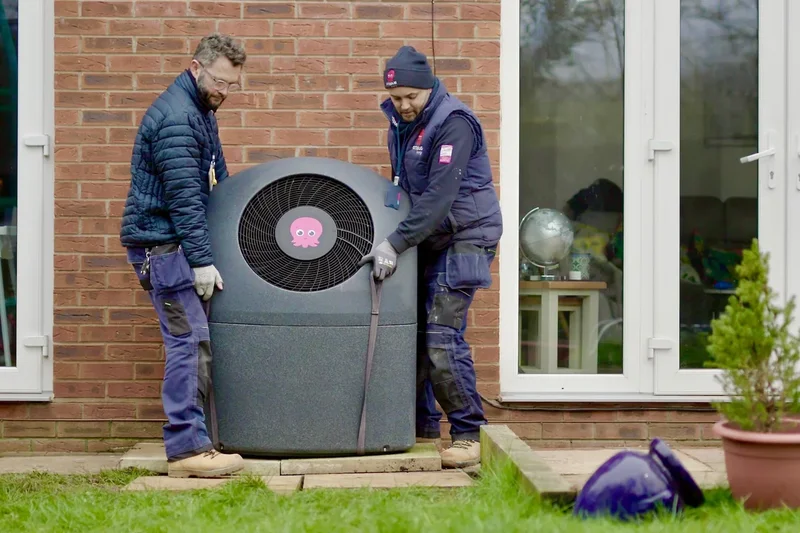
If you heat your home with oil, you already know the routine. You watch the price per litre, you time your order, and you hope you're filling the tank when the market's kind, rather than when it's spiking.
Around 1.7 million homes in England and Wales still run on oil or LPG (liquefied petroleum gas). Most of them are in rural locations that are not connected to the gas grid, and every one of them makes the same pricing gamble a few times a year when it comes to refilling the tank.
From 21 July 2026, however, the sums changed. The Boiler Upgrade Scheme now offers £9,000 towards a heat pump for off-grid homes replacing oil or LPG, the most generous grant the scheme has ever offered (it’s a 20 per cent increase on the previous grant amount).
If your oil boiler has seen better days and you've been putting off the decision when it comes to replacing it, here's what the switch actually costs, what it could save you in the long run, and whether it’s worth considering sooner rather than later.
Why oil homes face a different calculation
Gas and electricity prices are set by the Ofgem price cap, which puts a ceiling on what suppliers can charge per unit. Oil sits outside of that protection entirely. The price you pay for oil follows the global market, and tracking prices over the past few years reveals just how far it moves.
Heating oil ran to around 132p a litre at its spring 2026 peak, then fell back below 80p by mid-summer. Over four years, the price of heating oil has swung between roughly 48p and £1.30 a litre. A typical oil home burns 1,800-2,000l a year, so swings in prices can soon add up.
That is the reason homeowners with oil-based heating face a tougher decision than someone on mains gas when it comes to upgrading an ageing system. Replacing a gas boiler or swapping to a heat pump keeps you on a capped, relatively stable fuel. Sticking with oil keeps you exposed to a market you can't predict, with no cap to catch you when it climbs. Replace like with like, and you lock in that exposure for years to come.
What a new oil boiler actually costs
A like-for-like oil boiler replacement runs to between £2,500 and £5,500 when fitted using an OFTEC-registered engineer. A straightforward swap sits at the lower end. Moving the boiler, converting the system or replacing an ageing oil tank pushes up the price.
There's one catch oil households often miss: no grant exists for a new oil boiler. The Boiler Upgrade Scheme funds low-carbon replacements only, so a like-for-like oil swap comes entirely out of your own pocket. You pay the full price, then you carry on paying the oil bills behind it.
What a heat pump costs after the £9,000 grant
An air source heat pump installation runs to roughly £8,000 to £14,000 before any support, depending on the size of your home and the system specified. That's the sticker price. The grant is where that all changes.
From 21 July 2026, off-gas-grid homes replacing oil or LPG can claim £9,000 towards an air-to-water or ground source heat pump. That's £1,500 above the standard £7,500, and it's the highest figure the scheme has ever offered. Zero VAT currently applies on top, until March 2027.
Put those together and a typical installation for a three- or four-bedroom home lands somewhere around £500 to £5,000 after support, depending on the specifications. That's premium-boiler territory, and for some homes it comes in below the cost of a high-end oil replacement.
A few conditions are worth noting:
- The grant uplift covers air-to-water and ground source heat pumps only. Biomass boilers and air-to-air units stay on their standard rates.
- It applies to fresh applications made on or after 21 July. Vouchers already in progress before that date remain at £7,500.
- The window runs until 31 March 2027. The wider scheme continues to 2030, but the £9,000 oil and LPG rate is a temporary uplift for this financial year.
- The scheme runs on a fixed annual budget, and if applications exceed that budget, Ofgem will stop issuing the vouchers.
You don't deal with Ofgem yourself. Your MCS-certified installer applies on your behalf, and the grant comes straight off your invoice, so you pay the reduced figure from the start.
Will it cut your running costs?
Upfront cost is one half of the decision. Running cost is the other, and this is where oil homes tend to do well out of the switch.
The Energy Saving Trust notes that homes coming off oil, LPG or direct electric heating usually see the biggest running-cost savings from a heat pump. The reason is efficiency: a heat pump delivers three to four units of heat for every unit of electricity it uses, whereas an efficient oil boiler converts around 90-95 per cent of its fuel into heat.
Here's how that might play out for a typical off-grid home. Take a three- or four-bedroom property with an annual heat demand of around 17,700kWh, the equivalent of burning about 1,900l of oil a year through a modern condensing boiler. Run the same home on an air source heat pump with a seasonal efficiency (SCOP) of 3.5, on the standard July price-cap electricity rate of 26.11p per kWh, and the comparison is likely to look something like this:
|
|
|
| Oil at 80p/litre (summer 2026 low) | £1,520 |
| Oil at 97p/litre (12-month average) | £1,843 |
| Oil at 132p/litre (spring 2026 peak) | £2,508 |
| Heat pump, standard tariff | £1,320 |
Figures cover fuel for heating and hot water only, excluding standing charges you'd pay regardless. Oil boiler assumed at 90 per cent efficiency, heat pump at SCOP 3.5. Your own numbers will vary with insulation, usage and the price you pay per litre or per unit.
Even against oil at the lower price of 80p per litre, the heat pump comes out ahead. Against oil at its 12-month average, you’d save around £500 a year on fuel bills. And that's before you move to a tariff built for heat pumps.
That last point is important. A heat pump on a standard variable tariff already competes with oil, and a dedicated heat pump tariff sharpens the case further.
"If you have got a heat pump, being on the standard flexible tariff is probably not the right thing," says Phil Steele, future technologies evangelist at Octopus Energy. "You'd be better off going onto our ‘cosy’ tariff, which has cheaper periods to improve the economics even more."
There's a subtler benefit, too. Electricity prices move, but they move within the price cap's guardrails. Swap oil for a heat pump and you trade a fuel that can swing 50p a litre within a few months for one that shifts in smaller, capped steps. For a rural household that's spent years watching the oil market, that predictability can be worth as much as the saving itself.
Insulation and radiators: The caveat worth taking seriously
A heat pump earns you savings by running steadily at a lower temperature than a boiler, but that only works well when your home holds onto the heat it produces.
This is the part of the decision that catches out oil households. Off-grid homes are often older, larger and harder to heat, exactly the stock that loses warmth through walls, roofs and floors. Get the insulation right and the heat pump runs at the top of its efficiency range. Skip it, and the system works harder, the efficiency drops, and any savings you might have made start to erode.
Radiators matter, too. Because a heat pump runs cooler, each radiator gives out less heat than it would on a boiler, so some may need upsizing. That's usually a smaller job than it sounds.
"If you've got single-panel radiators, putting in double-panel ones instead means aesthetically nothing looks very different, but you've increased the heat output of that radiator," explains Steele. A double-panel unit can roughly double the output without changing the footprint on your wall, which often saves you moving pipework or redecorating.
A good MCS-certified installer assesses all of this during the survey: heat loss, radiator sizing, insulation. The scheme itself has grown friendlier to older homes, too. Since April 2026, it has dropped its EPC requirement, and removed the old rule that forced you to complete recommended insulation work before applying. Where an EPC is missing, the installer can use a recent bill and photos of your existing system instead.
Essentially, it’s the order that matters here: sort the insulation first and the heat pump pays its way.
Is it worth switching?
For a lot of oil households, this is the best the maths has ever looked. The strongest case comes together when:
- your oil boiler is near the end of its life and you'd be paying to replace it anyway
- your home is reasonably insulated, or you're ready to tackle it alongside installing a heat pump
- you can apply before the £9,000 rate closes on 31 March 2027
- you're happy to use smart controls or a heat pump tariff to get the most from the system
If your boiler's only a few years old and running well, the urgency is lower, and you might want to wait – although then you’re in danger of missing out on the full grant. A poorly insulated home will also see the heat pump underperform, so a phased approach can make more sense there, with the same caveat that the full £9,000 grant will not hang around if you wait too long.
The window runs to March 2027, and the budget is finite. If it's the right move for your home, it's one worth making sooner rather than later.