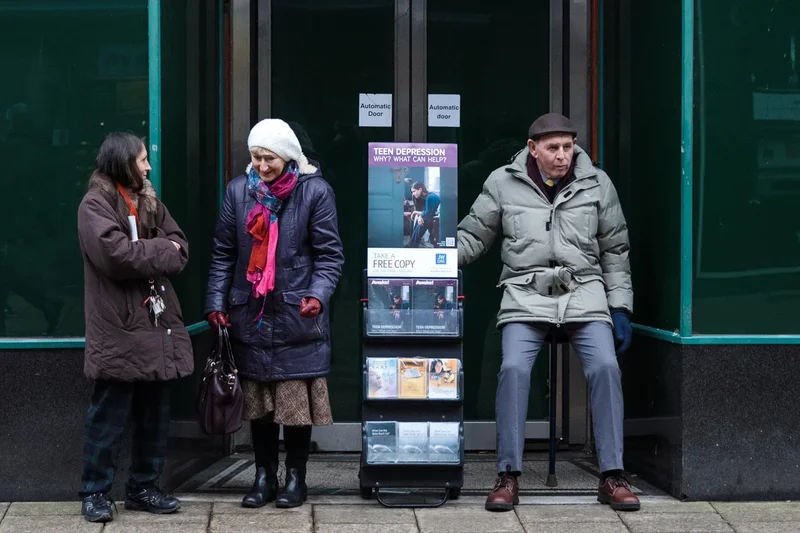
A court in Moscow has seized 123 real estate properties belonging to Jehovah's Witnesses and handed them over to the Russian state, the capital's judicial court service announced on Friday.
The assets had previously been registered under the religious group’s Swedish branch. They include 63 residential and commercial properties covering a combined total area of over 11,000 square metres, as well as 60 plots of land with an overall area of 5.6 hectares located across the country.
The Jehovah's Witnesses have been under pressure for years in Russia where the Orthodox Church championed by President Vladimir Putin is dominant.
A court in Russia banned Jehovah's Witnesses as an "extremist organisation" in 2017, a decision that the European Court of Human Rights ruled in 2022 was itself unlawful. A large number of Jehovah's Witnesses in Russia have subsequently been jailed following their convictions for "extremist activity."
Earlier this year four Jehovah's Witnesses were jailed.
The convictions reportedly followed covert video recordings by spies who infiltrated their prayer sessions.
The four men joined a list of some 220 people who have been sent to prison during a major crackdown.
In the first of two recent cases, Oleg Postnikov, 61, was sentenced to six years and two months in the city of Birobidzhan.
"After almost a full year of covert filming, the FSB (security service) managed to select only a handful of meetings they considered the most 'extremist', which in fact prove that we are ordinary people who respect everyone without exception," he said in his final statement to the court.
"A telling example is the closing prayer in which those present asked God for strength to endure the hardships caused by persecution. There is no request for punishment or harm to our persecutors."
In the other case, Valeriy Tolmazov, 71, Aleksandr Kostyuk, 53, and Maksim Barbazyuk, 43, were sentenced to six years each in the city of Tver.
"What stands out in these two new cases is not just the use of covert operatives, but how deeply those operatives integrated themselves into small, trusting groups before feeding selectively edited material back to investigators," said Jarrod Lopes, a New York-based spokesperson for the World Headquarters of Jehovah's Witnesses.