Much of the world is set to look towards the night sky in August, to take in a rare celestial event: a solar eclipse, where the Moon will block out the Sun.
But the event also falls right at the peak of another spectacle in the sky. Both the solar eclipse and the peak of the Perseids meteor shower will fall on 12 August.
The two will not occur together. A solar eclipse by definition needs a view of the Sun – which will be visible across large parts of Europe and North America – whereas the meteor shower will not be visible until after night falls.
But it means that the day will feature a double bill of celestial shows, taking place just hours apart.
The solar eclipse will be partial in the UK and Ireland, with the Moon covering 90 per cent of the Sun, the closest to a total solar eclipse since 1999. It will be total in Greenland, Iceland and Spain.
On 12 August, the Moon and Sun will gradually move closer together. Then, at about 6.17pm, the Moon will start to cover the Sun, and it will become total at around 7.12pm.
How to watch the solar eclipse
As ever, anyone trying to watch is advised to take precautions to ensure they do so safely. That might include using a colander to see the Sun’s rays without damaging the eyes.
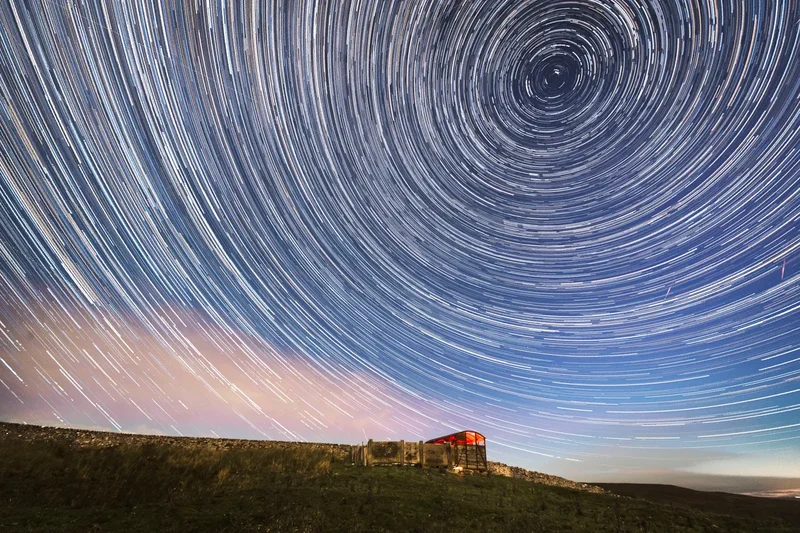
The Perseid meteor shower, by contrast with the eclipse, will last much longer. It is active between 17 July and 24 August.
But it will reach its peak of the night between 12 and 13 August, just after the eclipse has finished. They should be visible as soon as the Sun sets, since they come just above the horizon as seen from the UK, and the best time is between midnight and 5.30am.
The Moon will also play a supporting role for the Perseids. Because it will be a new Moon at the time of the peak, its relatively low brightness should mean that the night sky is relatively clear.
The Perseids are a particular favourite of people looking to see meteors because they produce a high number of so-called shooting stars and they are particularly bright.
They are caused when the Earth moves into a field of debris left behind by the comet 109P/Swift-Tuttle, which lights up as it strikes Earth’s atmosphere. That happens at the same time each year.
Unlike the solar eclipse, seeing a meteor shower requires no precise timing and no particular equipment. Stargazers are simply encouraged to head out somewhere dark with a low horizon, allow their eyes to adjust, and keep an eye on the sky for any moving lights.