Lifting of wait-out period will reduce stress of moving, say private home owners eyeing a flat
AI generated
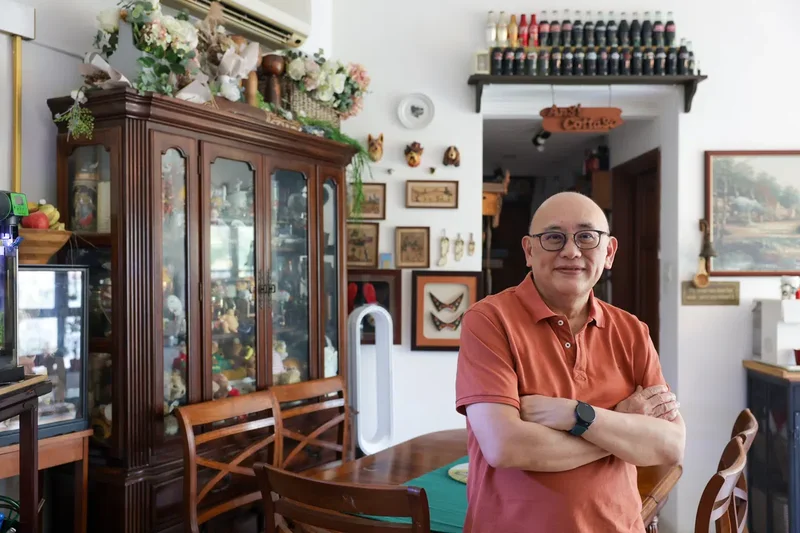
SINGAPORE – For about three to four years, Tony Ang, 67, has wanted to sell his condominium unit to move into a Housing Board flat.
As he approaches retirement, Ang, who works in the financial services sector, wants to spend more time on volunteer work – something he would feel more able to do if he can monetise his private property to cushion his retirement savings.
“When I volunteer, there is still cost involved. Nothing is free, and I still need to give up time and money while drawing no income,” said Ang, who befriends seniors monthly at an active ageing centre and goes on community service trips yearly.
So it was with much relief that Ang – like other private home owners interviewed by The Straits Times who are looking to transition to public housing – learnt on July 28 that the 15-month wait-out period for private property owners looking to buy a resale flat had been lifted with immediate effect.
Introduced as part of several property cooling measures in September 2022, the wait-out period was aimed at curbing demand from cash-rich private home owners looking to buy a non-subsidised HDB resale flat during a time when the prices of such flats were increasing rapidly.
To be sure, Ang – as a Singapore citizen aged 55 and above – could have been exempted from the wait-out period, had he opted to move out of his condo to a four-room or smaller HDB resale flat.
But the father of two married sons, who have moved out into separate homes, did not feel these flat types were large enough to accommodate his family.
“A four-room flat is too small when they come back for gatherings or to stay over, so we wanted at least a five-room flat that is similar in size to my current home,” said Ang, who lives with his wife.
He added that his sons would use the condo facilities, such as the swimming pool and tennis courts, when they were younger, but there is no longer a financial incentive to pay for their upkeep.
Had the wait-out period not been lifted, Ang could have chosen to put up at a rental home first, before moving to a newly purchased flat.
“Not having to wait out for 15 months has reduced the stress of moving. Seniors like us have difficulty carrying things, and so, moving homes twice would have been very taxing,” he said.
Like Ang, landed property owner Low Lee Lin said the lifting of the wait-out period has spared her the inconvenience of making alternative housing arrangements.
Low, 68, and her husband put their home up for sale some time ago and planned to move into their daughter’s resale flat for 15 months, if their property was sold while the wait-out period was in effect. Their house is presently still unsold.
“While my daughter could accommodate us, it would have been troublesome for her, and for us to move twice,” said the former Singapore Armed Forces regular, who works part-time as a passenger service ambassador for rail operator SMRT.
She, too, is looking for a five-room or larger flat to host family gatherings.
Low added that the wait-out period had added uncertainty for those moving from private to public housing, as market conditions could change between the time they sold their private homes and when they could buy a flat.
While both Ang and Low are seniors looking to prepare for retirement, market watchers said the circumstances of those who transition from private to public housing vary widely.
Kelvin Fong, chief executive of real estate firm PropNex, said that anecdotally, some private property owners may be experiencing changes in career or household income and looking to manage their housing commitments more comfortably. Others may want to live closer to their parents or secure more space at a manageable price.
Eugene Lim, key executive officer at property company ERA Singapore, said some could also be monetising their properties to finance business activities, or to send their children abroad for education.
Christine Sun, chief researcher and strategist at Realion Group, which comprises property firms OrangeTee and ETC, said there was a substantial fall in the number of five-room resale flat transactions after the wait-out period was introduced in September 2022.
Fong added that the number of five-room and executive flats sold has not recovered to the levels recorded before the wait-out period’s introduction, while four-room sales figures have.
Analysts expect demand for five-room and larger flats to rise, with the wait-out period now lifted.
ERA’s Lim said that although private property owners and those who were in the midst of the wait-out period are entering the housing market in a strong financial position, the existing supply of new and resale homes should be enough to meet demand.
“This should result in stable and sustainable market growth, rather than a rapid spike,” he said.
Fong from PropNex noted that selling a private home and buying an HDB flat is a major financial and lifestyle decision, where the considerations include timing, affordability, family needs and the availability of a suitable replacement home.
The policy change hence “may not translate immediately into transactions or a sharp influx of demand”, he said, while Sun added that any policy impact typically takes at least a month or two to be felt on the ground.
Agents have, however, seen an immediate shift in sentiment among former private home owners who were serving or about to begin the wait-out period when it was lifted on July 28.
Among them was a technology sales professional who preferred to be known only as Chan and lives in a landed home that she recently sold. She resides with her elderly parents and daughter, and a helper.
Chan, 49, said she decided to look for a flat after her father, in his 80s, suffered two falls and could no longer climb the stairs in their home.
Since the wait-out period was lifted, she has gone from seeking a rental home that can fit their household of five to looking for a resale flat.
“I was mentally prepared to have to move twice, which would have been tough on my aged parents, but the news on Tuesday felt like I was given a present,” said Chan.