If you want to pack the most into a summer road trip, consider the national park which gives back an hour of your time without crossing its borders.
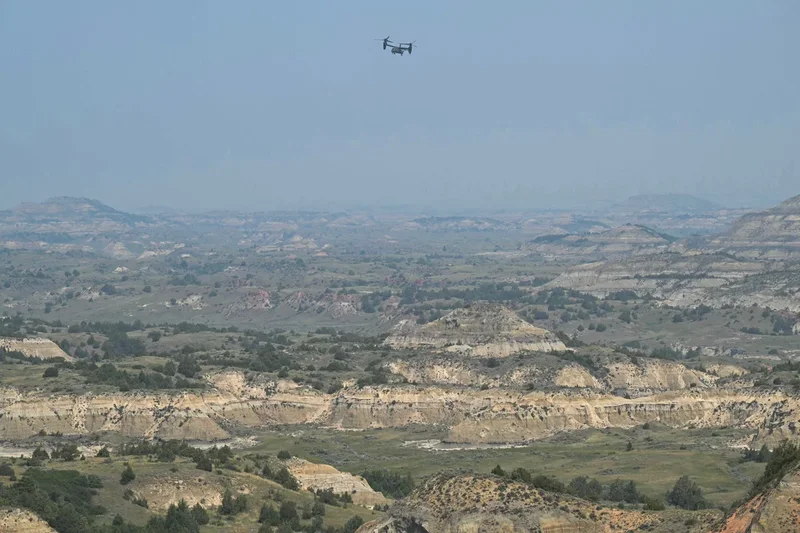
Tucked into the North Dakota Badlands, Theodore Roosevelt National Park offers roaming bison and canyons carved by water.
The North Unit of the park is on Central Time and the South Unit on Mountain Time. Separated by around an hour’s drive, if you take U.S. Highway 85 from the North Unit at 9 a.m. C.T., you could make it to the South Unit by 9 a.m. M.T.
There are campgrounds in both areas but if you only have a day to enjoy the park, there is still tons to do.
The North Unit has a 14-mile drive through the Little Missouri River Valley, rising out of the canyon to the River Bend Overlook, and then along the upper rim of the Badlands to Oxbow Overlook.
Visitors often see bison on the drive, and mule deer usually appear around dawn and dusk. Bighorn sheep may also be spotted on the adventure. For those who wish to experience nature on foot, the North Unit also offers backcountry trails, including the Buckhorn, Caprock Coulee, and Achenbach Trails. There are also easier nature trails for more casual hikers.
The South Unit has a 36-mile drive where visitors can spot bison, mule deer, prairie dogs and horses. There are also two self-guided nature trails in the South Unit, the Ridgeline Nature Trail and Coal Vein Trail, as well as backcountry trails.
There are several tips to keep in mind when visiting Theodore Roosevelt National Park.
You must make a reservation if you’d like to stay at the campgrounds, and overnight backcountry hiking requires a permit. The park is completely cashless, so entrance fees and other in-person sales will require a mobile payment, credit card or debit card.
Theodore Roosevelt National Park has a rich history, dating back to the death of “the conservation president” in 1919. America wanted a way to honor Roosevelt, who doubled the number of sites within the National Park system during his tenure.
In 1947, President Harry Truman signed a bill creating the Theodore Roosevelt National Memorial Park, which included the land that roughly makes up the South Unit and Elkhorn Ranch. The North Unit was added in 1948. The land was given national park status in 1978 with the signing of a law by President Jimmy Carter, slightly changing its name to Theodore Roosevelt National Park.
If you aren’t planning on visiting North Dakota anytime soon, there are dozens of other national parks across the U.S. to choose from.
Yellowstone National Park stands at No. 1 on U.S. News & World Report’s ranking of the best national parks for 2026. The ranking was based on scenery, activities and the opinions of travel experts and park visitors.
Holding the title of America’s first national park, Yellowstone offers hiking, fishing, backcountry camping and horseback riding. The park, which stretches across Wyoming, Montana and Idaho, is also home to more than half of the world’s active geysers.
Montana’s Glacier National Park and California’s Yosemite National Park follow Yellowstone, respectively, on U.S. News’ ranking.
Visitors at Glacier National Park can drive down its “Going-to-the-Sun Road,” a 50-mile stretch with views of glacier-carved mountains, alpine lakes and dense forests. Yosemite National Park is best known for its waterfalls and granite rock formations.