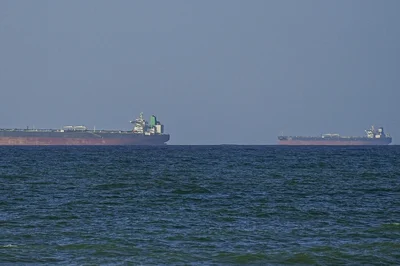
Iran has collected its first revenue from tolls imposed on ships transiting the Strait of Hormuz, one of the world’s most important routes for global energy supplies, Parliament Deputy Speaker Hamidreza Haji Babaei said Thursday.
“First revenues from transit fees in the Strait of Hormuz have been deposited into the Central Bank account,” he said in comments carried by the semi-official Tasnim News Agency.
Lawmaker Alireza Salimi also told Tasnim that Iran has begun collecting fees from vessels passing through the strait, citing what he described as “reliable sources.”
The amount charged varies depending on the type and volume of cargo and the level of risk posed by each vessel, the agency said, adding that Iran determines the rates and collection mechanisms.
The deputy speaker and lawmaker, however, did not give details about the number of ships that had paid.
Later, Iran’s central bank said that the revenues from ships passing through the strait were received in “cash currency,” denying earlier claims that Iran had been collecting the fees in cryptocurrency, Fars news agency reported.
READ: Trump orders Navy to shoot any boat laying mines in Strait of Hormuz amid ceasefire
The bank also noted that charges imposed on vessels “vary depending on the type and volume of cargo and the level of risk.”
On April 8, the Wall Street Journal (WSJ) reported that Tehran moves to tighten its grip on the world’s most important oil shipping route, ordering ships to arrange toll payments in advance with Iran’s Islamic Revolutionary Guard Corps and pay in cryptocurrency or the Chinese yuan.
On March 19, the semi-official ISNA news agency said that Iran is considering legislation that would require countries to pay fees for vessels transiting the strategic maritime corridor.
Shipping through the Strait of Hormuz has been severely disrupted since the US-Israeli war on Iran began on Feb. 28, rattling global energy markets and raising fears of prolonged economic damage.
On Tuesday, US President Donald Trump extended a ceasefire with Iran following a request from Pakistan, saying it would remain in place until Tehran presents what he described as a “unified proposal.”
READ: China urges ‘comprehensive’ ceasefire, normal passage via Strait of Hormuz amid US-Iran conflict