…the institutions we build today will determine whether future generations inherit a nation in which public trust is earned through competence, accountability and integrity — or one in which every scandal becomes another chapter in an endless cycle of blame. It is one conviction per person that builds a nation. This is why our character matters, because it takes a strong, constructive, and intentional characteristic to look at the indulgences that tempt us and still muster the morality to look away.
A man got tired of his wife’s alleged belligerent behaviour. She was never “available” and whenever she chose to be, she was always passive. Her love was dramatised for optics and her joy was influenced by incentives. The man got tired and after a while took another wife, and handed some of his income management to the new lady. After about a year, they thought of moving from their four-bed bungalow to a more spacious terrace apartment. They moved. Three years later, the man discovered that he had been paying yearly rent on the terrace apartment to a caretaker who always handed the rent back to his new wife. Right under Maigida’s nose, his wife stole his money, built a house, rented it to him and was collecting rent on it. What do we call this? Domestic heist!
Imagine waking up one morning to discover that for years, someone had allegedly been operating a government agency that never existed. Not a tiny neighbourhood association. Not a fictitious NGO. Not a WhatsApp investment platform. A “government agency.” He allegedly had a title, an office, documents, correspondence, and held meetings. He was recognised. He operated 34 bank accounts. Then, one day, the illusion collapsed. A “whistleblower” blew the cover, and the mask came off. And almost instantly, social media delivered its own verdict. “The government must have known. They’re all in on it together.” “Oh, this is Nigeria, anything can happen!”
Within hours, the incident had become less about the alleged fraud and more about a political blame game. Make no mistake, that reaction is understandable and very realistic. This is how our citizens and their overall appraisal of stewardship has been polarised for a while. As we keep placing premium attention on political alignments as our central identity, this defines our focus, ignites our outrage and makes governance-driven civil discourse almost impossible. Whenever public institutions appear vulnerable to abuse, accusations and counter accusations will fill the air. But there is another question we seldom ask. A far more uncomfortable one. What if this story is not just about government? What if it is also about us? Because before we conclude that an institution must have been complicit simply because it was deceived, history invites us to pause.
Some of the world’s most sophisticated frauds unfolded not in fragile democracies but in countries renowned for strong institutions. On 11 December, 2008, the world woke up to a shocking revelation: that for years in the United States, a man named Bernard Madoff operated what became one of the largest investment frauds in history, orchestrating an estimated $65 billion Ponzi scheme scheme that cost investors tens of billions of dollars over two decades. Prince Adeniyi’s alleged heist is the “Presidential Advisory Council”. Bernard Madoff operated the “Investment Advisory Business,” which lured thousands of investors, fabricating account statements, inflating returns and fooling investors with a deceptive high-yield trading strategy.
| | |
|---|
Madoff’s closest government ties were in the Security and Exchange Commission. He was said to have “cultivated a close, personal relationship with regulators who were responsible for overseeing and regulating his firm.” Banks interacted with him. Professionals dealt with him. Regulators received warnings. Many intelligent people believed him. When everything collapsed, the public outrage was immediate: “Where was the regulator?” “How could nobody know this Madoff was a fraud?!”
On 10 November, 2021, the same questions echoed across the United Kingdom after the Arena Television financing fraud, in which lenders reportedly advanced about £280 million against television equipment that investigators later alleged either did not exist or had been pledged multiple times. In December 2019, an investment firm named Muddy Waters published a report accusing NMC Health of inflating its cash balances and understating its debt. This signalled the collapse of NMC Health, once listed on the London Stock Exchange. Billions of dollars in undisclosed debt and financial irregularities stunned investors and regulators alike. Different countries. Different governments. Different political parties. The same uncomfortable questions.
If someone could allegedly present himself as the Director-General of an entity that was not lawfully constituted, then our verification processes, inter-agency coordination, documentation culture and internal controls clearly require strengthening. Those are legitimate concerns. But who builds institutions? Every institution is ultimately a collection of human beings. The accountant who approves. The administrative officer who files. The procurement officer who signs…
The lesson is not that oversight failures should be excused. Far from it. It is that sophisticated fraud is not uniquely Nigerian. When systems fail, institutions deserve scrutiny. But scrutiny should not automatically become conspiracy. There is a difference. The reported allegations surrounding the so-called Presidential Foreign Intervention Promotion Council expose weaknesses that deserve critical interrogation. If someone could allegedly present himself as the Director-General of an entity that was not lawfully constituted, then our verification processes, inter-agency coordination, documentation culture and internal controls clearly require strengthening. Those are legitimate concerns. But who builds institutions? Every institution is ultimately a collection of human beings. The accountant who approves. The administrative officer who files. The procurement officer who signs. The banker who sees but covers unusual transactions. The consultant who looks away. The civil servant who decides that “it is not my business.” Systems do not collapse by themselves. They weaken, one compromise at a time.
Corruption is a scourge planted, cultivated and harvested by the human mind. Government, therefore, merely reflects society. Our national weaknesses did not begin inside public buildings. They began wherever integrity surrendered to convenience. Which brings me to another uncomfortable truth. Some professionals have unfortunately helped create escape routes for financial criminals. This is particularly troubling where legal expertise is used not to defend constitutional rights, but to create elaborate structures that conceal beneficial ownership, frustrate accountability, delay justice, or sanitise the proceeds of wrongdoing.
To be clear, the overwhelming majority of our lawyers serve society honourably and our legal profession remains indispensable to democracy and the rule of law. But where a minority knowingly enables financial crime, the line between professional representation and profiteering becomes dangerously blurred, and when patriotism loses to profit, the nation pays the price. The same can be said of accountants who manipulate records. Governors who divert federal allocations; contractors who are channels of fraudulent deals; and citizens who celebrate ill-gotten wealth, while mocking honest labour. That is why strengthening accountability must involve more than changing laws. It requires changing culture.
Encouragingly, Nigeria has been investing in digital reforms intended to strengthen identity verification, public administration and service delivery. Initiatives around the National Identity Management system and broader digital integration hold real promise for reducing impersonation, improving authentication, and making certain categories of fraud more difficult to execute. Technology, however, is not a magic wand. Till date, London has not eliminated fraud. New York has not eliminated scheming, and Singapore still prosecutes financial crime. Digital systems, therefore, may stifle pilfering tempting opportunities. They do not eliminate human greed.
This is precisely why continued investment in technology should be encouraged, refined and improved — not dismissed because crime still exists. Progress should never become the enemy of perfection. If technology can close even some of our leakages, protect public records, improve verification, and strengthen transparency, then it deserves support, while we continue demanding accountability from those entrusted with public office.
Perhaps the most patriotic response is neither blind defence nor relentless condemnation. It should be honest introspection. It is insisting on stronger institutions, while also raising stronger citizens. It is applauding integrity wherever it appears. It is refusing to celebrate fraudsters because they are wealthy. It is refusing to amplify every damaging story about Nigeria with a sense of triumph, as though the nation’s embarrassment validates our personal opinions.
There is another habit we must abandon as citizens: Before investigations mature, before facts emerge, before institutions complete their work, many of us instinctively ask only one question: “How can this damage my political opponent?“ That instinct is costing us dearly. Every major scandal should not become immediate political ammunition, because crime has no political colour and fraud does not have a party loyalty. Criminality is born in the human mind.
When we reduce every wrongdoing to partisan warfare, we stop searching for solutions and start searching only for opportunities to score political points. That serves nobody. Patriotism demands something better. We should condemn wrongdoing — firmly and without hesitation. But we should resist the temptation to weaponise every crime against political opponents before the facts are known. A nation cannot heal if every scandal becomes a campaign poster. Neither should we pretend that the people committing these crimes fell from another planet. Those arrested for internet fraud; those involved in property scams; those selling one plot of land to multiple buyers; those prosecuted for banking fraud; those forging documents; those laundering the proceeds of crime; those manipulating procurements; landlords and House Agents extorting tenants. They are not strangers. They are products of the same society we all helped to shape.
Perhaps the most patriotic response is neither blind defence nor relentless condemnation. It should be honest introspection. It is insisting on stronger institutions, while also raising stronger citizens. It is applauding integrity wherever it appears. It is refusing to celebrate fraudsters because they are wealthy. It is refusing to amplify every damaging story about Nigeria with a sense of triumph, as though the nation’s embarrassment validates our personal opinions. Sadism is not victory and a mature nation confronts its failures without becoming addicted to them.
If this latest episode teaches us anything, it should be this: Oversight matters. Professional ethics matter. Institutional reform matters. But above all, when we cannot have conversations that strengthens democracy, critical matters of national importance get drowned by partisan noise. Ultimately, the real contest is not between government supporters and opposition supporters. It is between institutional strength and institutional weakness.
Governments will come and go. Political parties will rise and fall. Public officials will retire. But the institutions we build today will determine whether future generations inherit a nation in which public trust is earned through competence, accountability and integrity — or one in which every scandal becomes another chapter in an endless cycle of blame. It is one conviction per person that builds a nation. This is why our character matters, because it takes a strong, constructive, and intentional characteristic to look at the indulgences that tempt us and still muster the morality to look away. The fight against corruption should begin long before a courtroom. It begins from the man you see when you hold up the mirror!
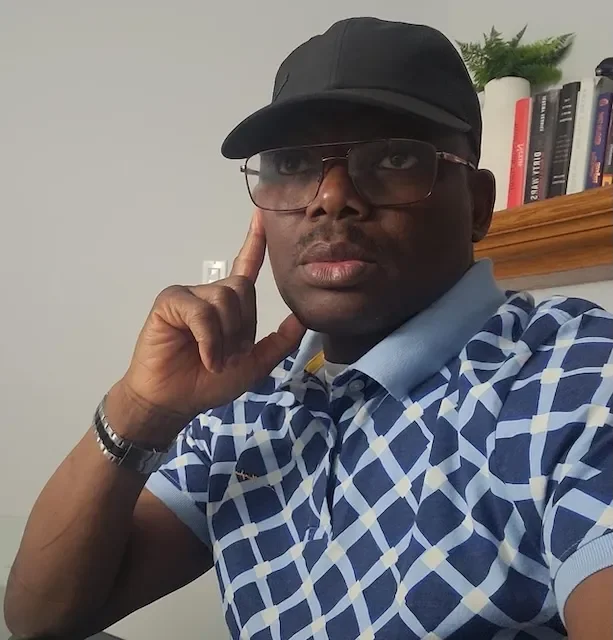
Akin Fadeyi, a citizens engagement and behavioural change expert, is the founder and executive director of the Akin Fadeyi Foundation.
** **