Your support helps us to tell the story
From reproductive rights to climate change to Big Tech, The Independent is on the ground when the story is developing. Whether it's investigating the financials of Elon Musk's pro-Trump PAC or producing our latest documentary, 'The A Word', which shines a light on the American women fighting for reproductive rights, we know how important it is to parse out the facts from the messaging.
At such a critical moment in US history, we need reporters on the ground. Your donation allows us to keep sending journalists to speak to both sides of the story.
The Independent is trusted by Americans across the entire political spectrum. And unlike many other quality news outlets, we choose not to lock Americans out of our reporting and analysis with paywalls. We believe quality journalism should be available to everyone, paid for by those who can afford it.
Your support makes all the difference.
Read more
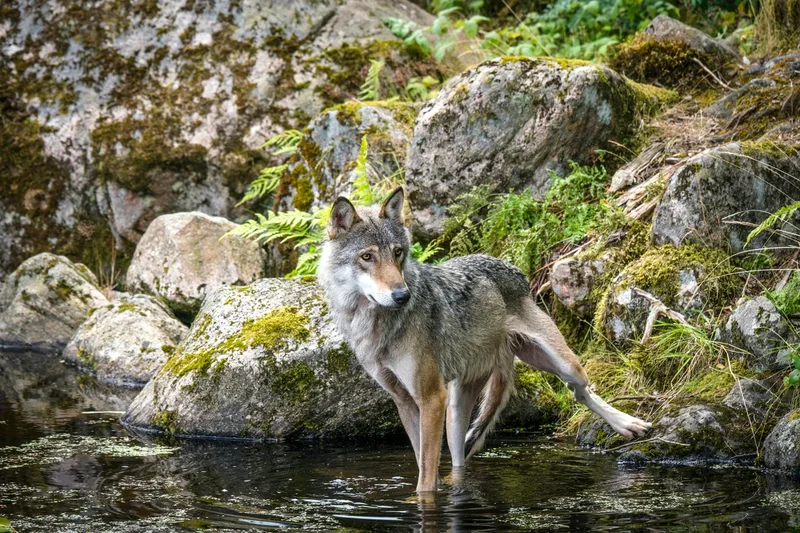
Authorities in Denmark have warned tourists to show “maximum resistance” in the event of a wolf encounter, following incidents of one young pup approaching humans.
The municipality of Varde and Visit Vesterhavet have distributed flyers with government advice to “show dominance” and “keep eye contact” in the area’s tourist offices.
Flyers add: “There have been no wolf attacks on people in Denmark, but should it happen, you must defend yourself by all means: hit, kick, and use any object at hand. If a wolf attacks another person or your dog, aim your blows and kicks at the wolf’s hindquarters.”
In May, several incidents with approaching wolves in the area around Oksbøl, Vejers and Blåvand indicated that “at least one young wolf is exhibiting significantly reduced shyness and approach behaviour towards humans”, said the Danish Centre for Environment and Energy (DCE).
In the Oksbøl region, wolves were observed close to people, dogs and summer cottages.
Wolves are slowly repopulating Denmark after returning to the country in 2012 after a 200-year absence.
By 2017, a wolf pack had settled in west Jutland.
According to monitoring by the Natural History Museum of Aarhus, 49 wolves have been recorded in the country this year.
It added that 10 territories have seven pairs of pups from 2025, three pairs without pups and a lone territorial male wolf.
One wolf in particular, a pup born in 2025, has appeared to be the most approachable and “shows a high degree of lack of shyness towards people”, said DCE.
It added that there is currently no immediate danger of attacks on people or overly aggressive behaviour.
Wolves are protected by EU law, but their status was recently downgraded from “strictly protected” to “protected” to allow governments to manage wolf populations in Europe.
Varde’s second deputy mayor, Sandie Eis Ravn, told The Guardian that the campaign was aimed at informing tourists: “If you are visiting somewhere and you know there is a wolf in the nearby forest, to make sure you have the right code of conduct when you meet this creature.”
Read more: This new 2,000-mile hiking trail crosses six European countries