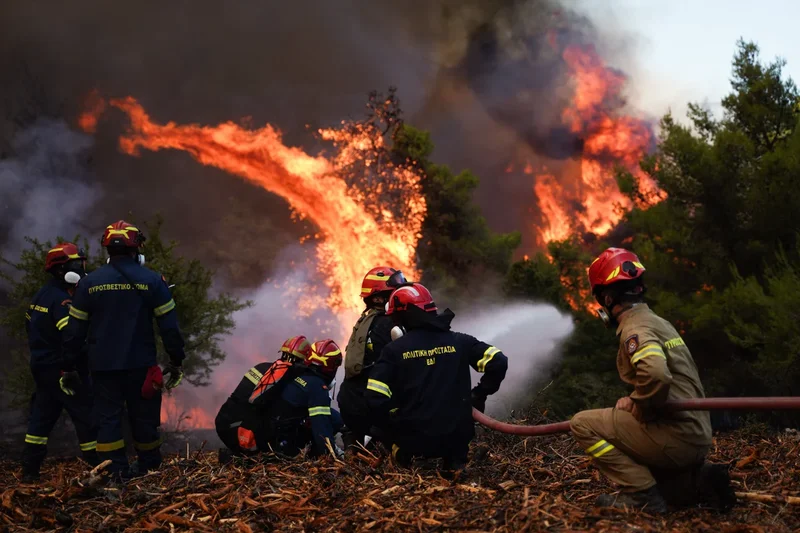
As a series of heatwaves causes wildfires across Europe, holidaymakers may be concerned about the safety of their summer travel plans.
In Greece, two firefighting helicopters collided while fighting wildfires west of Athens on Sunday.
Greek firefighters have been battling to control a huge wildfire that has destroyed over 100 homes northwest of Athens, while a fresh blaze forced evacuations on the popular tourist island of Kefalonia.
Here’s the latest travel advice for Greece, plus all the key questions and answers.
What happened and where are the wildfires?
Two firefighting helicopters collided in Greece while helping to control a huge wildfire on Sunday.
The fire has destroyed more than 100 homes northwest of Athens, while a fresh blaze forced evacuations on the popular tourist island of Kefalonia.
Europe has been ravaged by wildfires this summer after a period of record-breaking heatwaves and little rain – conditions that scientists say have been exacerbated by climate change.
What is UK government travel advice?
As of 2 August, the UK Foreign Office (FCDO) has not issued any specific travel advice regarding the wildfires in Greece.
General wildfire advice from the FCDO warns there is a “high risk” of wildfires during the summer season from April to October.
Travellers are advised to register mobile phones to receive emergency alerts and be warned of wildfires near their location.
The FCDO said: “Wildfires are highly dangerous and unpredictable. The situation can change quickly.”
Contact airline or travel operators for assistance with return travel to the UK in the event of an evacuation. More information can be found on the FCDO’s travel advice page for Greece.
Will my flight get cancelled?
Heraklion and Chania airports in Crete are currently operating departures and arrivals largely as scheduled.
However, travellers should prepare for potential flight delays and cancellations as wildfire blazes continue in the south of the island.
Can I cancel my holiday?
As the FCDO has not warned against travel to Greece, there are no exceptional grounds for cancelling a trip and receiving a full refund. The conditions for cancelling your trip will depend on your holiday provider, so it’s best to contact them if you’re looking to postpone.
Some travel insurance policies include natural disaster cover for an event that prevents you from reaching your holiday destination. Check with your insurer to understand your options.
Read more: Mapped: Devastating wildfires hit Greece after EU warns ‘whole continent’ at risk