TCCIMA proposes private sector role in Hormuz governance model
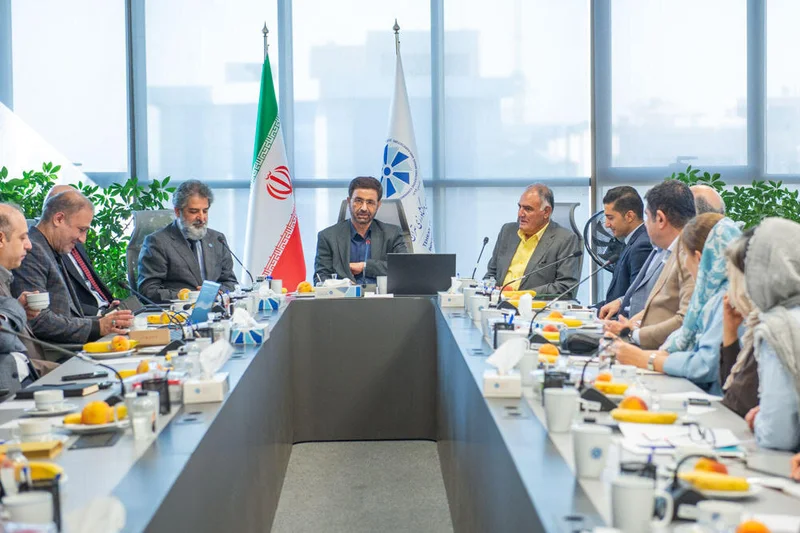
TEHRAN- At the 12th meeting of the Corporate Governance Committee of the Tehran Chamber of Commerce, Industries, Mines, and Agriculture (TCCIMA) held with the presence of a member of the National Security and Foreign Policy Committee of the Parliament, developments related to the governance of the Strait of Hormuz and the Persian Gulf, proposals put forward in policy-making bodies, as well as their effects on the private sector and the country's trade were examined.
In this meeting, Fada Hossein Maleki pointed out that the expert proposals of the Tehran Chamber of Commerce regarding the governance model for the Strait of Hormuz can play an effective role in formulating efficient policies and making better use of the economic capacities of this strategic waterway.
The members of the Corporate Governance Committee of the Tehran Chamber of Commerce, at their twelfth gathering, while reviewing the scenarios facing the region, emphasized the necessity of active private sector participation in policy-making, reforming economic governance, and formulating policy packages to increase trade resilience and utilize the geo-economic capacities of the Strait of Hormuz.
Hassan Forouzanfar, head of the Corporate Governance Committee of the Tehran Chamber of Commerce, at the beginning of this meeting, referring to the importance of examining regional developments for economic actors, said: "Any major development in the region, especially in the Persian Gulf area, can affect the country's economic and commercial activities; therefore, economic actors' awareness of the current situation and the scenarios ahead plays an important role in planning enterprises for continuing operations and managing risks."
The head of the Corporate Governance Committee of the Tehran Chamber of Commerce, referring to the vastness of the country's economic actor community, said: "More than 100,000 members of chambers of commerce operate in various economic and commercial fields, and decisions related to regional developments can directly or indirectly affect the performance of this sector."
Continuing the meeting, Davoud Khani, an expert of the Corporate Governance Committee of the Tehran Chamber of Commerce, presented a report on studies conducted regarding the consequences of recent regional developments and addressed the economic importance of the Strait of Hormuz.
Stating that "this waterway is considered one of the most important energy and trade transit routes in the world," he added: "Any change in the conditions governing the Strait of Hormuz can, in addition to the energy market, affect transportation costs, insurance, the supply chain, and the flow of international trade."
Khani emphasized: "The issues surrounding the Strait of Hormuz are not merely security or military matters, and the manner of governance over this strategic capacity can affect the future of foreign trade and the activities of the country's economic enterprises."
Referring to future-oriented studies conducted at the Tehran Chamber of Commerce, he considered three scenarios: the continuation of the current fragile situation, the escalation of regional tensions, and the formation of broader agreements, and said: "In each of these conditions, the government, the private sector, and specialized institutions must, with a forward-looking approach, determine their role and responsibility in managing the consequences."
This expert of the Corporate Governance Committee of the Tehran Chamber of Commerce added: "The Tehran Chamber of Commerce intends, relying on its expert capacity, to provide the necessary policy proposals for strengthening the economic governance of the Strait of Hormuz and increasing the role of the private sector in the decision-making process."
Subsequently, Dr. Fada Hossein Maleki, a member of the National Security and Foreign Policy Committee of the Parliament, while appreciating the expert report presented, said: "The studies conducted in the Corporate Governance Committee of the Tehran Chamber of Commerce can pave the way for formulating expert proposals to be submitted to decision-making bodies."
Emphasizing the necessity of using private sector capacity in economic decision-making, he added: "One of the existing challenges is the failure to fully utilize the capacity of economic actors in the policy-making process; while the experience and knowledge of the private sector can help improve the quality of decisions and increase the efficiency of policies."
Maleki, referring to the economic importance of the Strait of Hormuz, stated: "This waterway should be considered not only from a security perspective but also from an economic standpoint, and its capacities for trade development, investment, and value creation should be utilized."
He continued: "Iran, with its special geographical position, access to open waters, proximity to various countries, and being located on important regional routes, has considerable capacities for developing economic interactions, and these advantages must be utilized through coherent planning."
This member of the National Security and Foreign Policy Committee of the Parliament, referring to the existing capacities in the country's southern coasts, considered the development of economic cooperation with neighboring countries, utilization of the Makran coasts' capacity, strengthening the position of Chabahar port, and completing regional communication routes as requirements for enhancing Iran's role in regional and international trade.
Maleki also emphasized the necessity of clearly defining the role of institutions in the economic governance model of the Strait of Hormuz and said: "The government should be responsible for policy-making and regulation, the private sector should play a role in investment, implementation, and innovation, and specialized institutions should support the decision-making process by providing expert studies."
Referring to the importance of using modern financial instruments in international trade, he added: "Utilizing new financial mechanisms can help reduce transaction costs, facilitate trade, and increase the speed of economic interactions."
Maleki further emphasized the continuation of cooperation between the Parliament, the government, and the private sector and said: "The expert proposals of the Tehran Chamber of Commerce regarding the governance model for the Strait of Hormuz can play an effective role in formulating efficient policies and making better use of the economic capacities of this strategic waterway."
Subsequently, the head of the Corporate Governance Committee of the Tehran Chamber of Commerce, emphasizing the necessity of private sector participation in formulating the governance model for the Strait of Hormuz, said: "The private sector, relying on its operational experience, can offer proposals to complete this model and increase its efficiency."
In another part of this meeting, Diako Hosseini, deputy for economic studies and future studies of the Tehran Chamber of Commerce, referred to recent regional developments and said: "The conditions facing Iran's economy and trade cannot be analyzed merely within the framework of a political or security dispute, because these developments also affect communication routes, international trade, and the country's regional position."
Stating that "a significant part of Iran's foreign trade depends on the Persian Gulf," he added: "The continuation of uncertainty in the region has increased the necessity of reorganizing the structure of the country's foreign trade, developing alternative routes, and expanding economic cooperation with neighboring countries."
Hosseini emphasized: "Some of the obstacles to trade development have domestic roots, and reforming administrative processes, reducing redundant regulations, and facilitating trade with regional countries are measures that, without dependence on external conditions, can enhance Iran's trade position."
He also announced the implementation of a joint project between the Tehran Chamber of Commerce and the Vice Presidency for Strategic Affairs to identify existing challenges at border crossings and said: "In this project, infrastructure, regulatory, and operational issues of the country's borders will be examined with the participation of the private sector, and short-term, medium-term, and long-term solutions will be proposed for them."
Continuing, Farshid Shokrkhodaei, head of the Sustainable Development Committee of the Iran Chamber of Commerce, emphasized the necessity of formulating a comprehensive policy package to manage the new economic conditions and said: "The private sector needs to be aware of the country's macro-orientations in the fields of trade, transportation, financial transactions, and regional cooperation for planning and continuing its activities."
Shokrkhodaei, referring to increasing production costs and limited financial resources, emphasized the necessity of greater coordination of economic policies with producers' needs and facilitating enterprises' access to financial resources.
Amin Sadrnezhad, vice-chairman of the Corporate Governance Committee of the Tehran Chamber of Commerce, cited revising the method of economic governance, reducing administrative barriers, and increasing coordination among executive bodies as requirements for enhancing the resilience of economic enterprises.
Also, Neda Kordouni, advisor for social responsibility of the Tehran Chamber of Commerce, emphasizing the importance of utilizing the capacity of border residents, sailors, and chambers of commerce in southern provinces, said: "Participation of local communities in formulating the governance model for the Strait of Hormuz can contribute to the sustainable development of coastal and border areas."
Tahereh Kharestani, who is active in the field of corporate social responsibility, referring to the environmental consequences of regional developments, considered simultaneous attention to economic, social, and environmental dimensions as one of the requirements for sustainable governance of this strategic waterway.
Mehdi Fanaei, a member of the Board of Representatives of the Tehran Chamber of Commerce, also emphasized the necessity of effectively using private sector capacity in decision-making processes and said: "Utilizing the specialized knowledge and executive experience of economic actors can improve the quality of policy-making."
Continuing, Maleki, referring to the proposals put forward in the Parliament regarding the economic governance of the Strait of Hormuz, said: "So far, 13 proposals related to this field have been raised in the Parliament, and after the reviews, a committee has been formed to summarize the views and formulate the final framework."
Maleki, emphasizing the position of economic actors and holders of trade cards as direct stakeholders of economic policies, said: "The private sector should have an effective presence in decision-making processes related to trade and economic policies."
He noted: "Designing appropriate mechanisms for private sector participation can provide the basis for better utilization of the country's economic capacities, development of regional trade, and strengthening of economic governance."
EF/MA