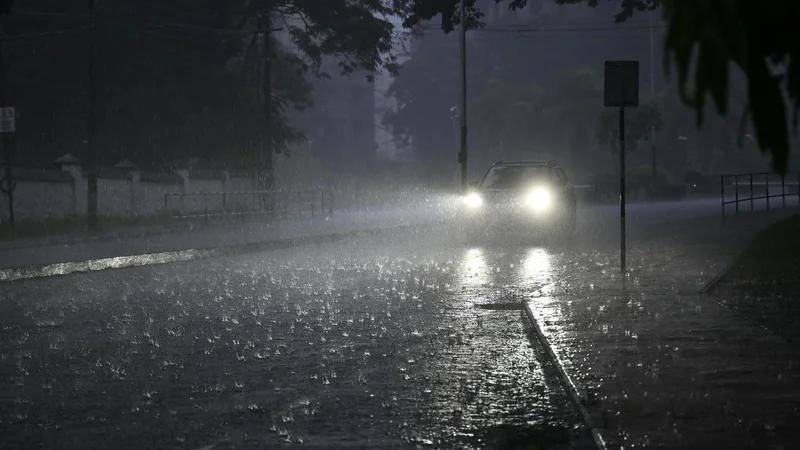
Though Wayanad has witnessed heavy rain over the past few days, cumulative southwest monsoon rainfall in the hill district remains around 50% below normal after the first two months of the season.
Data released by the Hume Weather Lab of the Hume Centre for Ecology and Wildlife Biology shows that Wayanad received only 802 mm of average rainfall between June 1 and July 31, against the India Meteorological department (IMD) normal of 1,600 mm for the period.
This year, the onset of the southwest monsoon was delayed, a phenomenon experts attributed to the combined influence of global climate change and the El Niño phenomenon.
“The recent spell of heavy rain has, however, brought some relief. Between July 27 and 31 (five days), Wayanad recorded 199 mm of rainfall, accounting for nearly 25% of the total rainfall received during the past two months. The prevailing wet spell is expected to continue until August 4,” said C.K. Vishnudas, executive director of the Hume Centre for Ecology and Wildlife Biology.
Rainfall distribution across the district has remained highly uneven. Lakkidi recorded the highest rainfall at 2,548 mm, while Muthanga received the least at just 228 mm. Among local bodies, Thondernad grama panchayat registered the highest average rainfall of 1,990 mm, whereas Noolpuzha grama panchayat recorded the lowest average of 277 mm.
The late July rain has also brought down temperatures across Wayanad. The average daytime temperature has dropped to around 25°C over the past five days, ending the unusually warm conditions that prevailed during the early weeks of the monsoon when rainfall remained scarce.
Published - August 02, 2026 02:21 am IST