A few years ago a woman was referred to me because she couldn’t sleep and had low mood. For the first two appointments, that was all we talked about, since she’d been waking at 4am every morning and it had started to affect her work.
The woman was in her late 40s, well dressed, very dry and funny and she ran a department of 30 people. Nothing about her suggested she was ill with anything at all.
It was only during her third appointment – when I asked in passing what she’d had to eat that day and she went completely still – that I understood what I was actually looking at. She had been unwell for 26 years with an eating disorder.
In all that time, she had never told her husband, never mentioned it to her GP and had never been referred to an eating disorder service. She had become adept at hiding the daily struggle she had with food.
I worked in an NHS specialist eating disorder service for ten years and I know quite a bit about this area of medicine – but even I hadn’t clocked that this woman had a problem.
Most of us, even many doctors, carry around a particular picture of anorexia and it’s a teenage girl in a hospital bed. This means that we only recognise the illness at its most extreme and in its youngest patients.
The largest British study of women in mid-life was published in 2017. It interviewed more than 5,500 women face to face and found that more than 15 per cent had met the criteria for an eating disorder at some stage – and getting on for 4 per cent had been ill with one within the previous year.
Among the women who were currently unwell, more than four in ten had become ill during middle age. Their illness had developed in their 40s, often due to the strains of divorce, bereavement, children leaving home and elderly parents who suddenly needed them.
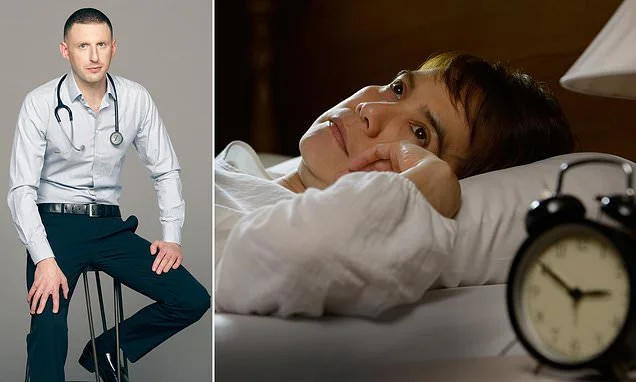
A patient was referred to Dr Max because she couldn’t sleep and had low mood – she had been unwell for 26 years with an eating disorder
Fewer than three in ten had sought or been given any help at all and only about 8 per cent had mentioned it to their GP.
Several said that the interview was the first time they had spoken about it to anybody.
Part of the reason that these cases get missed is that they are not ‘textbook’. But not fitting the criteria doesn’t make you less ill; it means the criteria were drawn around somebody else.
There’s another reason why many people don’t get diagnosed, even though other doctors and I did our best to resist it. The service I worked in wouldn’t accept a referral unless the patient was below a set weight threshold. So some patients were turned away despite having an eating disorder which caused great distress in their life.
You can imagine the damage this caused. That threshold came from an old diagnostic manual drawn up with teenagers in mind. Thankfully, that policy has now been abandoned, as we now know how poor a guide the scales are.
Last November, the first national survey to clinically assess eating disorders in England found that not a single adult identified as having one fell into the underweight category. Its findings ought to stop any service still using weight as a reason to turn someone away. The National Institute for Health and Care Excellence’s guidance instructs doctors not to use single measures such as weight, or how long somebody has been ill, when deciding whether to offer treatment. But services do it anyway.
If you have been turned away, take that information to your GP because it is national guidance and it’s on your side.
If somebody has come to mind while you’ve been reading this, the signs you need to look out for are subtler than you might expect: she (or he) has always already eaten, somewhere else, earlier on; she talks about being healthy and eating clean in a way that sounds less like a choice and more like a slightly unhealthy obsession; she exercises when she’s ill, exhausted or on holiday; she gets very upset when a plan changes or somebody else picks the restaurant; and she has quietly stopped turning up to anything that involves sitting down to eat.
What helps is, unfortunately, what people rarely try. Don’t comment on her weight and don’t watch what is on her plate because this shows that she is being observed, which is the thing she dreads most.
Say what you have noticed about her behaviour rather than what you have concluded. Ask once and ask kindly, and be prepared to ask again in a month.
And if you’re the person silently struggling with this, you should know that it is never too late to seek help. I have watched people get better who had been told, and had come to believe, that they never would.
You’re not too old and you haven’t left it too late and you certainly don’t have be a particular weight to deserve help.
- The charity Beat’s eating disorders helpline is 0808 801 0677.
Holly's brave reveal over 'ship sailing'
Former This Morning presenter Holly Willoughby has launched Together, a new YouTube series
Holly Willoughby has launched a YouTube series called Together and recently, when speaking to comedian Katherine Ryan, she admitted something most women wouldn’t dream of saying out loud.
Katherine, 43, had her fourth child – a daughter named Holland – last October. Holly found herself thinking that perhaps she, too, should have another child. She is 45 and has three already. But she realised that ‘ship had sailed’ and felt jealous of Katherine.
But I don’t think jealousy is quite what Holly was describing. What she really expressed was the acknowledgement of a door closing; and mourning a version of life that is no longer available to you isn’t envy at all, it’s grief.
Holly gave it away with that phrase about the ship having sailed. She was talking about a decision that, without her really noticing, stopped being a decision at some point.
Something I see again and again in clinic is that when women say they want another baby, it turns out that many of them don’t actually want a newborn at all. What they want is to be needed in the way they were when their children were small.
A woman of 45 with three children isn’t supposed to admit to this because it sounds greedy or a bit ridiculous. Holly said it on camera, and I suspect a great many people watching recognised themselves and felt less embarrassed for it.
Andy Burnham says carers ought to be the best paid people in society. He’s right. Two carers visit my Mum four times a day. They are patient, know how to move her and always make her laugh. I’m enormously grateful that they do.