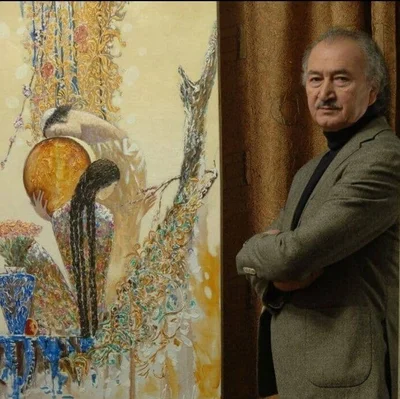
TEHRAN – An exhibition of selected paintings by Akmal Nuriddinov, President of the Uzbekistan Art Academy and one of the country’s prominent contemporary painters, will be held online on the website of the Iranian Academy of Arts.
More than 27 works by Nuriddinov will be presented in this virtual exhibition, which seeks to strengthen cultural and artistic diplomacy, introduce contemporary Uzbek art, consolidate scientific, research, and artistic cooperation between the two countries, and expand cultural ties with Central Asian nations.
By introducing the works of one of Uzbekistan’s leading contemporary artists, this exhibition provides a foundation for the mutual recognition of artistic capacities, the exchange of experiences, and the creation of bonds between the artists and researchers of both countries, IRNA reported.
This program aims at expanding sustainable cooperation, mutually introducing Iranian and Uzbek artists, and creating a space for presenting Iranian art in Central Asian countries and the art of this region in Iran; an approach that helps to deepen cultural relations and elevate the status of art in regional interactions.
Akmal Nuriddinov, 67, is one of the best-known artists of Uzbekistan. Having graduated from the Republican Art School named after P. Benkov in 1978 and the Tashkent State Institute of Arts named after M. Uygur in 1984, he started his work mastering his artistry in the best Tashkent arts studios.
In 1997, Akmal Nur became an academician and an active member of the Academy of Arts of Uzbekistan. In 2003 he was awarded the title of People’s Artist of Uzbekistan.
Regarding his artistic approach, he says: “My art takes shape between the manifest and the hidden; between the material reality of the human body and their internal, spiritual experience. What occupies me more than the representation of the outer world is revealing states that transcend form and appearance: silence, passion, love, loneliness, memory, and the human longing for the Absolute.”
According to the painter, his works are rooted in a dialogue with the philosophical and cultural heritage of the East, particularly the Sufi understanding of love, and serve as a path toward self-discovery.
SS/SAB