Woodlands Hospice opens; plans for 70 beds to serve palliative care needs in the North
AI generated
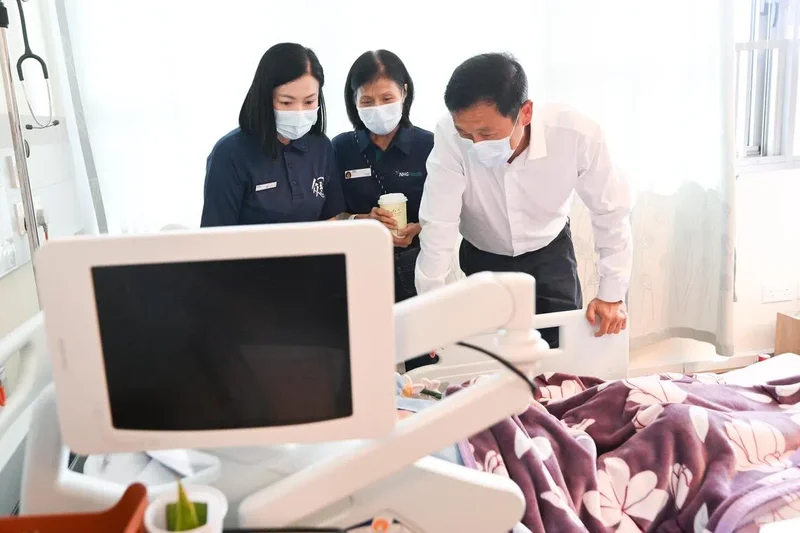
SINGAPORE - Woodlands Hospice, which opened its doors on July 1, is bringing end-of-life specialist care to those in the north.
While the hospice currently has 16 beds in one ward within Woodlands Hospital (WH), there are plans to increase the capacity to 70 beds, which would make it one of the largest inpatient hospice facilities in Singapore.
“This is a very significant development in the North, because we have end-of-life (care) providers like Assisi Hospice, Dover Park Hospice and HCA that are active throughout the island, but in the North, we never had a dedicated provider”, said Health Minister Ong Ye Kung when he officially opened the hospice on Aug 3.
Ong, who is also Coordinating Minister for Social Policies, added that the palliative care sector has developed rapidly over the years, including stepping up of the financial support for palliative care and expanding capacity.
However, he said that Singaporeans and society also need to learn to cope with end-of-life care, specifically caring for patients who have suffered heart attacks or strokes, as their death could come very suddenly, leading to families questioning the treatments and care provided.
“We need to assure the public that healthcare workers will always act professionally and actively in the patient’s best interest...professionals will do their best to treat patients suffering from sudden heart attacks and strokes,” added Ong.
“But when it is very severe, there will come a point in time, when the doctors assess that aggressive treatment no longer has the prospect of reversing physical prognosis, and it may in fact prolong the suffering of the patient.”
Woodlands Hospice is jointly operated by WH and Ren Ci Hospital.
WH chief executive Joe Hau said the hospital provides resources of an acute hospital, coupled with palliative care expertise through its specialists.
It is meant for patients who are too sick to stay at home, to give them a space where they and their families can feel comfortable and at ease.
Patients continue to get access to tests and investigations, specialist consultations and hospital services when needed, while being cared for in a familiar environment, he added.
WH had previously cared for patients with pallative care needs in its community hospital ward from May 2024.
Separately, Ren Ci Hospital has expertise within its nursing, allied health, and psychosocial care staff. It also has experience in caring for those with complex and longer-term care needs.
In addition, in a first, Cheng Hong Welfare Service Society (CHWSS) is the community care partner in this integrated hospice care model.
The society has committed $6 million over the next six years to support the hospice through various programmes which are still in discussion, and will work with both hospitals to strengthen support for patients and their families through activities such as befriending, horticulture, companionship during outdoor activities and fulfilling last wishes.
Established in 2004, the society currently operates 10 Traditional Chinese Medicine clinics - including one mobile clinic, providing pro bono treatment and medication to vulnerable communities. Since 2012, it has offered free funeral and bereavement support to families, regardless of race or religion.
Hospice expected to care for more than 2,900 patients over next six years
The hospice is currently located at the seventh storey of WH in a dedicated ward E71.
Since it began operations on July 1, about 30 patients have been cared for there. The average length of hospice stay was between two to three weeks.
The hospice cares for patients with conditions such as advanced cancer and organ failure. It accepts patients transferred from WH, as well as referrals from home hospice partners and doctors whose patients are cared for in other hospitals and nursing homes.
Ren Ci Hospital’s chief executive Yong Keng Kwang told The Straits Times that the hospice will expand its capacity to 50 beds in the next four to six years with a second ward E72.
In the longer term, the capacity can grow to 70 beds by tapping other WH wards depending on actual demand, said Yong.
Currently, the largest bed capacities of standalone hospices or community hospitals can range from a maximum of 70 to 100 beds. There are about 10 standalone hospices and community hospitals with hospice wards in Singapore.
Over the next six years, Woodlands Hospice is expected to serve more than 2,900 patients.
Ong said in April that his ministry has set a target of training 10,000 nurses and healthcare workers in generalist palliative care by 2030.
The aim is to upgrade the core skills of as many healthcare workers as possible, instead of viewing palliative care as a specialised skill for a small group of healthcare workers, said Ong.
Responding to this call, Hau said palliative and geriatric care had been included in the hospital’s internal nursing core-competency training, even before WH was fully opened.
He added that currently, close to 1,000 staff have completed the essential palliative care training, and training of all 1,900 nurses is underway.
Facilities and services for patient comfort and dignity
The hospice has an activity area, sensory room with a a calm and immersive environment, family lounge and personalised patient spaces.
Patients are encouraged to wear their own clothes rather than hospital garb, and to spend time with their loved ones, such as by participating in activities that create memories.
The hospice provides programmes such as music therapy, art therapy and volunteer-led activities which could also give families and caregivers emotional and practical support.
“Together, we will create more than a hospice. We are creating a place where patients and families can find comfort, dignity and peace; and where the community comes together to care for one another when it matters most”, said Hau.