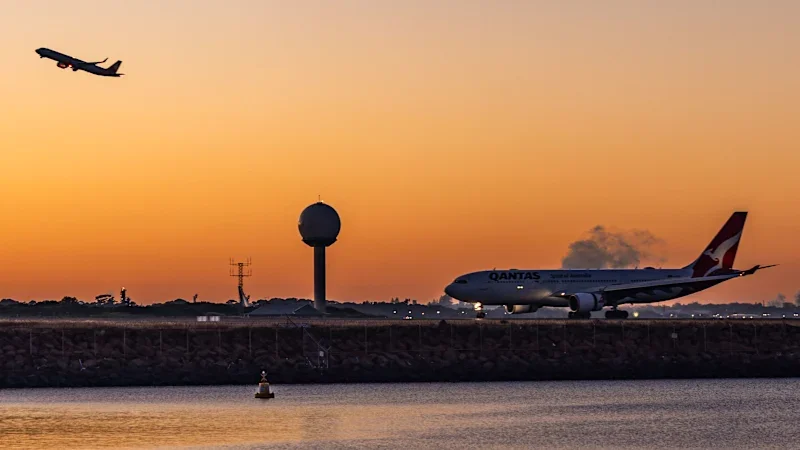
Living under a flight path, next to a cemetery, beneath electricity transmission lines, close enough to get the whiff of a nearby tip, or near enough to suck in freeway fumes: These are the trade-offs first home owners are making to get a foot on the property ladder.
Iconic Australian comedy The Castle’s protagonist, Darryl Kerrigan, famously loved “the serenity” of his heavily powerline-infested rural getaway, and his son, Dale, saw the bright side in the family’s city home being next to an airport, saying: “It will be very convenient if we ever have to fly one day.”
First home owners aren’t laughing.
A report from Westpac, the country’s second-largest home lender, headlined “Postcode Trade-off” paints a picture of the lengths to which some would-be home owners are prepared to go to reach stage one of the property ownership dream.
The Castle parody now feels like first home buyers’ reality.
Westpac describes it as a readjustment of expectations but it could be more adequately described as an alarming compromise. The Westpac survey says three-quarters of buyers are now willing to move into an area that they hadn’t previously considered thanks to affordability pressures.
And buyers are also more prepared to buy an apartment – another trade-off.
But under power lines, next to a data centre or having your wake-up alarm as the Qantas arrival from Singapore?
The Westpac report says the list of deal-breakers for home buyers – such as proximity to a waste dump, a data centre or an airport flight path – are increasingly being readjusted by first home owners in their desperation, thanks to being outrun by years of rising property prices.
Interestingly, there is conflicting evidence around what new and aspiring home owners think about the federal government’s tax policies around capital gains and negative gearing.
They were designed to take the heat out of property prices – and on that score have been wildly successful.
National house prices are showing a clear pattern of decline as a result of the government’s tax policy combined with rising interest rates.
The latest home values have been released for the month of July and show that in Sydney, the median house value dropped 1.7 per cent and is down 5.9 per cent since the beginning of the year.
Despite the fall in prices, the median house value in Sydney remains above $1.5 million, so getting into the market is still a stretch for first home aspirants on an average wage.
Melbourne’s house values fell by 1.4 per cent in June to be down 3.4 per cent over the past 12 months to $936,528. The city remains the weakest market in the country, with the median dwelling value – which includes houses, units and apartments – now 1.6 per cent down on where it was five years ago.
And thanks to auction clearance rates remaining depressed, all the signs point to values continuing to fall until interest rates start falling, which will not happen this year.
The good news is that according to Westpac, half of Australians think the recent changes to negative gearing and the capital gains tax will have a positive impact for aspiring homebuyers. Gen Z feels the most optimistic about the policy changes.
That said, the evidence is also clear that applications for home loans have fallen off a cliff and that includes first home buyers, not just the investors that the government’s tax policy was targeting. Buyers/borrowers are risk-averse to catching a falling knife – buying into a market in which house values are falling.
They clearly appreciate house values going down but they would prefer to be the beneficiary of this movement rather than the victim.
The Business Briefing newsletter delivers major stories, exclusive coverage and expert opinion. Sign up to get it every weekday morning.