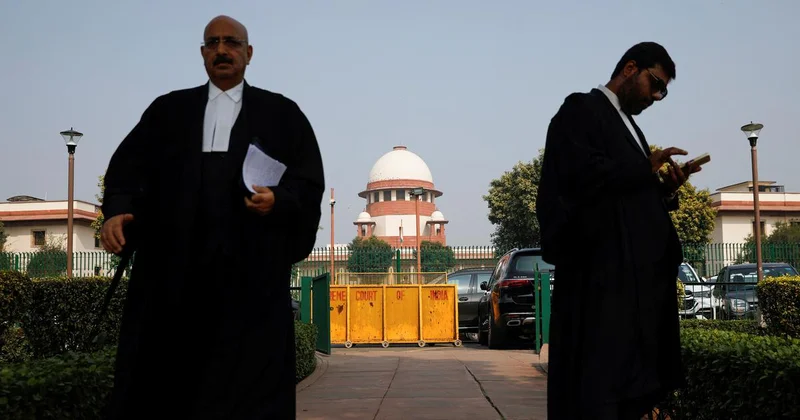
The Supreme Court on Monday clarified that states can withdraw first information reports filed against youth protesters wherever permissible, in accordance with the law, Live Law reported.
The clarification came in response to concerns raised by petitioners that the court’s July 28 order, which allowed states to continue investigations into the FIRs, could hinder the withdrawal of cases. They argued that closing the FIRs was part of the Union government’s promise to leaders of the Cockroach Janta Party political campaign to end the protests.
It also came after the Union government submitted that it was “serious” about its assurance that amnesty would be granted to students who had participated in demonstrations, The Hindu reported.
In its July 28 order, the Supreme Court had directed that minors who had been detained should be released and no coercive action should be taken against protesting students as long as they did not have any “criminal antecedents”.
On Monday, the bench also clarified that the term “criminal antecedents” in the order referred only to “grave and heinous offences”.
The Cockroach Janta Party campaign on Monday said that following the Supreme Court’s clarification it expects all states with Bharatiya Janata Party governments “to immediately honour the assurances given on 25 July to the young of this country”.
“The youth of this country honoured their word,” Saurav Das, a spokesperson for the campaign said. “It is now time for the government to honour its own immediately.”
The Supreme Court’s order had come on a batch of petitions alleging that the police used excessive____ ____force against protesters marching to Parliament in Delhi on July 20.
During the protest, several demonstrators were injured after the security personnel used lathis, fired tear gas and pellet guns to disperse the crowd.
The petitioners also pointed out instances of the police in Bihar using allegedly excessive force against protesters who were demonstrating in solidarity with the youth agitation in Delhi.
On July 25, three protesters were injured after the police opened fire on demonstrators in Bihar’s Siwan district.
Following this, a batch of petitions was filed in the Supreme Court, seeking nationwide guidelines to regulate police action during protests, including a ban on the deployment of plainclothes personnel for crowd-control duties.
The petitioners also sought guidelines to regulate the use of prohibitory orders under Section 163 of the Bharatiya Nagarik Suraksha Sanhita. The provision grants the authorities the power to issue orders in urgent cases of nuisance or apprehended danger.
The agitation in Delhi started on June 6, when the Cockroach Janta Party began a protest at Jantar Mantar to demand the resignation of Dharmendra Pradhan, the Union education minister at the time, over the alleged irregularities in the conduct of competitive exams. Solidarity protests were held in several states. Pradhan resigned on July 25.
Plea in SC action against organisers of protest
The Supreme Court on Monday agreed to hear a petition seeking action against the “organisers” of the July 20 march to Parliament for allegedly inciting violence, Live Law reported.
The petition, filed by a retired Air Force Officer, also proposes that minors who posted purportedly abusive content about Prime Minister Narendra Modi should be made to perform community service instead of facing criminal prosecution.
Edited by Nachiket Deuskar.
*Also read: *
We welcome your comments at letters@scroll.in.