British academic Alice Roberts has called out BBC Radio 4’s Thought for the Day, calling it “historically ignorant”.
The broadcaster, author and scientist said she had the “misfortune to catch” the radio segment while driving to work on Monday morning (3 August).
Billed by the BBC as “reflections from a faith perspective on issues and people in the news”, Thought for the Day was first broadcast in 1970 and is aired for approximately three minutes in the mornings during the Today programme, Monday through Saturday.
The episode in question welcomed guest Catherine Pepinster, a historian and writer whose focus is theology, to speak about the recently released documentary Wham! 10 Days in China – about the band’s 10-day tour of the country in 1985, which made them the first pop act to visit the Communist country.
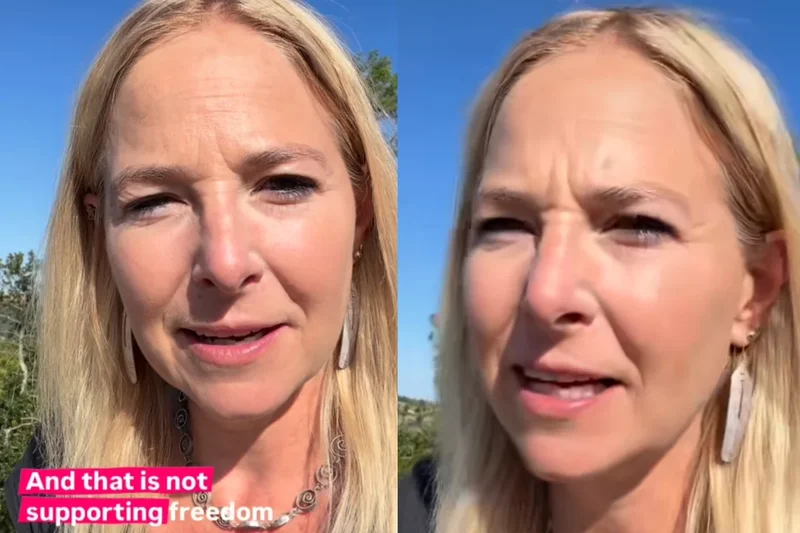
Speaking in a video posted to Facebook, Roberts said: “Somehow [Pepinster] managed to turn that around to talk about the challenges that she had encountered as a Christian in China – and how unfair it was that it was seen as something tied up with Western hegemony when actually [she said] it was all about freedom of belief.”
“It’s just extraordinarily historically ignorant to talk about Christianity in that way,” said Roberts, who took issue with Pepinster’s comments, which seemed to ignore the role Christianity played in the Roman and British empires.
In the episode, Pepinster spoke about her recent visit to China a few years ago, during which “my group was followed by government officials everywhere” and said that, “like those who follow other religions in China, their members face abuse and constant harassment”.
“Part of the tension over Christianity is that even though there is evidence that Christianity first arrived in China around 625 in the Christian era, and today there are at least 44 million Christians, probably more, Chinese officials see Christianity as Western and alien to their culture,” she said.
“But Christianity does not belong to one nation or one continent; God does not have a passport identifying his nationality. It is as much for the Chinese as it is for anyone else. It offers dreams and aspirations, as Andrew Ridgeley said of music. But it needs a place to start.”
In response, Roberts said: “Christianity was a religion of empire since the Romans adopted it as their state religion, and then it was a religion of empire, of course, for the British Empire and others as well. It was the religion that basically supported the monarchies of Europe.
“And so to kind of disassociate it in that way is just… it is historically ignorant.”
Roberts argued against the idea of Christianity as “a completely benign influence around the world”, stating: “When the British empire and Christian empires were expanding, very often the first thing they were doing is sending in clerics to set up institutions, and that is the beginning of Imperial expansion and to say otherwise is so ignorant.”
Roberts went on to criticise Thought for the Day in general, adding: “To go from Wham! to Christianity in China, and then to be criticising China for suppressing freedom of belief in a slot on Radio 4 where you can only actually speak in that slot if you subscribe to religion – given that half of Britain is not religious – that’s extraordinary. And that is not supporting freedom of belief.”
“The BBC is meant to be a public service broadcaster,” she continued. “Pushing religion at us in a news programme in the morning. It seems very, very odd and that’s not in service of the whole population so they either need to open it up or get rid of that slot, I think.”
In 2009, BBC rejected calls for the programme to include non-religious speakers, ruling that it is not a breach in impartiality to exclude views from atheists, secularists and humanists.
The Independent has contacted representatives for the BBC and Pepinster for comment.
The segment has been a source of contention for the BBC, with veteran presenter John Humphrys calling it “deeply boring” in 2017.
Humphrys said it seemed “inappropriate” that the Today programme should broadcast “nearly three minutes of uninterrupted religion, given that more than half our population have no religion at all”.
“When you’re presenting [Today], how many times have you said to yourself, ‘Dear God, we’ve got to cut a really fascinating programme short because we’re now going to hear somebody tell us that Jesus was really nice, and the world could be a better place if we all …’ You know … Oh God,” he said.
It is not the first time that Thought for the Day has run into trouble. Last year, the BBC apologised and retrospectively edited an episode of the segment after the head of a refugee foundation described comments by Robert Jenrick, the then shadow justice secretary, about asylum seekers as “xenophobia”.
The broadcaster said it had removed “some of the language used” by guest Krish Kandiah, a theologian, saying it was not appropriate for the faith-based radio show.
During the episode, Kandiah had quoted from Jenrick’s article published in the Mail on Sunday. “[Jenrick] said: ‘I certainly don’t want my children to share a neighbourhood with men from backward countries who broke into Britain illegally, and about whom we know next to nothing.’ These words echo a fear many have absorbed. Fear of the stranger. The technical name for this is xenophobia.”
Kandiah said such fears were irrational and that most arrivals on small boats were fleeing “war, persecution and famine”.
A BBC statement said of the item: “While its reflection on fear in society from a faith perspective is broadly in line with expectations of Thought for the Day, some of the language it used went beyond that and we apologise for its inclusion.”
The corporation also apologised to Jenrick.