PERU · AVIATION, 3 AUGUST 2026
A tourist plane crashed near Peru’s Nazca Lines on 1 August 2026, killing all 13 people aboard, in one of the deadliest accidents to strike the sightseeing flights that draw visitors to the ancient desert geoglyphs.
What happened
The single-engine aircraft came down about 2km from the Nazca airfield shortly after midday on Saturday, according to Peruvian authorities. It had taken off from Pisco Airport to carry passengers over the Nazca Lines, the pre-Columbian geoglyphs etched into the desert of the Ica region and inscribed on the UNESCO World Heritage list.
The crew reported a mechanical problem in flight before radio contact was lost, officials said. The plane lost stability and crashed into farmland near the archaeological zone. All 13 people on board were killed. There were no survivors, and rescue crews recovered the remains at the scene as the authorities began the formal work of identification.
Emergency teams reached the site during the afternoon. The authorities have not released a detailed account of the final moments and have cautioned that the cause will be established only once the investigation is complete.
The Ica region sits on Peru’s southern desert coast, and the Nazca Lines are one of its principal draws. The overflights typically climb to a few hundred metres and bank steeply so that passengers on both sides of the cabin can photograph the figures below, a manoeuvre that leaves little margin if a technical fault develops at low altitude.
The aircraft and the operator
The aircraft was a Cessna 208B Grand Caravan registered OB-2001-P, a single-engine turboprop widely used for regional and sightseeing flights and certified to carry up to 14 passengers. It was operated by Aerodiana, a Peruvian carrier that has run scenic flights over the Nazca Lines for about 14 years.
Aerodiana is one of several operators offering the short loops that let visitors see figures such as the hummingbird, the monkey and the condor from the air, since the scale of the designs is difficult to appreciate from the ground.
The company has not issued a detailed public account of the cause and, under the suspension order, its flights are grounded while the inquiry proceeds. The order applies to the whole company rather than a single aircraft, halting its scenic routes until regulators are satisfied that its operations meet the required standards.
The Cessna 208B Grand Caravan is one of the most common aircraft in light commercial aviation worldwide, valued for its reliability on short strips and its single-engine simplicity. Thousands are in service, and the type has a long record on sightseeing and feeder routes, which is likely to focus the investigation on the specific airframe, its maintenance history and the reported fault rather than the model as a whole. Investigators will also review the aircraft’s recent flights and servicing to build a picture of its condition before the accident.
The victims
Eleven of the dead were foreign tourists: seven Italian nationals, two German nationals and two Spanish nationals, according to Peruvian authorities. The two crew members were the pilot, Américo Salazar, and the co-pilot, Irenka Guanilo del Carpio.
Consular officials from the affected countries were notified as identification and repatriation procedures began. Peruvian agencies said they were working with the families through the relevant embassies.
The predominance of Italian, German and Spanish nationals underlined the international profile of the Nazca overflights, which draw travellers from across Europe and beyond. For the small communities that host the flights, the shared nationalities of the victims turned a local accident into a matter of consular attention in several capitals at once.
The loss of life makes the crash one of the most serious to hit the Nazca overflight business, a long-running fixture of the regional tourism economy. The scale of the loss, and the fact that so many of the dead were visitors from abroad, gave the accident an international dimension from the outset.
The suspension and investigation
Peru’s Ministry of Transport and Communications ordered Aerodiana to suspend all operations until investigations are completed to verify the company’s compliance with the applicable aviation regulations, procedures and operating requirements.
The ministry said an investigation had been launched to establish the circumstances of the accident. Air-safety authorities typically examine maintenance records, the flight’s technical history and the wreckage before reaching conclusions, a process that can take months.
Officials have declined to speculate on the cause beyond confirming the reported mechanical problem, and have asked the public to wait for the official findings. That caution is standard in aviation inquiries, where early assumptions about a cause are often revised once the physical evidence and flight data are examined.
Peru’s civil aviation authority leads technical inquiries of this kind, examining the wreckage, flight documentation and the crew’s communications. International norms allow the participation of the aircraft’s manufacturer and the authorities of the countries whose citizens died, and a preliminary report is generally expected within weeks, with a full account taking considerably longer.
The Nazca overflights
The Nazca Lines are among Peru’s most recognisable attractions, and the overflights from Nazca and Pisco are the standard way for tourists to view them. The flights are usually short, lasting around half an hour. They have long been marketed as a bucket-list experience, and demand from foreign visitors has kept several operators flying the route through the year.
Safety on the routes has drawn scrutiny in the past, and the latest crash is likely to renew debate over oversight of the small operators that fly them. Any regulatory response will depend on the investigation’s findings. Any tightening of the rules would apply across the sector rather than to Aerodiana alone.
The overflight business is central to the economy of the town of Nazca, where hotels, guides and drivers depend on the steady flow of visitors who come to see the geoglyphs from the air. A prolonged grounding of a major operator, or tighter rules imposed after the inquiry, would be felt quickly across the local tourism trade.
For now, the immediate effect is the grounding of one of the sector’s long-standing operators and a fresh focus on the safety of a tourism staple in southern Peru.
A UNESCO landmark
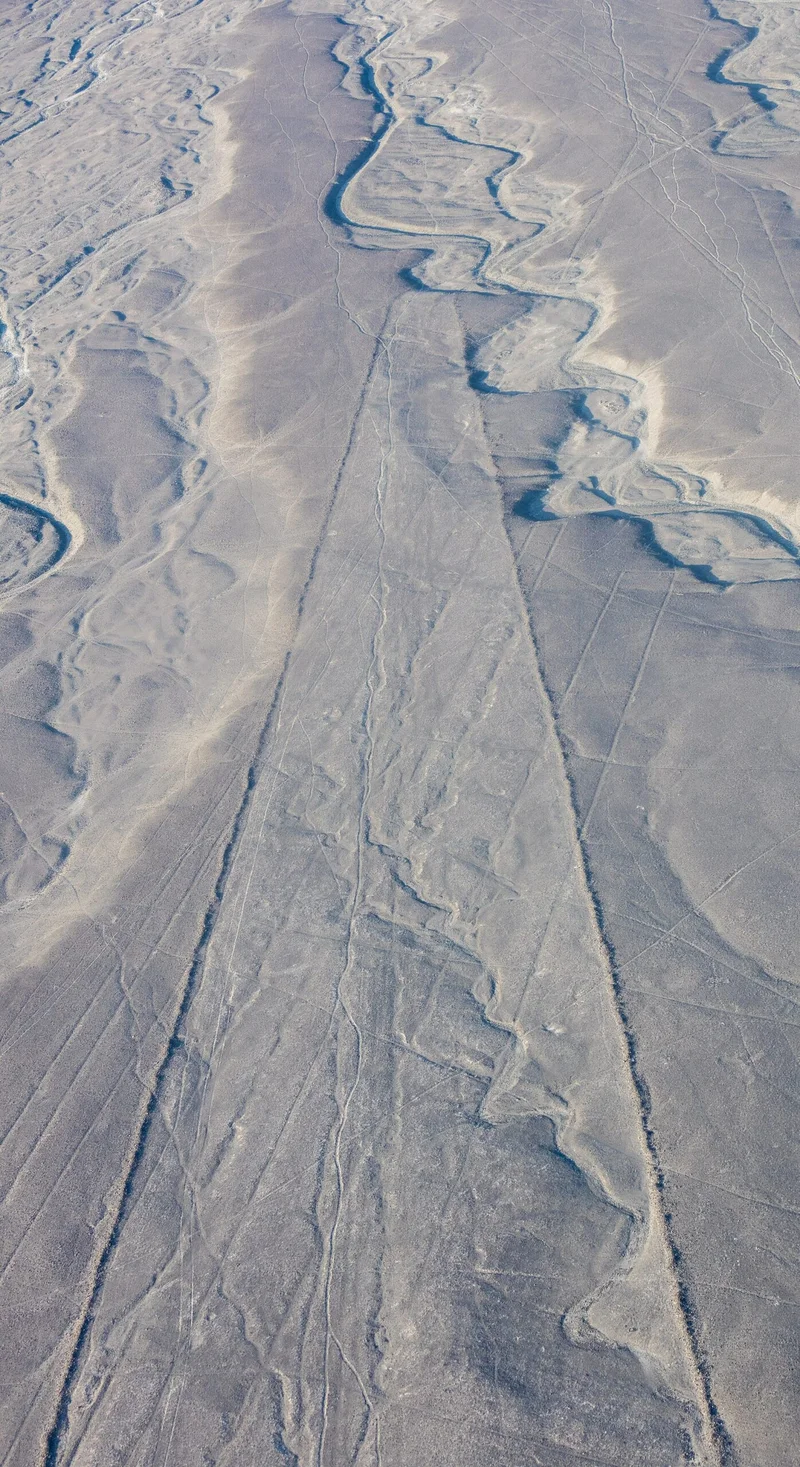
The Nazca Lines are a vast collection of geoglyphs traced into the desert of southern Peru more than 1,500 years ago by the Nazca culture. Ranging from straight lines and geometric shapes to stylised animals and plants, they were made by removing the dark surface stones to reveal the lighter ground beneath, and they have survived for centuries in the region’s exceptionally dry climate.
Because many of the figures are best appreciated from above, aerial tours became the standard way to see them after they were placed on the UNESCO World Heritage list. That status has also made their preservation a national priority, and any incident connected to the site draws attention well beyond the aviation sector.
For Peru, the Lines are both a scientific treasure and a pillar of cultural tourism, mentioned alongside Machu Picchu among the country’s signature destinations. The crash has brought that prominence into sharp focus, coupling a human tragedy with questions about how safely one of the world’s most famous archaeological sites is presented to the visitors who travel to see it.
Frequently Asked Questions
How many people died in the Nazca plane crash?
All 13 people on board were killed — 11 passengers and two crew members.
What aircraft was involved?
A Cessna 208B Grand Caravan, registration OB-2001-P, operated by Aerodiana.
Where and when did it crash?
About 2km from the Nazca airfield in Peru’s Ica region on 1 August 2026, after leaving Pisco Airport.
What caused the crash?
The cause is not yet established. The crew reported a mechanical problem before radio contact was lost.
Has the airline been suspended?
Yes. Peru’s transport ministry suspended Aerodiana’s operations pending the investigation.
Related reading
- Peru’s tourism economy and the draw of the Nazca Lines
- Ica region: what to know before you travel
- Aviation safety oversight in the Andes
This article was produced by The Rio Times’ automated newsroom system. How we use AI · Report an error