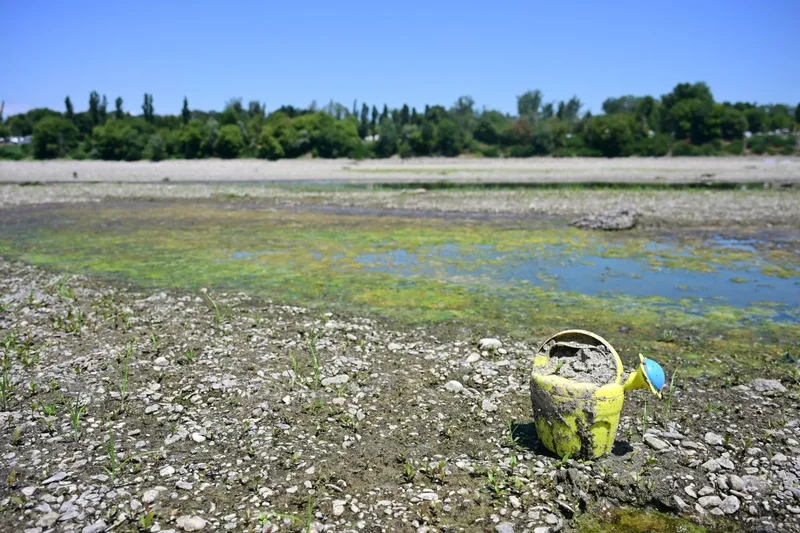
As is often the case over the summer, drought conditions are worsening across Italy due to the extreme heat, prompting many cities and regions to introduce water restrictions.
While there is no single official source listing all the water restrictions in force across every single town and village in Italy, people can check their municipality's or region's official website for more local updates.
The Italian civil protection department also provides a list of links to some of the regions that issue weather information and alerts.
The Local has gathered information on the areas of the country with severe water restrictions, which you can find below.
READ ALSO: Water shortages as northern Italy's Po River on high alert for drought
Veneto
Veneto regional authorities, for instance, published an update on the drought situation on July 31st, warning that drought conditions remain “extremely critical,” with the most serious emergencies currently affecting Albarella Island and the Adige River.
Water levels in the Adige have fallen below the minimum needed for pumping, prompting the region to impose restrictions on water withdrawals from the river.
Water extraction from tributaries of the Piave has also been halted to preserve water supplies.
“We are aware that everyone is making great sacrifices: energy producers, tourism operators and farmers,”said Veneto environment councillor Elisa Venturini, “but at this stage, it is crucial to do everything possible to preserve the drinking water supply for citizens.”
READ ALSO: Which Italian cities are currently under heat alerts?
Veneto authorities have also ordered a 55 percent cut in water withdrawals from the Adige River for irrigation to prioritise drinking water supplies, particularly in Rovigo, which is already facing severe water shortages.
In response to the worsening drought, Sergio Giordani, the mayor of Padua, in Veneto, signed an ordinance in July restricting water use until the emergency is over. The ordinance prohibits the use of drinking water to wash courtyards and squares, wash private vehicles, or fill ornamental fountains and private pools.
It also limits the use of drinking water for irrigation: gardens, lawns and green areas cannot be watered from 6am to midnight (except through drip irrigation systems), while vegetable gardens may only be watered from midnight to 8am. The restrictions do not apply to agricultural, horticultural and livestock activities, interventions by public services and authorised sports facilities.
Piedmont & Lombardy
The Po River basin is also on high drought alert, with more than 100 municipalities in Italy's northern regions of Piedmont and Lombardy facing water supply difficulties, according to the Po River Authority (ADBPO).
Many municipalities are already using water tanks to refill aqueduct reservoirs to ensure continuous water supply.
Check with local authorities in the regions for specific town by town rules.
READ ALSO: Water shortages as northern Italy's Po River on high alert for drought
Liguria
In Liguria, the situation is currently under control, authorities say, but several municipalities have already issued ordinances limiting water use or urged residents and tourists to conserve water.
Tuscany
In Tuscany, regional water bosses encouraged mayors of different municipalities to raise awareness about best practices to limit water consumption and asked residents to check for water leaks, run dishwashers and washing machines only with full loads and turn off water faucets when not in use.
Long-standing drought conditions
Some regions and municipalities in Italy already have long-standing ordinances on water consumption to address water deficits.
In Puglia, for instance, a ban on using drinkable water for non-essential purposes, such as watering gardens and filling private pools, remains in force until 29th October.
How to find out if there are water restrictions in your area
The best way to find out whether your area has any water restrictions is to look up the official website of your municipality or region and check for water ordinances.
Remember, the Italian civil protection department also provides a list of links to some of the regions that issue weather information and alerts.
In general, authorities across the country recommend reducing water consumption to essential domestic purposes, hygiene and personal care during the summer months when drought conditions and the lack of precipitation put additional pressure on water supplies.