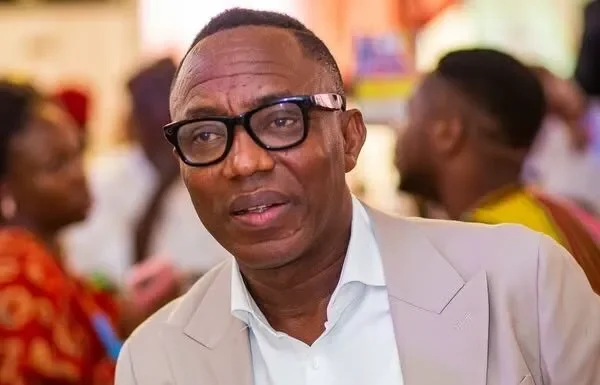
The cyberstalking trial of Sahara Reporters and presidential candidate of the he African Action Congress (AAC), Omoyele Sowore, stalled at the Federal High Court in Abuja on Monday.
This followed a clash between senior lawyers representing the prosecution and the defence just as the proceedings started.
Prosecution lawyer, Akinloku Kehinde, a Senior Advocate of Nigeria (SAN), accused the defence of deploying dilatory tactics after the lead defence lawyer, Adeyinka Olumide-Fusika, a SAN, sought an adjournment of the proceedings.
But Mr Olumide-Fusika counter-accused Mr Kehinde of blaming the defence for every hiccup in the proceedings, including when the prosecution failed to produce the State Security Service (SSS) director-general initially subpoenaed to testify in the case.
| | |
|---|
The exchange between the two senior lawyers grew tense as proceedings unfolded, forcing the judge, Mohammed Umar, to adjourn proceedings until 20 September.
The SSS is prosecuting Mr Sowore on charges, including cyberstalking, which followed Mr Sowore last year’s social media posts on X and Facebook calling President Bola Tinubu “a criminal”.
Mr Sowore has stood by his posts and denied wrongdoing regarding the social media comments.
During the proceedings of 22 July, defence lawyer, Mr Olumide-Fusika, informed the judge of his team’s plan to apply for a subpoena for the director-general of the SSS, Oluwatosin Ajayi, to appear in court to present an exhibit and face questioning from the defence.
The exhibit wanted by the defence is a letter dated 7 September 2025, asking Mr Sowore to retract his alleged criminal defamatory posts about Mr Tinubu.
Mr Olumide-Fusika said the defence wanted Mr Ajayi to appear because Uwem Davies, the SSS official who appeared as the second defence witness on subpoena, could not adequately address questions he raised regarding the letter.
But during the 28 July proceedings, the defence rescinded the decision to have the SSS director-general summoned.
This followed the surprise appearance of the Attorney-General of the Federation Lateef Fagbemi and his assurance that another top official would be sent to answer the subpoena.
Tension rises
At the start of Monday’s proceedings, Mr Olumide-Fusika informed the court that he gathered that a witness was present based on the subpoena served on the SSS director-general.
“Unfortunately, it will not be possible for us to proceed,” Mr Olumide-Fusika said.
The lawyer said although he filed an application on 22 July requesting the judge to attest to some documents he planned to use when leading the subpoenaed witness, he discovered just minutes before the hearing commenced that the request had just been granted.
“We filed an application on 22nd July 2026, and we were told that your lordship had not approved it.
“We only discovered that the court approved it since 27th July, a few minutes before the court began sitting.
“Obviously, the problem is not from your lordship, it is a registry issue. That is the predicament my lord,” he said.
However, the prosecution lawyer, Mr Kehinde, opposed the defence’s position, arguing it was a dilatory tactic to keep the matter pending on the court’s docket.
He submitted that, at the last adjourned date, all parties agreed that a nominated officer from the SSS director-general (DG) would appear in court to testify for the defence.
“That part of the agreement was kept in toto by the prosecution and the essence of the witness being in court is to be cross-examined on Exhibit DW-D tendered on July 22 before this court.
“It is trite that when an application is made to the court in a case by the defence, it is the responsibility of the applicant to follow up,” Mr Kehinde said.
The senior lawyer, therefore, urged the court to foreclose Sowore’s case, arguing that he was merely wasting the court’s time.
He submitted that where the court had repeatedly given opportunities which had been deliberately and persistently frustrated, the court is entitled to invoke its discretionary case management powers.
He argued that this would not amount to a breach of the constitutional right to fair hearing.
Citing Sections 36(4) and (6) of the Nigerian Constitution, Mr Kehinde argued that the constitution guarantees only an opportunity to be heard, not an unlimited right to delay proceedings.
He also cited a 2011 Supreme Court decision in Segun Ogunsanya vs The State to back his argument.
He submitted that the Supreme Court held that deliberate attempts to stall a trial should not be allowed.
He therefore urged the court to make a consequential order directing parties to file their final written addresses.
Responding, Mr Olumide-Fusika disagreed with the submission.
He argued that the prosecution had failed to address the facts placed before the court.
He accused Kehinde of blaming every problem on the defence, including its own refusal to produce a subpoenaed witness.
He argued that if the defence truly intended to delay the proceedings, it would have insisted on calling the earlier subpoenaed witness.
He also faulted the prosecution’s submission that the defence ought to have followed up on its application.
Mr Olumide-Fusika said the defence was not in a position to determine when the judge signed the application since the communication did not come through the registry.
He cited Sections 4 to 13 of the Evidence Act to back his argument.
The defence lawyer added that if he had planned to delay proceedings, he would not have appeared in court since the court had already commenced its vacation.
“If he (Kehinde) doesn’t want to cooperate with me, and he wants us to be fighting…,” Olumide-Fusika said when the judge interjected.
“Mr Fusika,” Justice Umar said, and was about to make his remarks when Mr Olumide-Fusika also retorted.
“How can he say that I am using dilatory tactics,” Olumide-Fusika responded.
At that point, Mr Kehinde stood up, saying: “I object to counsel’s vituperation against me. I respectfully ask that he be temperate. I am the oldest member of the Bar…”
The judge, reminding Mr. Olumide-Fusika that he had just took over the matter, said the defence had been delaying the case since March when the prosecution closed its case.
But Mr Olumide-Fusika said his calmness should not be taken for granted.
He said the prosecution should deal with the facts.
“What exactly are these alleged dilatory tactics?” he said.
Mr Kehinde then interrupted.
“My lord, he can’t be talking all the time, this court does not belong to him,” Mr Kehinde said.
“Does it belong to you? You behave like persecutor. What is wrong with you; all you want is to jail him,” Mr Olumide-Fusika responded.
Judge expresses anger
The judge, who was angry with the lawyers’ altercation, said he would not hesitate to refer any counsel to the appropriate disciplinary body if they continued.
“I have been on the bench for 22 years. We have junior counsel here. This is not good.
“This should be the last time. If you are no longer interested in the case, you should say so.
“You cannot behave in my court in that manner.
“I am adjourning this matter. I am not in a position to continue hearing the case today,” Justice Umar said.
He consequently adjourned the matter until 20 September for continuation of the defence.
Shorlty after adjournment, both counsel apologised to the court.
The News Agency of Nigeria (NAN) reports that Mr Sowore is being prosecuted on allegations of criminal defamation and cyberstalking over his remarks last year on social media referring to President Tinubu as a criminal.
Before Mr Davies, the SSS official subpoenaed to testify as the second defence witness, prominent lawyer, Deji Adeyanju, had appeared as the first defence witness.
Testifying as the first defence witness on 6 July, Mr Adeyanju, a lawyer widely known for his public affairs commentaries, defended Mr Sowore’s remark about Mr Tinubu.
He said Mr Tinubu had publicly stated that citizens had the right to criticise and “even insult him” as part of democratic governance.
He also told the court that the president urged the judiciary “not to allow itself to become an instrument of oppression” against government critics.
(NAN)