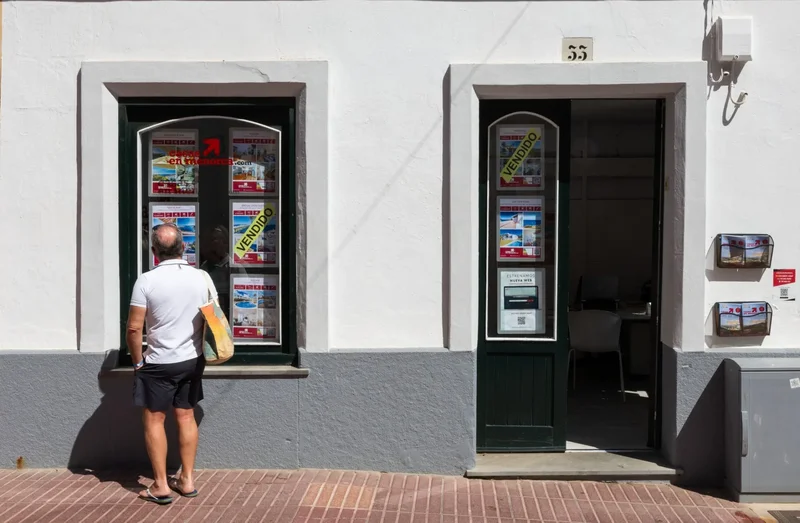
What does Artificial Intelligence think about Spain's property market and is it predicting prices will decrease? From Gemini to ChatGPT, the world's most popular AI models seem incapable of agreeing on what awaits homebuyers.
It’s no secret that there’s been a housing crisis in Spain over the past few years, with property prices skyrocketing and many people unable to get onto the property ladder.
The big question on everyone’s lips is when - and if - Spanish property prices will begin to decrease.
According to local Spanish media, the real estate market is beginning to show the first signs that the strong upward cycle may be losing momentum.
Although prices continue to rise, the pace is no longer accelerating as it has in recent years, pointing to a potential stabilisation.
The latest data from the Spain’s National Institute of Statistics (INE) shows that the price of housing increased by 12.9 percent year-on-year during the first quarter of 2026.
This is the same percentage recorded in the last quarter of 2025. This is the first time since the end of 2023 that growth has stopped accelerating.
Artificial Intelligence is increasingly being used for many parts of life even has a predictor as to what will happen in the future. So, what does AI think about property prices in Spain? Does it think they will drop anytime soon.
According to a recent study by national newspaper ABC based on the most used Artificial Intelligence models, the main answer is that an overall property price drop is not likely, but there are slight differences between platforms.
READ ALSO: Why are property prices in Spain rising twice as fast than in the EU?
When ChatGPT was asked, it said "there are no signs of a general decline in housing prices in Spain in the short term". The main reason is "the imbalance between continued high demand and insufficient supply, especially in major cities and more desirable areas."
ChatGPT believes that the most likely scenario is a stabilisation of house prices or a moderate increase.
When The Local asked the same question, it agreed saying: “A nationwide decline in Spanish property prices looks unlikely in the near term, although some local markets could soften or stagnate”.
It highlighted the high demand in places like Madrid, Barcelona, Málaga, Valencia and parts of the Mediterranean coast, but added that prices may decline in places with weak local employment and population growth or places with a heavy dependence on second-home owners.
READ ALSO: Why do prices keep rising if property purchases are falling in Spain?
ABC reveals that Gemini predicts that "there will not be a general decline".
"The main research services rule out a general drop in housing prices in the short and medium term,” it stated.
When The Local asked it said: “The market is entering a phase of cooling and stabilisation rather than a downward correction”.
It explains that several factors that will continue to support prices such as the shortage of housing. The Bank of Spain estimates a deficit approximately 750,000 properties.
To The Local it also highlighted population and rental pressures, as well as a persistent international demand.
Claude also agreed that "housing prices in Spain will not fall in the short term, according to the consensus of analysts" and even warns of possible increases.
Overall, one point becomes clear after posing this property price question to AI platforms: Their accuracy and reliability for matters relating to property market forecasts is dubious, which may come as no surprise as they're trawling for information from the internet, which in itself contains plenty of inaccuracies.
However, their answers do coincide somewhat with forecasts by more expert groups, that predict a slight cooldown rather a dive in prices.
Experts from BBVA Research have forecast a 10.2 percent increase in housing prices in 2026 and a 6.8 percent increase in 2027, while Bankinter estimates increases of 7 percent and 4 percent, respectively.