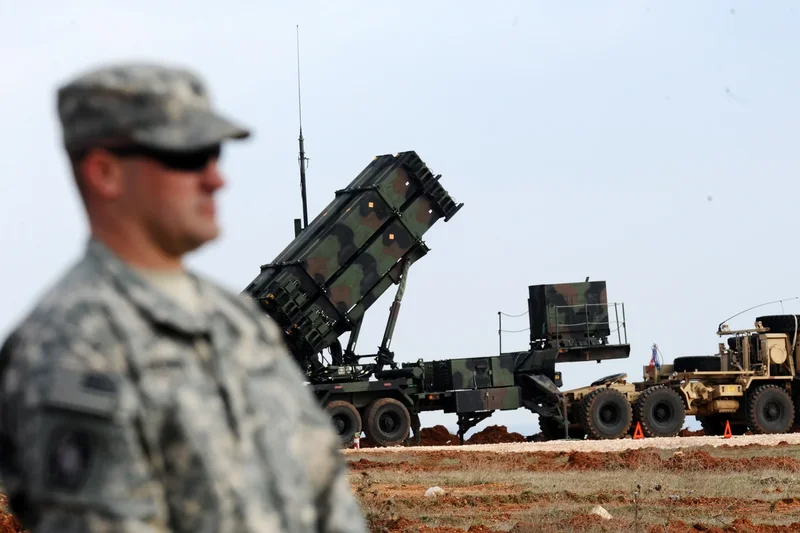
The United States has signed a more than $3 billion deal with Lockheed Martin and Northrop Grumman to significantly boost the production of Patriot and THAAD interceptor missile parts.
The agreement addresses strained stockpiles, exacerbated by ongoing conflicts in Ukraine and Iran.
Announced by the Pentagon and Northrop on Monday, the deal follows last week's $58.6 billion contract for Lockheed to produce Patriot interceptor missiles. The US has faced growing concerns over its air defense and precision-guided weapon inventories, having supplied substantial arms to allies and utilized munitions in the Iran conflict.
The framework agreement aims to triple Patriot production and quadruple THAAD systems.
This urgency is highlighted by a recent estimate from the Center for Strategic and International Studies, a Washington think tank, which reported the US military holds fewer than 1,000 Patriot and 250 THAAD interceptors, both extensively used in the Middle East.
Pentagon negotiators have been pressing contractors to accelerate output, building on earlier tentative production agreements.
Ukraine, in particular, has experienced chronic shortages of Patriots, which are vital for downing ballistic missiles. The deal will also establish a second source for PAC-3 solid rocket motors and increase the output of ignition safety devices.
This effort parallels a similar framework deal with Raytheon's parent company, RTX, to boost Tomahawk cruise missile production from about 60 units annually to an eventual 1,000 per year for the US.