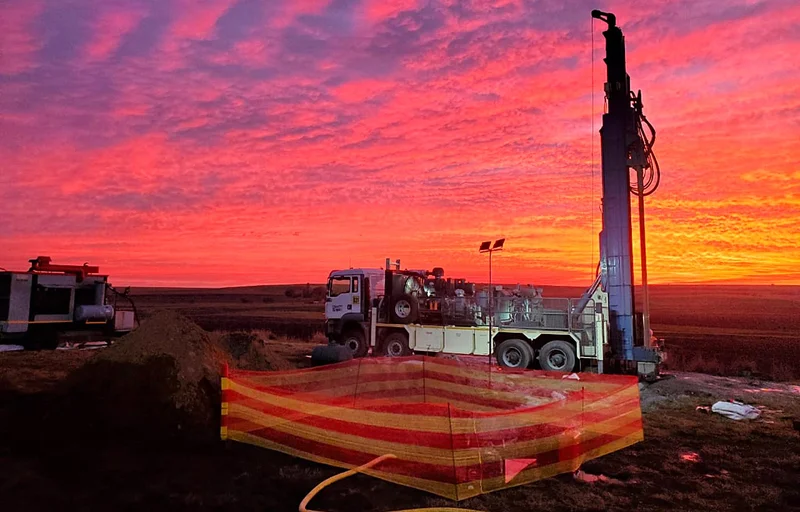
The Perth-based Kinetico Energy group is hoping to get approval to start pumping its first commercial gas supplies to industry customers before the end of next year from a new âworld-classâ gas discovery in southern Mpumalanga.
In an investor presentation earlier this month, Kinetico and its local subsidiary company Afro Energy announced plans to secure regulatory approval to dig a new network of gas production wells, centred initially between the towns of Volksrust and Amersfoort, close to Eskomâs Majuba power station.
The site is also close to Transnetâs Lilly gas pipeline that runs between Secunda and Durban, via the port of Richards Bay.
According to Kinetico, the company has achieved a â100% drilling success rateâ in its four exploration blocks in Mpumalanga and neighbouring Free State province.
âAll 50 wells successfully encountered gas with large, shallow pay zones,â the company states, also noting that currently assessed reserves are estimated at more than six trillion cubic feet (6 tcf) of natural gas.
Kinetico executive chairperson Adam Sierakowski has promised âa very light touch to the environmentâ, also asserting that the project will not involve any fracking (shattering underground rock with high-pressure water and chemicals to enable gas flow to the surface).
Oddly, however, the company has previously acknowledged that things did not go quite 100% during the initial drilling of its first two production test wells, which produced low gas flows. This was attributed to problems with water invasion and high viscosity foam, which had reduced gas flow by up to 85%.
In an Australian Stock Exchange announcement last April, Kinetico referred to a series of laboratory test simulations by Oilfield Technologies Australia which suggested that âwater and foam invasionâ in the South African test wells led to poor gas flows, compelling the company to modify its drilling techniques.
Such technical details may seem insignificant, but they underline the potential for underground water contamination, one of the central concerns of several farmers and residents in the exploration area.
Who will be checking whatâs actually going on underground? Who ensures that the gas company lives up to its light touch promises?
In a recent legal appeal against the Kinetico/Afro Energy exploration rights in two provinces, lawyers from the Centre for Environmental Rights (CER) said there were only 94 environmental mining inspectors to monitor mining operations across the country, with none designated specifically for the oil and gas sector.
As a result, the centre submits that the government lacks sufficient capacity to monitor or enforce legal obligations in the oil and gas sector. The legal appeal is still pending.
The Centre for Environmental Rights, representing the Free State Environmental Justice Network, says the potential for groundwater pollution in a water-scarce region remains a key concern.
âAlthough Kinetiko has publicly stated that it intends to produce gas from relatively shallow coal seams without hydraulic fracturing, our clientsâ concerns extend beyond whether fracking is proposed. In our clientsâ view, gas production may still pose significant risks to groundwater and the broader environment, even where fracking is not used,â Centre for Environmental Rights attorney Maki Sefatsa said in response to queries from Daily Maverick.
âGiven the strategic importance of groundwater in the region for communities, agriculture and ecosystems, our clients consider that a precautionary approach is necessary,â she said.
Free State Agriculture director Dr Jack Armour echoed some of these concerns in a separate submission to Kineticoâs environmental consultants.
Even if the Kinetico/Afro Energy plan did not involve fracking, he said, farmers were still concerned about the cumulative effect on farming caused by a multiplicity of gas extraction points, all connected by a network of pipelines crossing busy roads to collect and amass the gas.
Agriculture Mpumalanga executive manager Robert Davel told Daily Maverick that while members were opposed to hydrofracking, they were not opposed in principle to conventional mining or gas extraction â as long as this was done in a way that ensured âthe smallest possible negative impact on the two most important natural resources for the agricultural sector, namely soil and waterâ.
Any agreements reached between farmers and gas companies â including the need for groundwater monitoring or rehabilitation â should be strictly adhered to, he said.
Privately, however, some residents suggest that the smell of gas has led to divisions. As one Mpumalanga farmer remarked: âSome of us are very worried about what could happen on and underneath our land. And there are those who see money on the horizon and are willing to sell their birthright.â
At a broader level, there is also concern that SA is walking back from its international commitments to curb fossil fuel and methane emissions.
In a case study report entitled âDevelopment at what cost?â the Fair Finance Coalition of Southern Africa notes that the fossil fuel industry is positioning gas as a transition fuel â a supposedly âcleanerâ alternative to coal.
âThis narrative, however, ignores the significant environmental, economic and reputational risks associated with gas projects. By latching onto the notion of gas as a âbridge fuelâ, the southern African region risks locking itself into a high-carbon pathway with the support of its own financial institutions.â
The report argues that investment in new gas projects is incompatible with SAâs transition to a low-carbon economy and risks undermining any progress the country has made towards achieving its climate goals and commitments under the 2015 Paris Agreement. DM