Russia’s war on Ukraine has become a grinding tally of raw numbers, and Kyiv is executing its strategy with the ruthlessness of a corporate efficiency expert, according to the RAND think tank.
In a note last month, researchers Gian Gentile and Andrew Radin pointed out that Ukraine has gained the upper hand via attrition: wiping out more of an opponent’s troops and weapons than you lose.
That’s counterintuitive, given the much bigger size of Russia’s population and military. Rather than trying to slug it out toe to toe, some analysts earlier in the war, which is now in its fifth year, suggested Ukraine ought to seize Russian territory to force Moscow into talks.
But Kyiv opted instead to simply kill more Russian soldiers and faster, according to Gentile and Radin.
“Ukraine leaders use business principles to maximize both Russian casualties and economic costs,” they wrote.
For example, Ukraine has KPIs for the military—just like corporations, which use them to track output from employees or subsidiaries.
As laid out in former Defense Minister Mykhailo Fedorov’s war plan, Ukraine’s KPIs call for killing 200 Russian troops for each square kilometer of territory seized and eliminating at least 50,000 each month.
The RAND researchers also said Fedorov had developed a “mathematics of war initiative” that collected data to improve the efficiency of Ukraine’s attrition strategy.
That includes Ukraine’s “ePoints” system, which is thought to be the first of its kind anywhere. Drone operators submit videos of their battlefield exploits to the government as entries in a competition that rewards points to high scorers.
Different targets are worth different amounts. One soldier is worth 12 points. The points can then be redeemed in an online government marketplace for more drones that are put to use in combat.
Ukraine is racking up plenty of points now, killing or wounding 30,000-40,000 Russian troops each month. The losses exceed the number of fresh recruits that Moscow can muster, and Russian authorities are coercing men into signing up.
RAND also credits Ukraine’s defense sector for achieving the KPIs. That includes its new command-and-control systems, training, organization, and domestic drone industry.
In fact, the emergence of Ukraine’s defense industrial base is itself an example of business success. Since Russia’s invasion in 2022, thousands of companies have sprung up as fighting numerically superior forces requires constant innovation, rapid fielding, and mass production.
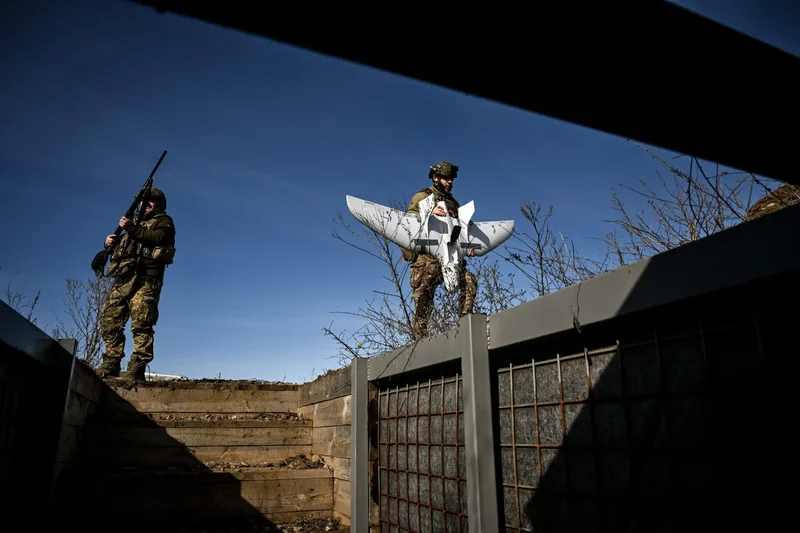
Ukraine now cranks out millions of drones a year, prompting retired Gen. David Petraeus, who previously served as CIA director, to call it the “most important military industrial complex in the free world.”
In addition to inflicting devastating loss on the battlefield, Ukrainian drones are now advanced enough to penetrate deep into Russian territory.
Recent months have seen oil refineries, weapons factories and e-commerce logistical hubs go up in flames, adding further strain on a Russian economy that’s already cracking from high inflation, onerous borrowing costs, and soaring debt.
Ordinary Russians far from the war must now suffer the war’s consequences first hand as they wait in long lines as gas stations and find out that their online orders won’t be fulfilled.
Aside from social media posts complaining about the war’s fallout and some grumbling from oligarchs about the Kremlin seizing their assets, there are still no signs of any widespread popular unrest against Vladimir Putin’s regime.
“But Ukraine could very well break Russia’s will to continue fighting,” RAND’s Gentile and Radin wrote.
So even if Putin remains in place, he may at least be forced to the negotiating table to bring his war to an end.
During World War I, four years of brutal attrition ended with the arrival of American troops, who helped stop Germany’s spring offensive in 2018 and caused its army to collapse.
“Whether the Russian Army faces a similar fate will depend on Ukraine’s maintenance of its effective strategy of attrition and continuing if not increasing its long-range strikes into Russia, and the continued support of its partner nations,” RAND added.
Sign up here.