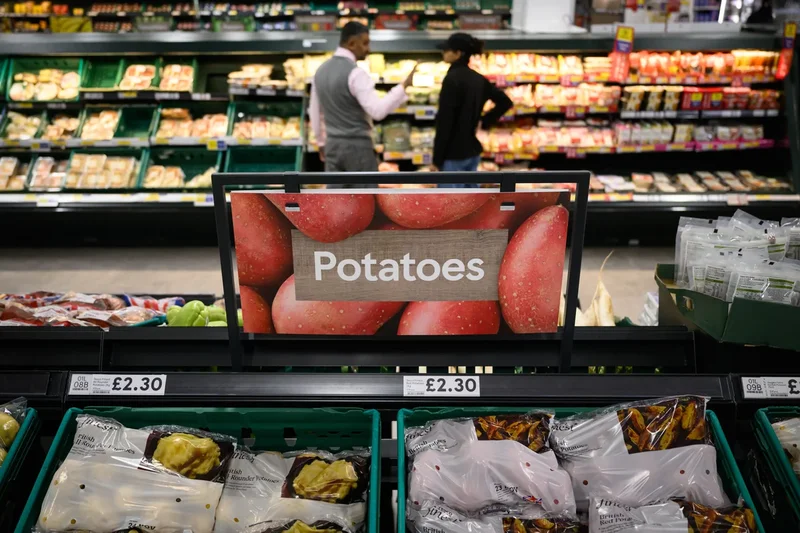
The heatwaves and extreme drought conditions gripping the UK could stunt the growth of Britain’s potato crop this year.
Farmers have warned supermarkets that their potatoes, which require large amounts of water to grow, could be unusually small after England and Wales suffered through their driest July on record.
Potatoes typically stop growing when temperatures climb above 30C, meaning British chips could soon become shorter, and baking potatoes may be sold at a smaller size.
Last year, British farms supplied 71 per cent of the total potato demand for the UK.
Jim Wayman of 3Ms, an East Anglian potato-growing conglomerate which supplies supermarkets including Marks & Spencer and Aldi, told The Telegraph: “We’ve been chucking water on them, but in this heat they’re not growing. It’s like watering a corpse.
“We’re being accused of scaremongering, and the big retailers are saying their customers expect a certain standard of size but we’re saying we can’t do it.”
While much of Scotland and Northern Ireland are expected to see showers this week, no rain is forecast for England and Wales.
Met Office meteorologist Liam Eslick said high pressure was going to be the dominant factor for much of August and for the first half of September.
He said the Met Office’s forecast suggested that the current drought declared across half of England would not be short-lived.
In its long-range forecast from 8 to 17 August, the weather agency said there could be some showers, “but also the likelihood of some decent drier interludes too, especially in the south.
“Towards mid-August, high pressure may become rather more dominant towards the north or northwest of the UK, with lower pressure at times further to the south or east.
“This means there is a greater chance of frontal systems or thundery interludes to affect southern and eastern areas, certainly in comparison to recent weeks, though rainfall amounts could be quite variable with some areas seeing relatively little.
“For the most part, temperatures look to remain above average, especially in the south, though perhaps without the exceptional heat we have seen in recent weeks.”
July and early August are key times for the Christmas potato crop, according to gardening charity RHS.
They are among the many food items suffering as a result of the hot and dry weather. Experts have warned of possible shortages of other field vegetables, including carrots, onions, cabbage, lettuce, spinach, kale, brassicas, pumpkins, and cucumbers.
Meat and dairy products, including beef, chicken, and pork, and milk, could also be affected due to the heat stress on animals, while cereal harvests are also struggling.
Andrew Opie, the director of food & sustainability policy at the British Retail Consortium, said: “Climate change continues to create challenges for retailers and their suppliers. Extreme weather, including drought, can affect crop yields and place upward pressure on prices.”