Your support helps us to tell the story
From reproductive rights to climate change to Big Tech, The Independent is on the ground when the story is developing. Whether it's investigating the financials of Elon Musk's pro-Trump PAC or producing our latest documentary, 'The A Word', which shines a light on the American women fighting for reproductive rights, we know how important it is to parse out the facts from the messaging.
At such a critical moment in US history, we need reporters on the ground. Your donation allows us to keep sending journalists to speak to both sides of the story.
The Independent is trusted by Americans across the entire political spectrum. And unlike many other quality news outlets, we choose not to lock Americans out of our reporting and analysis with paywalls. We believe quality journalism should be available to everyone, paid for by those who can afford it.
Your support makes all the difference.
Read more
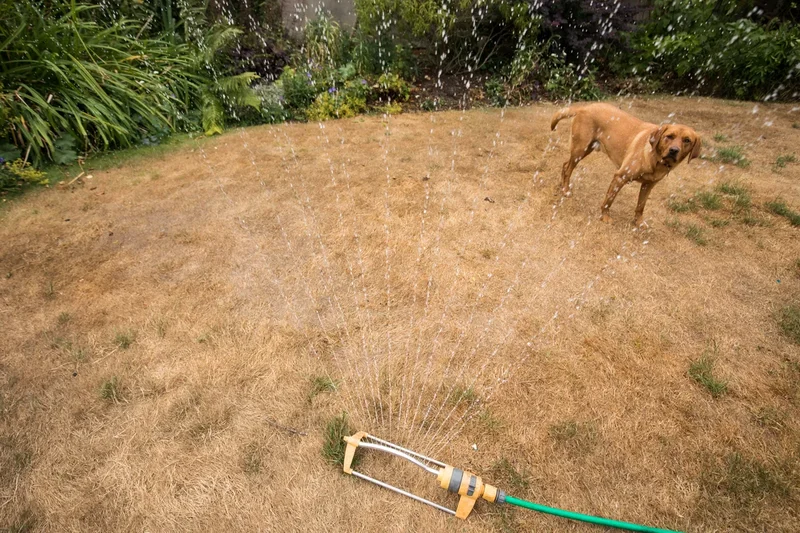
Parts of England are at risk of drought after record-breaking heatwaves have left a number of rivers and reservoirs “exceptionally low”.
The country has seen three consecutive heatwaves and the driest spring on record for England and Wales, with southern and eastern England having no rain at all this month.
Environment experts say the prolonged hot and dry conditions have dried up land, rivers, and streams, while demand for water has soared during the hottest days, warning that eight areas are now at risk of a drought.
Eight areas are at risk of drought, the National Drought Group warned (Getty)
Prolonged dry weather – the stage immediately before drought – has been declared in East Anglia, the West Midlands, Devon, Cornwall, the Isles of Scilly, Lincolnshire, Northamptonshire, Hertfordshire, London, Wessex, Thames, the Solent and the South Downs.
The National Drought Group, whose members include the Met Office, government, regulators, water companies and farmers, warned only 13 per cent of rivers are currently at normal levels for this time of year. The majority are lower than normal, including the Rivers Avon (Hampshire), Cam, Derwent (Yorkshire), Swale, Tone, Wye and Yare, which are exceptionally low.
This means these eight areas are one stage away from official drought status.
Six reservoirs are also classed as “notably low” – including Wimbleball, Grafham and Hanningfield and The Lower Thames group, while Blagdon is “exceptionally low”.
On Tuesday, Thames Water announced a hosepipe ban for 10.1 million customers. Britain’s biggest water company said the restriction, also known as a temporary use ban (TUB), will come into effect at 12.01am on Thursday.
The ban applies to all customers that it supplies with drinking water across London, the Thames Valley and the Home Counties – but not to waste-only customers.
It means hosepipes should not be used for watering gardens, cleaning cars or windows, or filling paddling pools, hot tubs or swimming pools.
The company is the latest in a string of utilities to announce a temporary use ban in recent weeks.
On Monday, South East Water announced that a hosepipe ban in Kent will be extended to parts of Surrey, Sussex, Hampshire and Berkshire from Saturday.
Bans are also in place for Southern Water customers across Hampshire and the Isle of Wight and South West Water customers in parts of Devon and Lyme Regis in Dorset.
Customers of Cambridge Water, Affinity Water and Anglian Water, which supply areas in the East of England, have also introduced restrictions.
It comes as the National Farmers Union (NFU) warned coming 10 days are set to determine whether supermarkets will be hit by food shortages later in the year. Speaking to The Independent, Paul Tompkins, NFU deputy president, said: “Parts of the country, particularly in the east and south, have seen exceptionally low rainfall, creating real challenges for farm businesses.
“For many arable farmers, this could be another difficult and expensive harvest after extreme weather in both 2024 and 2025 which saw both drought and flood.”