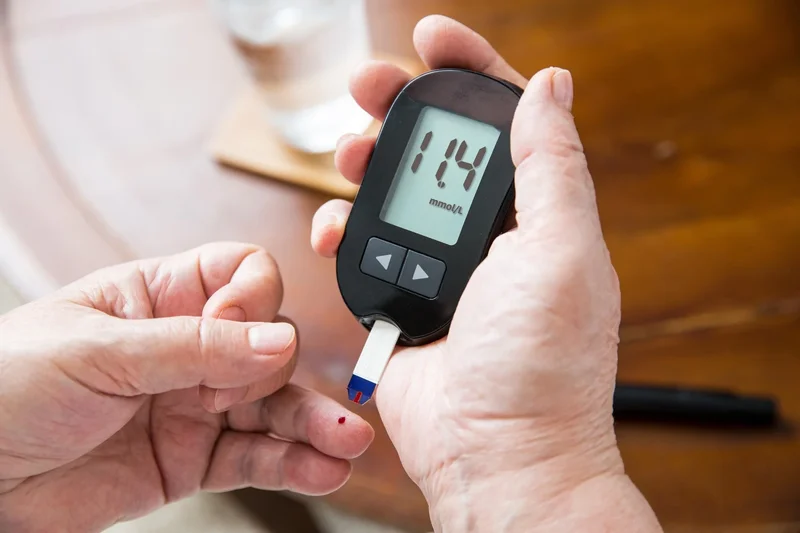
A study of adults aged 85 and older reveals how vitamin D, metabolic health, depressive symptoms, and cognition intersect in one of diabetes care’s most vulnerable populations.
Study: Vitamin D levels and other factors associated with depressive symptoms and cognitive impairment in the oldest-old patients with diabetes. Image Credit: Aleksandra Suzi / Shutterstock
In a recent study published online as an unedited 'Article in Press' manuscript in the journal Scientific Reports, researchers investigated the factors associated with comorbid depressive symptoms and mild cognitive impairment (MCI) in the “oldest-old” (85 years or older) adults, specifically those with type 2 diabetes (T2D). The cross-sectional study examined these associations in 188 individuals using serum 25-hydroxyvitamin D [25(OH)D] levels alongside standardized neuropsychological and metabolic evaluations.
Study findings revealed that participants with both depressive symptoms and MCI exhibited the lowest serum vitamin D concentrations. Lower serum 25(OH)D remained independently associated with having both conditions after adjustment for selected demographic and clinical factors. These findings support further investigation of vitamin D as a correlate of mood and cognitive health, but do not establish its predictive or therapeutic value.
Background
The global burden of type 2 diabetes (T2D) has, over the past few decades, grown rapidly and is projected to continue increasing. The rise is accompanied by an increasing burden of age-related geriatric and psychiatric comorbidities.
Studies have shown that depressive symptoms and cognitive impairment frequently co-occur in older adults with diabetes, a pattern that may reflect shared complex pathophysiological mechanisms, including cerebral microvascular damage, changes in brain white matter, and altered blood-brain barrier integrity.
Researchers have therefore examined biological factors that may be associated with these comorbidities. Emerging neurobiological evidence suggests that vitamin D may act as an important neuroimmunomodulatory molecule.
This evidence suggests that vitamin D may influence neurotransmitter synthesis, synaptic plasticity, and amyloid beta clearance across cortical and hippocampal regions. However, these proposed mechanisms were not examined in the present study. Despite these theoretical pathways, little was previously known about serum vitamin D concentrations in adults aged 85 years or older with T2D and coexisting depressive symptoms and MCI.
About the study
The present study aimed to address this knowledge gap by concurrently assessing serum 25-hydroxyvitamin D levels and identifying clinical factors independently associated with comorbid depressive symptoms and MCI in very older adults with clinically confirmed T2D.
The study sample comprised 188 outpatients with T2D, all described by the authors as Caucasian (mean age = 87.3 years). Participants were consecutively recruited from a single diabetes outpatient clinic in Lodz, Poland, during the winter season to reduce seasonal variation in vitamin D levels. People with diagnosed depression or dementia were excluded. Based on GDS-30 screening and a MoCA-based MCI assessment incorporating European Alzheimer’s Disease Consortium criteria, participants were categorized into four groups: 1. Depressive symptoms alone (n = 25), 2. MCI alone (n = 52), 3. Comorbid depressive symptoms and MCI (n = 38), and 4. A T2D comparison group without depressive symptoms or MCI (n = 73).
Participant evaluations were conducted in two parts: first, researchers collected morning blood samples (while participants were fasting) to measure participants’ serum 25(OH)D levels using an enzyme-linked immunosorbent assay (ELISA). This biochemical evaluation phase also included measurements of glycosylated hemoglobin (HbA1c), lipid parameters, and fasting plasma glucose.
The second part of the evaluation comprised a detailed medical history, physical examination, and standardized neuropsychological testing using the 30-item Geriatric Depression Scale (GDS-30) alongside the Montreal Cognitive Assessment (MoCA). Statistical analyses used multivariable logistic regression models to identify factors independently associated with the combined presence of depressive symptoms and MCI rather than cognitive decline over time.
Study findings
Results showed that serum 25-hydroxyvitamin D levels across the entire study cohort averaged 18.38 ng/mL (SD = 5.9 ng/mL). Although this mean is below 20 ng/mL, the study did not compare it with a clinical threshold or formally classify participants according to vitamin D status.
Multiple subgroup comparisons revealed significant differences across groups, with the comparison group showing the highest mean concentration (22.67 ng/mL) compared to participants with depressive symptoms alone (16.37 ng/mL, P < 0.001) or MCI alone (16.60 ng/mL, P < 0.001). The lowest vitamin D concentrations were observed in the combined depressive symptoms and MCI group (13.86 ng/mL, P < 0.001).
Separate correlation analyses showed that, in the combined group, serum vitamin D levels were negatively correlated with HbA1c concentrations (r = -0.85, P < 0.001) and GDS-30 scores (r = -0.89, P < 0.001). Serum 25(OH)D concentrations displayed a strong positive correlation with MoCA cognitive scores (r = 0.76, P < 0.001).
The multivariable model showed that lower vitamin D status remained independently associated with increased odds of having both depressive symptoms and MCI (adjusted odds ratio [aOR] = 0.773, 95% confidence interval [CI]: 0.61–0.97, P = 0.03), alongside older age (adjusted odds ratio = 2.12), fewer years of formal education (aOR = 0.31), longer diabetes duration (aOR = 1.45), and higher multimorbidity burden (aOR = 3.52). Expressed another way, each 1 ng/mL increase in serum 25(OH)D was associated with approximately 23% lower adjusted odds of having both conditions. The remaining estimates were calculated for each additional year of age, each additional year of education, each additional year of diabetes duration, and each additional comorbidity. However, only 38 participants had both conditions, limiting the model's complexity and stability.
Conclusions
The authors describe the present study as the first to assess serum 25(OH)D levels and associated factors in people with T2D aged 85 years or older who had co-occurring depressive symptoms and MCI. The findings demonstrate an association rather than a biological or causal link and do not validate vitamin D as a neurological risk biomarker or treatment for cognitive decline.
Because vitamin D levels, depressive symptoms, and cognition were measured simultaneously, the study cannot determine which came first. Reverse causation is plausible because poorer health, frailty, reduced outdoor activity, and inadequate nutrition may contribute to lower vitamin D levels. The small subgroups, single-center population, strict exclusion criteria, and limited demographic diversity also limit the generalizability of the findings. Residual confounding from omitted factors in the restricted multivariable model also remains possible.
Further prospective studies are needed to confirm these results and determine the temporal direction and clinical relevance of the associations. Randomized intervention trials would be required before conclusions could be drawn about supplementation or appropriate dosages, and the current findings do not support recommending vitamin D as a preventive or therapeutic strategy.
Journal reference:
- Gorska-Ciebiada, M., & Ciebiada, M. (2026). Vitamin D levels and other factors associated with depressive symptoms and cognitive impairment in the oldest-old patients with diabetes. Scientific Reports. DOI: 10.1038/s41598-026-65284-z. https://www.nature.com/articles/s41598-026-65284-z