Your support helps us to tell the story
From reproductive rights to climate change to Big Tech, The Independent is on the ground when the story is developing. Whether it's investigating the financials of Elon Musk's pro-Trump PAC or producing our latest documentary, 'The A Word', which shines a light on the American women fighting for reproductive rights, we know how important it is to parse out the facts from the messaging.
At such a critical moment in US history, we need reporters on the ground. Your donation allows us to keep sending journalists to speak to both sides of the story.
The Independent is trusted by Americans across the entire political spectrum. And unlike many other quality news outlets, we choose not to lock Americans out of our reporting and analysis with paywalls. We believe quality journalism should be available to everyone, paid for by those who can afford it.
Your support makes all the difference.
Read more
A sustainable aviation body has warned that without urgent government support in decarbonisation, the UK aviation sector risks increasing costs for air passengers.
The Sustainable Aviation coalition’s new “Decarbonisation Road-Map” has urged the government to take action to prevent the UK aviation sector losing its global competitiveness and higher transition costs for passengers.
Sustainable Aviation, a coalition of UK airlines, airports, and plane makers working to reach net zero carbon by 2050, published its 2026 roadmap on Tuesday.
A proposed pathway to deliver net zero carbon emissions presented several scenarios to help deliver net zero carbon emissions through “technological innovation, operational improvements, and low-carbon aviation fuel”.
The aviation sector contributes over 850,000 jobs and more than £100 billion to the UK economy annually.
Between 2005 and 2024, UK passenger numbers increased by 28 per cent while absolute aviation emissions fell by around one per cent, said Sustainable Aviation.
Emissions per passenger have reduced by around 22 per cent on average.
Under the new roadmap, Sustainable Aviation Fuel (SAF) would account for 65 per cent of total aviation fuel use by 2050, down from the 2023 estimate of 75 per cent.
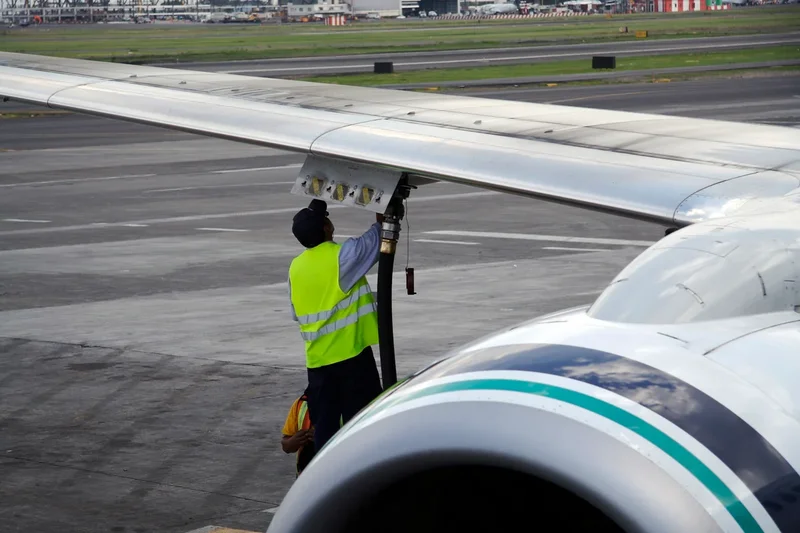
SAF is a non-fossil jet fuel made from waste items like used cooking oil, household garbage and plant materials.
According to Sustainable Aviation, this target would deliver lifecycle emissions savings of around 80 per cent, contributing approximately 31 per cent to total decarbonisation.
It added that by 2050, greenhouse gas removals will remove residual emissions, accounting for 29 per cent of the required reductions and removing roughly 19.5 million tonnes of carbon dioxide annually – more than doubling the previously estimated contribution.
Carbon reductions will also be made in other areas, including through fleet renewal and airspace operational upgrades.
“The sector will only achieve a continued reduction in its emissions with the right policy environment in place. Other nations are moving quickly to support sustainable aviation technologies, fuels and infrastructure, and the UK must avoid transition costs becoming materially higher than competitor markets,” said the coalition.
Sustainable Aviation has called on the government to fund aerospace innovation, speed up airspace upgrades, make SAF widely affordable and create a cost-effective system for carbon removals.
Neil Robinson, chair of Sustainable Aviation, said: “This new Decarbonisation Roadmap sets out the real progress the UK aviation industry is making to decarbonise and reach the target of net zero carbon emissions by 2050.
“With record numbers of passengers travelling through UK airports, our net emissions continue to fall. On average, emissions per passenger have fallen by 22 per cent – demonstrating that UK aviation can continue to grow, connect businesses and take people on holiday while reducing its impact on the environment.
“The industry is committed to achieving net zero carbon emissions. However, we cannot reach this goal alone. To scale the solutions we need and protect the UK’s global competitiveness, we urgently need the Government to match our ambition with decisive policy action and investment certainty.”
Read more: Can green fuels clean up aviation?