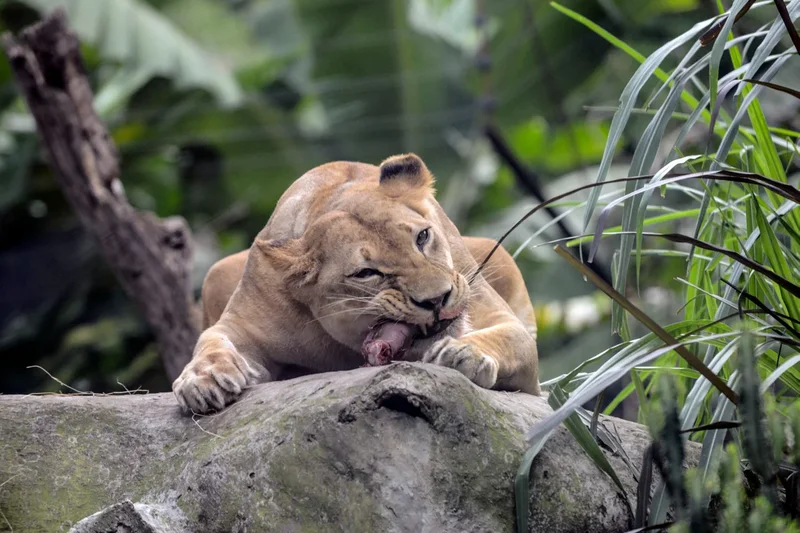
Three lions have died of suspected heatstroke at a zoo in Tokyo, the first such deaths since the park began keeping the animals in 1964, as Japan endures a summer of record heat.
The three females, aged three, 11 and 15, died between 28 July and 2 August at Tama Zoological Park in Hino in the western suburbs of the capital, the Tokyo metropolitan government and the Tokyo Zoological Park Society said on Monday.
Post-mortem examinations found widespread dehydration and multiple organ failure in all three, though the zoo said the cause would not be confirmed until laboratory results were returned.
Ten of the park's 16 lions have needed treatment since temperatures climbed in the middle of July, with keepers first treating two animals for loss of appetite on 18 July before symptoms appeared across the group within days. Some of the lions were unable to stand.
Staff cooled the animals with fans and water sprays and gave them medication, and the zoo closed its lion enclosure to the public on 23 July as their condition worsened. One female and two males are still being treated, and the park has not said when the enclosure will reopen.
"This is the first time we've experienced anything like this. Last year was also hot, but none of our lions fell ill like this," Miwa, Kosaka, a zoo representative, told the BBC.
The park has bred and displayed lions since 1964 and had 16 of them in July, five males and 11 females aged between one and 20.
The deaths come during a summer that Japan's Fire and Disaster Management Agency has called a disaster, a description it usually reserves for earthquakes and typhoons. Some cities recorded "cruelly hot days", a term used for days when temperatures rise above 40C.
Between 20 and 26 July, 18,591 people were taken to hospital with heat-related illness and 45 died, with those aged 65 and over accounting for about 58 per cent of admissions. Tokyo recorded the most cases of any prefecture.
Japan recorded temperatures of 40C or above on five consecutive days to 25 July, the longest such run since comparable records began. The weather agency introduced a term for such days, kokushobi or cruelly hot day, only this year, choosing it from a public survey that drew about 478,000 responses. It was the first new heat category the agency had added since 2007.
Central Tokyo reached 36.5C on Saturday, while Hamamatsu, west of the capital, hit 39.7C. Heatstroke alerts were in force across 30 of Japan's 47 prefectures at the weekend, and forecasters expect the heat to hold, with 40C predicted in Hita in the south-west. Night-time temperatures in much of the country are staying above 25C, giving people and animals little relief after dark.
Lions live wild across sub-Saharan Africa and in a small forest reserve in western India, ranges that are hot but far drier than a Japanese summer, when humidity is high and temperatures fall little overnight.
Zoos across Japan have been running cooling measures through the summer, and the extreme heat has also complicated the response to an earthquake in Kumamoto in the south-west, where recovery crews have been told to avoid working in the hottest hours.