Gillman Barracks, Sunset Way plans not fixed as government weighs competing needs: Alvin Tan
While the formal consultation period for environmental and heritage impact assessments ends on Aug 6, engagement with stakeholders will continue, says the minister of state for national development.
SINGAPORE: Amid a public outcry over the proposed redevelopment of Gillman Barracks and Sunset Way, Minister of State for National Development Alvin Tan reiterated that plans are not finalised as he detailed the considerations and dilemmas in balancing needs "within our limited space".
Speaking in parliament on Tuesday (Aug 4), Mr Tan said the environmental and heritage studies being done for both sites were not meant to justify a detailed plan that was already fixed.
"They are an integral part of the consultation process through which the plan is shaped," he added.
The formal consultation period for the environmental impact assessments and heritage impact assessments ends on Thursday, but engagement with stakeholders will continue before the authorities decide how to carry out the development, Mr Tan said.
"This could involve adjustments to the development layout and the amount of greenery and heritage to conserve."
The government would always try to make the best use of existing land and safeguard important natural and heritage assets, but there would be times when difficult trade-offs could not be avoided, he added.
When that happens, agencies must be clear about why a site needs to be developed, deliberate over where to build and take care over how it is built, Mr Tan said.
This meant being honest with Singaporeans about the choices involved, listening to feedback and refining plans, before the government makes a final decision in the interest of Singapore and Singaporeans.
"The question before us is not whether housing, greenery or heritage matters. They all do. The challenge is how we balance these needs responsibly within our limited space," he said.
"We will and must always make the best use of existing land and safeguard our most important natural and heritage assets. But there will be times when we cannot avoid difficult trade-offs."
Mr Tan was responding to 18 questions from Members of Parliament on planned housing developments in Gillman Barracks and Sunset Way.
The Housing and Development Board (HDB) announced on Jul 10 that it would build new homes at Gillman Barracks and Sunset Way in Clementi following the completion of environmental and heritage studies.
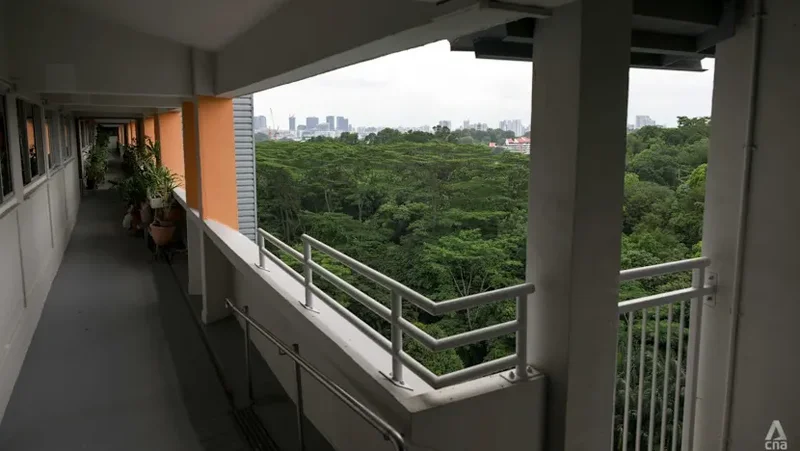
About 15ha and at least 10ha of forest may be cleared at Maju Forest at Sunset Way and Gillman Barracks, respectively, to make room for these housing developments.
PROCEEDING WITH "GREAT CARE"
Mr Tan said the authorities do not start with sites that have "significant heritage or ecological value", but first look at whether they can make use of vacant land or better use of existing land.
"The next question then is how do we build responsibly when it is necessary to develop a site? We proceed with great care where a site has significant ecological or heritage value," he said.
This is when government agencies appoint independent external consultants to conduct an environmental impact assessment, heritage impact assessment, or both, Mr Tan added.
"Our general approach is to avoid impact where we can, where we can, reduce them where we cannot, and mitigate those that remain. We then publish the findings, the potential impact and proposed mitigation measures," said Mr Tan.
"This allows residents and the wider public to study the proposal and give their feedback and views."
Through these studies, the consultants establish what is on the site today, assess how the proposed development could affect these features, as well as recommend how to avoid, reduce or mitigate potential impact to the site.
For an environmental impact assessment, the consultants also propose a preliminary environmental management and monitoring plan, which sets out mitigation measures, monitoring arrangements and reporting requirements that will apply during development.
"Agencies then consider the studies and feedback before finalising the detailed plans," Mr Tan said, adding that these assessments "are not meant to justify a detailed plan that is already fixed".
Built in 1935, Gillman Barracks was a British military garrison before being repurposed into an arts precinct in 2012. It is now home to art galleries, bars, restaurants and lifestyle businesses.
The government announced in March 2024 that it was studying the possibility of introducing a new residential neighbourhood at Gillman Barracks.
To redevelop the Gillman Barracks site sensitively, HDB commissioned a study to understand the site’s ecology and heritage, and identify measures to mitigate the impact of development.
The studies covered an area of 47ha – comprising an approximately 40ha development area bounded by Depot Road, Alexandra Road, Telok Blangah Road/West Coast Highway and Telok Blangah Street 31, as well as a 7ha green area north of Telok Blangah Heights.
WHAT TO RETAIN AND CONSERVE?
When it comes to Gillman Barracks, the authorities are studying how to retain most of the native-dominated secondary forest within the site and looking at how to maintain ecological connections in the east-west and north-south directions, said Mr Tan.
The east-west connection would link Telok Blangah Hill Park and HortPark, while the north-south connection would comprise an ecological corridor, supporting the movement of birds towards Berlayar Creek and Labrador Nature Reserve.
Given the "distinctive heritage character" of Gillman Barracks, authorities are also studying the retention of all buildings assessed to be of exceptional heritage significance, as well as most of those assessed to be of high heritage significance.
"This would allow the future neighbourhood to build on the character and charm of the former colonial buildings. But where a heritage building cannot be retained because of practical site constraints, we will explore other ways to preserve its history," said Mr Tan.
At Sunset Way, the retention of a "significant stretch of greenery" along the former Jurong Railway Line, along with the retention of a natural stream and its surrounding riparian buffer are being examined, he added.
Mr Tan stressed that the government values heritage and green spaces, but also want Singaporeans and future generations to have access to affordable public housing.
"I wish we had an abundance of land, so we can provide all of these without having to make trade-offs. But that is not our reality," he said.
"Our choices are narrower than those faced by larger countries. We thus have to make the best of our limited land."