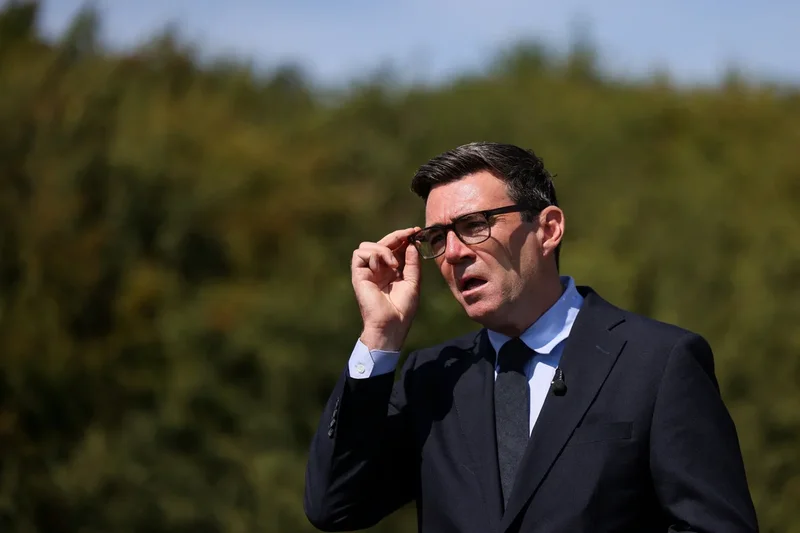
Andy Burnham has ordered a review of indefinite jail terms which have left thousands of inmates languishing in prison decades after their crime without a release date.
The prime minister said that he has requested that justice secretary Alex Norris reviews Imprisonment for Public Protection (IPP) sentences as a way of addressing Britain’s prison crisis and free up much-needed space in overcrowded jails.
The controversial open-ended punishments were scrapped in 2012, but not retrospectively, leaving thousands in prison without a release date for years beyond their tariff, including some for minor crimes, including some for stealing a mobile phone. The Independent and the families of those affected have repeatedly called for all IPP prisoners to have their sentences reviewed.
The review was announced as part of changes to the early prisoner release scheme, which will see rapists and serious child sex offenders, including those convicted of grooming offences, excluded from upcoming plans to release certain prisoners early.
Writing in The Telegraph, the former mayor of Greater Manchester said he understood the “anxiety” caused by the scheme and insisted he “wanted to go even further”, but said that would risk the collapse of the entire prison system.
But he also vowed that his government would “work to fix the prison crisis once and for all” and that he “will not leave the same problems for my successors” – including a review of IPP, he wrote.
Once released, many find themselves trapped in a cycle of indefinite recall for minor breaches of strict licence conditions.
Regarding them, Mr Burnham wrote: “To avoid a repeat of this situation, I have also asked the justice secretary to identify other ways to free up prison capacity that will be more palatable to the public.
“First, I have asked him to review the indefinite sentences handed out between 2005 and 2012, called Imprisonment for Public Protection (IPP). This has left many hundreds of people in prison since they were young but without any prospect of release despite having already served very long sentences.”
Last week, the United Nations condemned ‘arbitrary’ detention of UK prisoners trapped on indefinite jail terms as as “arbitrary” and accused the British government of presiding over a form of psychological torture.
In a scathing 16-page document, the Human Rights Council’s Working Group on Arbitrary Detention lashed out at the jail terms as “inhumane treatment” due to the “mental anguish of being subjected to continuous uncertainty of a release date”.
The damning assessment came after three UN special rapporteurs demanded that Britain urgently resentences almost 2,400 people still serving IPP terms.
In a strongly-worded intervention in July, the UN’s special rapporteurs on torture, extrajudicial or summary executions and the independence of judges and lawyers, said the jail terms have left prisoners trapped in a cycle of “excessive punishment, repeated recall, deteriorating mental health, and diminishing hope”.
“These penalties involve prolonged uncertainty and cause serious psychological deterioration among prisoners, including an increased risk of self-harm and suicide. Such punishments may amount to psychological torture,” the experts said.
The architect of the flawed sentence, Lord David Blunkett, has since admitted that ushering in the draconian punishments under Tony Blair’s government is his “biggest regret”.
In 2022, the cross-party justice committee inquiry found the sentences were “irredeemably flawed” and called for all IPP prisoners to be resentenced. Despite 96 people taking their own lives in custody after losing hope of release, successive governments have refused.
Mr Norris has also been asked to look into how to free up space in women’s prisons and how the UK can remove foreign offenders faster and in greater numbers.
The justice secretary said: “The prime minister and I have reviewed these reforms, listened to the concerns and gone further to protect victims.
“These are decisions no minister would ever want to take, but it is right these sickening crimes are excluded from these reforms.
“Victims will also have access to better support and reassurance that offenders leaving prison face tougher supervision and punishment.”