Demand for microgravity research and manufacturing is brewing — perhaps literally.
When SpaceX launched the first test flight of Starfall, its commercial reentry capsule, on June 23, the company did not disclose what payloads, if any, were in the spacecraft. A day later, though, one company stepped forward: Starbase Brewing, a Texas brewery that produces SpaceX-themed beers such as “Starhopped” and “Occupy März.”
The company said it flew a payload called the Brewery Archive Space Exposure Demonstrator to test how a variety of yeasts responded to exposure to the space environment during the several-hour mission.
Novelty space beer is probably not the killer app for microgravity research, but it does illustrate the breadth of interest in using space to produce items not possible on Earth.
While some of that work can be done on the International Space Station and its commercial successors, a growing number of startups in the United States, Europe and Asia are developing spacecraft to serve that demand. Those spacecraft would host payloads and return the results to Earth in secure containers called reentry capsules.
SpaceX’s entry into the market threatens those companies, in much the same way that SpaceX disrupted the launch industry with Falcon 9 and its rideshare missions. But reentry firms have a far more complex relationship with SpaceX than a typical competitor: SpaceX is also a key provider of launch services at a time when getting to orbit is becoming increasingly difficult.
From pharma to hypersonics
Companies working in the reentry field have pursued payloads low in mass but high in value, making it easier to close their business cases. That has meant focusing on pharmaceuticals and advanced materials, offering capabilities that can’t be reproduced on Earth.
Varda Space Industries, which has flown six missions to date, has followed the pharma path. Will Bruey, chief executive of the company, cited research done on the ISS several years ago involving the cancer treatment drug Keytruda. “By crystallizing in microgravity, there was a path to changing the formulation from an IV bag to a shot, which is huge for patients,” he said at the ASCEND conference in May.
“The way to think about Varda is we’ve invested this in zero-gravity pharma equipment,” he said, which it in turn offers to companies. Varda announced in May a partnership with United Therapeutics where they will study formulating new drugs in microgravity, starting with treatments for rare pulmonary diseases.
“It shows that space drugs have gone from research for science’s sake to research and development for patients’ sake,” he said of that deal. “They’re certainly not paying us for new science. They’re paying us for drugs into patients.”
Outpost, another company working on reentry vehicles, is interested in optical fiber production in microgravity. Jason Dunn, chief executive of the company, had worked on producing high-quality optical fibers in microgravity with his previous company, Made In Space, but ran into reentry as a time- and cost-intensive bottleneck.
“When we made the first fiber optics on the space station, it took many months to return it,” he said.
“Fiber has always been one of the interesting first products to go after because the market there is able to absorb today’s launch cost,” he said. “There’s also a lot of room to increase the supply of those fibers at lower prices to the market as launch cost comes down.”
Those companies have found interest not just in their microgravity capabilities but also the ability to return.
Varda has flown several payloads for Defense Department organizations testing technology in a hypersonic environment that would otherwise require a dedicated sounding rocket or missile launch.
“The way to describe our defense business is delta-v arbitrage,” Bruey said. “We buy speed for cheap from Falcon 9, and we then sell it into a market that’s used to buying dedicated launches.”
Outpost has received military interest in technology the company has developed to enable pinpoint landings that can be repurposed for use deploying cargo from aircraft and high-altitude balloons.
“They recognized that we have a precision landing system,” said Amir Blachman, president of Outpost. “They asked, ‘Can we buy this separate from the space system?’ So, we’ve packaged that separately now as an early revenue line.”
Other companies have reported similar interest in reentry vehicles including from those interested in doing microgravity research and manufacturing as well those considering defense applications.
“We see interest primarily driven by two sectors,” said Stef Crum, chief executive of Reditus Space.
One, he said, is microgravity research and manufacturing. “That primarily exists on the pharmaceutical side as well as advanced materials, particularly semiconductor substrate crystals.”
The other market is defense, he said, “related to facilitating the [Technology Readiness Level] advancement of hypersonic technologies.”
The Georgia-based startup recently completed its first reentry spacecraft, ENOS, which is scheduled to launch later this year on a SpaceX rideshare mission.
Competing with SpaceX
Most of the companies in the reentry sector are still early-stage. While Varda has flown six missions, others have only conducted test flights of varying degrees of success, or are still developing their spacecraft.
Into this nascent market now comes SpaceX. While there had been industry rumors for a year that SpaceX was developing some kind of reentry capsule, the details of Starfall were closely held until May, when the Federal Aviation Administration published an environmental assessment of SpaceX plans to conduct test flights of Starfall on either Falcon 9 or Starship launches.
Starfall, the FAA said in its report approving the missions, is intended to support both point-to-point cargo delivery as well as “create a self-sustaining commercial in-space manufacturing market by offering access to microgravity and vacuum, loiter on orbit, and safe return from orbit as a service at scale.”
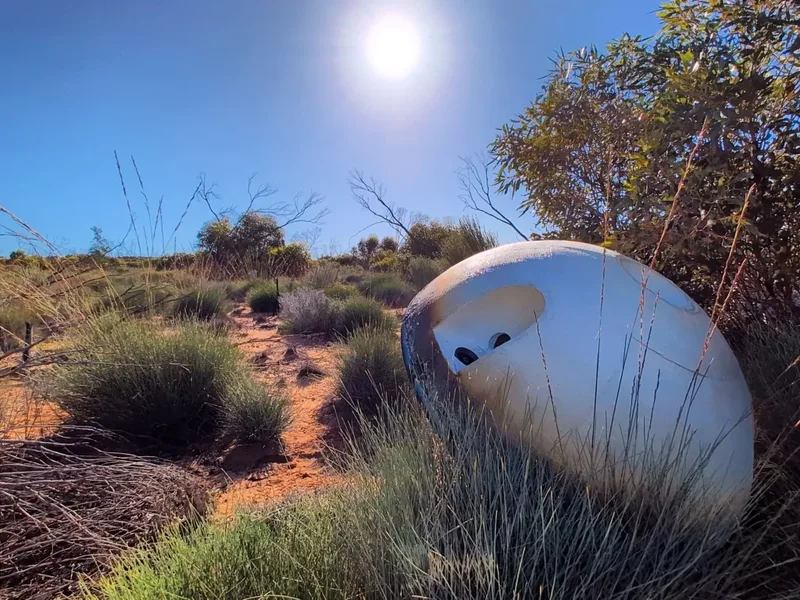
The Starfall spacecraft is disk-shaped, with a curved lower surface that hosts the heat shield. The spacecraft weighs 2,100 kilograms with a payload capacity of 1,000 kilograms, according to the FAA documents.
With that FAA approval, SpaceX launched its first Starfall spacecraft June 23, spending a few hours in orbit before splashing down in the Pacific Ocean off the Mexican coast.
SpaceX treated the launch much as it would a classified mission, declining to show onboard video from the upper stage or providing a timeline of events about the mission after the first stage landed.
“SpaceX has developed a new spacecraft called Starfall, which is, at its core, a microgravity lab that researchers and entrepreneurs can leverage to develop their products and innovations,” the company said on its launch webcast. “There is a huge opportunity to benefit life on Earth through microgravity research and in-space manufacturing.”
The arrival of such a product poses an obvious competitive challenge to the startups working on their own reentry vehicles for microgravity manufacturing. SpaceX’s immense resources, including its own launch capacity, would appear to give it a major advantage.
Many of those startups, though, see SpaceX not as a threat but instead a validation of the market. “My first reaction was, ‘Oh, here it is, finally,’” said Kazunari Miyamaru, chief operating officer of ElevationSpace, a Japanese startup developing reentry vehicles, during the Spacetide conference in Tokyo in July.
“SpaceX is huge. It could be a competitor but also a partner,” he said. “It could be evidence for opening up this market.”
Others agreed. “Having an entity the size of SpaceX underwrite the tremendous potential of this is a good thing for everyone in the reentry world,” Crum said.
“We think that it’s actually a big validator for what we’re building to have SpaceX getting into this,” Dunn said. He noted that orbital data center startups saw a surge in interest and funding once SpaceX announced its own plans for a constellation of as many as 1 million such spacecraft. “It’s helping the capital markets realize that this is a valuable place.”
There is some evidence to support that. ElevationSpace closed a $40 million Series B round in June, after Starfall’s plans became public, supporting development of a technology demonstration mission set to launch in mid-2027.
If there is strong demand for reentry services, be it for microgravity manufacturing or defense applications, companies say there will need to be a wide range of capabilities, including vehicles with payload capacities both smaller and larger than Starfall’s 1,000 kilograms.
Outpost is betting users will want larger vehicles. Its roadmap includes a vehicle, the CarryAll Block 3, that will be the size of a shipping container and can return 10 tons of payload. The company plans to have that available in the early 2030s.
“We’re intent on building the largest Earth return vehicle,” said Blachman, citing interest from the military for rapid cargo delivery among other uses.
Others are willing to go smaller, offering payloads for more specialized missions. More than one executive compared that diversity of sizes to the aviation market.
“In the airline world, there are several types of aircraft: two-aisle widebody jets and smaller jets,” said Miyamaru. “It depends on customer demand and cadence.”
“Reentry is difficult, which is why there are so few vehicles on the market,” said Dana Baki, chief commercial officer of The Exploration Company, which is developing the Nyx spacecraft designed to transport cargo to and from orbit.
“Now is the time because we don’t want the world to be dependent on one country or one company,” she said at Spacetide.
Access to space
But getting to space in the first place remains a challenge.
At the moment, the emerging reentry sector is largely dependent on one company for access to orbit: SpaceX.
Varda has flown all of its missions on SpaceX Transporter rideshare missions, along with initial demo missions by Atmos Space Cargo and Inversion Space.
Bruey said it was that regular cadence of SpaceX rideshare missions that made Varda possible. “The biggest risk for Varda is that we are relying on those Transporter Falcon 9 missions,” he said. “Varda does not work unless there is high-cadence reliable launch.”
That risk is in danger of being realized. SpaceNews has reported that SpaceX is not accepting reservations for rideshare launches after late 2028 or early 2029, with little capacity remaining on upcoming launches.
That has forced much of the space industry, including those working on reentry vehicles, to look for alternative means to space, from other rideshare missions to dedicated launches on small launch vehicles.
One advantage most reentry vehicles companies have over those who are developing communications or remote sensing satellites is that they are very flexible on what orbit they can go to, so long as it allows them to land their vehicle in their desired area.
“We just need to go somewhere, and we’re able to sort it out from that point onwards,” said Crum, describing his vehicle as the “ultimate” rideshare payload. “If you can squeeze us in anywhere, it’s perfect.”
Limited launch capacity is holding back the industry, some argue.
Australian company Southern Launch operates the Koonibba Test Range in South Australia, a reentry site used by Varda Space Industries for four of its missions. Two other companies, Lux Aeterna and SpaceWorks, have signed agreements to return spacecraft there.
“The issue we have with reentry transportation now is, despite all the excitement about increased access to space over the last 10 years, that access to space is diminishing as these launch companies vertically integrate,” Jeremy Hallett, chairman of the board of Southern Launch, said during a panel at Spacetide.
He said that while Southern Launch expects to support up to 30 reentry missions in the next two years, that number could be much higher. “We would probably have another hundred under contract if our customers could get to space.”
Outpost is counting on the emergence of new vehicles to provide flight opportunities for its vehicles, including SpaceX’s Starship as well as Rocket Lab’s Neutron and Stoke Space’s Nova. “We’re hoping that we see these new launchers come online in the 2030s so that we can see launch prices continue to drop,” said Dunn.
In the near term, Outpost is counting on rideshare missions: It has booked its own Transporter flights for its first demonstration spacecraft with a 100-kilogram payload. Blachman added the company thinks its work for the Air Force Research Lab and other military agencies might open up flight opportunities not otherwise commercially available.
As in many markets, most of the startups in the reentry field likely will not survive.
But some believe there is enough demand to ensure that a single company, like SpaceX, does not dominate the field.
SpaceX’s entry into the field was “inevitable,” said Hallett, but argued there was room for others. “The lesson we need to take from looking at launch and access to space is to be confident in the size of the market for reentry.”
He then turned to Miyamaru, sitting next to him on the Spacetide panel. “You guys stay the course and keep winning because we need more competition.”
This article first appeared in the August 2026 issue of SpaceNews Magazine with the title “What comes down must first go up.”