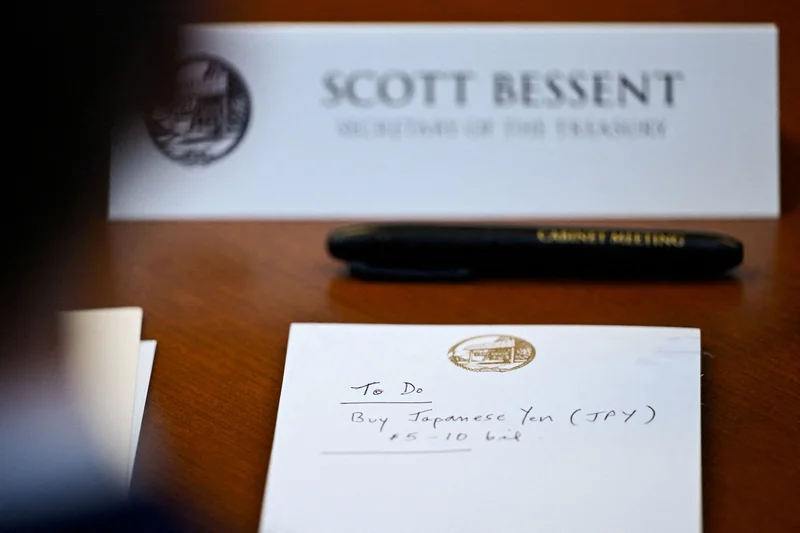
Treasury Secretary Scott Bessent said Tuesday that the U.S. joined Japan's effort to strengthen the yen because the currency's weakness risked destabilizing markets across Asia.
"A stable yen is not only important for the U.S., but very important for the entire region," Bessent said on CNBC's "Squawk on the Street."
Bessent said a sharply weaker yen could pressure other countries to devalue their currencies, pointing to volatility in the South Korean won and concerns that China's yuan is undervalued.
"Given the trade flows, given the size of the economy, given their contribution to the global savings market, [it is] very important to have a stable yen," Bessent said. "The Japanese government understands that, and we are proud to stand with them in implementing their policies and help them stabilize the region."
The U.S. and Japan carried out a coordinated yen-buying intervention after what Bessent described as a "substantial undervaluation" of the Japanese currency. He said the two governments had been in close contact and that Washington believed Japan would pursue policies intended to return the yen to a more normal level.
Bessent cautioned that intervention alone would not determine the currency's direction.
"You can give market signals with intervention, but it's policy that turns it," he said, adding that the U.S. participated because it was optimistic about Japan's policy path. He declined to say whether the Bank of Japan should raise rates but said Japanese officials would need to follow the intervention with broader policy changes.