Your support helps us to tell the story
From reproductive rights to climate change to Big Tech, The Independent is on the ground when the story is developing. Whether it's investigating the financials of Elon Musk's pro-Trump PAC or producing our latest documentary, 'The A Word', which shines a light on the American women fighting for reproductive rights, we know how important it is to parse out the facts from the messaging.
At such a critical moment in US history, we need reporters on the ground. Your donation allows us to keep sending journalists to speak to both sides of the story.
The Independent is trusted by Americans across the entire political spectrum. And unlike many other quality news outlets, we choose not to lock Americans out of our reporting and analysis with paywalls. We believe quality journalism should be available to everyone, paid for by those who can afford it.
Your support makes all the difference.
Read more
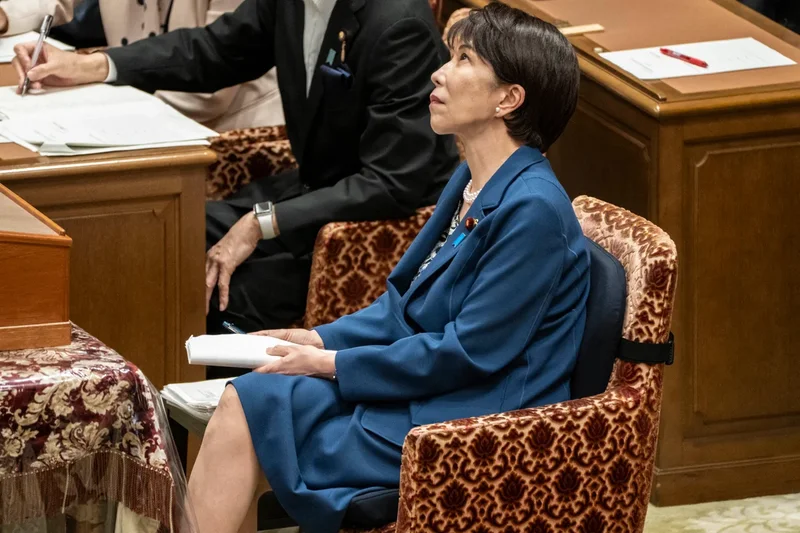
Sanae Takaichi says she is surviving on as little as “zero to three” hours of sleep, in what may be the Japanese prime minister’s latest attempt to compare herself with her idol Margaret Thatcher.
Ms Takaichi regards the former British prime minister, who famously slept only about four hours a night, as one of her greatest inspirations.
In a post on X, Ms Takaichi described spending long days reading official documents, reviewing policy drafts, and clearing thousands of emails. She had been “wrestling” with paperwork late into the night, she said, with limited rest becoming her new routine.
“Today’s holiday felt like such a true blessing,” she wrote on 20 July, which was celebrated as Sea Day in the country. “Finally getting a full five hours of sleep for the first time in ages. Ever since taking office as prime minister, zero to three hours has been the norm.”
The post triggered criticism from across the political spectrum, with lawmakers questioning whether a national leader should present extreme sleep deprivation as a symbol of dedication.
Yuichiro Tamaki, leader of the opposition Democratic Party for the People, said managing workload and delegating responsibility were integral to being an effective leader.
“Isn’t allocating work so that one can focus on tasks only the top leader can perform, in a sense, also the job of a leader?” he asked.
“I think she should rest more. Why doesn’t her entourage provide more support to create an environment in which she can make important decisions with a fresh mind?”
Hiroyuki Konishi, a parliamentary critic of Ms Takaichi, demanded she resign. “The prime minister’s actual job is to set policy directions and issue instructions,” he was quoted as remarking by the New York Times, “not to pore over every last detail of a document.”
Toru Kunishige, an opposition lawmaker, warned that sleeplessness “impairs judgment – much like a state of intoxication – and could pose a risk to national crisis management”.
Another opposition leader, who was not identified, told Mainichi that they had “rarely seen the prime minister of a country make a show of not sleeping”.
Ms Takaichi’s allies, however, came to her support.
“Each person has their own circumstances and behind-the-scenes stories. I would be grateful if you could understand,” Ayano Kunimitsu, a state minister for foreign affairs, wrote on X.
Ms Takaichi’s post, which had received over 32 million views and counting by Wednesday evening, revived a debate about whether she was seeking to compare her favourably with Thatcher, whose leadership style she sought to emulate in the past.
“Incidentally, Margaret Thatcher was also known for sleeping only four hours a night and her biography records that even during her time as prime minister, she cooked meals for staff at the prime minister’s residence, prepared breakfast for her husband, and did the ironing, so I imagine the tweet in question was made with this in mind,” a social media user said.
Thatcher, Britain’s first female leader, cultivated a reputation for working long hours and reportedly surviving on around four hours of sleep a night.
Ms Takaichi became Japan’s first female prime minister last October. She had vowed to “work, work, work, work, and work” after winning the ruling Liberal Democratic Party’s leadership contest earlier that month. The slogan was named Japan’s catchphrase of the year for 2025.
Ms Takaichi caused a stir shortly after taking office by summoning aides for a 3am meeting to prepare for a budget committee hearing due to start six hours later. Her workload drew expressions of concern, with former trade minister Akira Amari saying that he was “honestly worried” about her health and an opposition MP urging her to sleep more.
At a meeting with Mr Amari, the prime minister reportedly said she wanted “a little more sleep”.
The 65-year-old previously told a parliamentary committee her downtime was “quite short as I’m tied up with housework” and “the rest of the time is spent doing work”.
At the time, Ms Takaichi told MPs she was sleeping just two to four hours a night, pointing to the bags beneath her eyes as she spoke.
Some observers pointed out that unlike former prime ministers, Ms Takaichi appeared to be handling more domestic duties.
Yoko Iwama, a professor at the National Graduate Institute for Policy Studies in Tokyo, wrote in the comments section of a Nikkei article: “Are there still people who view the idea of the prime minister doing the cleaning and ironing himself in a positive light? While previous male prime ministers may have had their wives providing support, there are surely household support staff at 10 Downing Street and the White House.”
She continued: “I believe establishing a support system that allows the Japanese prime minister to focus solely on her duties without having to do household chores herself will also contribute to the future advancement of women in society and to growth strategies.”
“Wouldn’t it be in the national interest to have professional staff, such as a head chef, to handle meal preparation and household chores, allowing the prime minister to concentrate on policy-making and crisis management? Perhaps the cabinet secretariat should consider establishing a system to support the prime minister’s daily life,” Harukata Takenaka, a professor at the National Graduate Institute for Policy Studies, said.