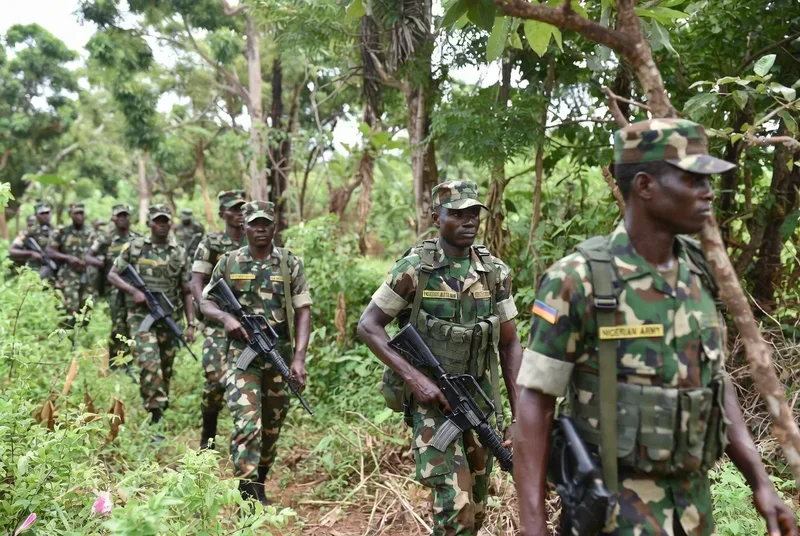
President Bola Tinubu has approved a salary increase of between 30 and 80 per cent for members of Nigeria’s Armed Forces, a move expected to raise the federal government’s annual military wage bill by N264 billion as the country continues to battle terrorism, banditry and kidnapping.
This was disclosed in a Tuesday statement by presidential spokesperson Bayo Onanuga who noted that the pay review will take effect from 1 September.
The presidency said about 250,000 personnel would benefit from the salary review. While it did not explain the figure, it likely refers to active members of the Nigerian Armed Forces currently on the federal payroll across the Nigerian Army, Nigerian Navy and Nigerian Air Force.
The military’s total strength is not officially disclosed, although public estimates have Nigeria’s active military strength at about 230,000 personnel.
| | |
|---|
Percentage increase by rank
Under the new salary structure, officers above the rank of colonel—including brigadier generals, major generals, lieutenant generals and generals—will receive a 30 per cent salary increase.
Personnel from colonel to warrant officer will receive a 50 per cent increase, while soldiers from private to staff sergeant will receive the highest adjustment of 80 per cent.
The presidency said the revised package would increase the armed forces’ annual salary bill from N660 billion to N924 billion, representing an additional N264 billion in personnel expenditure.
The increase amounts to an overall rise of 40 per cent in the military wage bill, although the actual increase for individual personnel varies by rank.
Junior soldiers, who make up much of the military’s frontline fighting force, received the largest percentage increase, suggesting the government is directing the biggest pay improvements to personnel most actively engaged in combat operations.
PREMIUM TIMES reported that troops fighting across the country’s frontlines have lamented about poor welfare.
While the presidency has yet to release the revised salary table, Defence Minister Christopher Musa had earlier said the minimum monthly salary for the lowest-ranked soldier was increased from N49,000 to N100,000 under the Tinubu administration. It is not immediately clear whether that increase forms part of the newly approved salary review or was implemented separately. The presidency has also not disclosed the new salary figures that will result from the latest adjustment, which takes effect on 1 September.
The announcement comes as Nigerian troops remain deployed in sustained counter-insurgency and internal security operations across the country, including the North-east, North-west and North-central, where they continue to confront Boko Haram, ISWAP, armed bandit groups and kidnappers.
The salary adjustment also forms part of the Tinubu administration’s broader efforts to improve troop welfare alongside investments in military equipment, weapons procurement and technology aimed at strengthening operational effectiveness.
Announcing the decision, Mr Onanuga explained that President Tinubu said members of the armed forces deserved greater support in recognition of their sacrifices.
“The men and women who help to keep us safe in our homes must be supported and appreciated in the course of their duties to our nation,” Mr Tinubu was quoted as saying.
The president said his administration would continue to prioritise troop welfare while modernising the armed forces with the weapons and technological tools required to confront security threats.
“Our administration believes that no nation can achieve greatness without security. We therefore remain resolute in mobilising all military and law enforcement assets to eliminate security threats and protect the lives and property of all Nigerians,” he added.
Mr Tinubu urged military personnel to regard the salary increase as a demonstration of the government’s appreciation for their service, expressing confidence that the armed forces would prevail against groups threatening the country’s security.