Restaurants call for more reforms to lower food prices
Request comes after subsidy was delayed
PUBLISHED : 21 Jul 2026 at 05:17
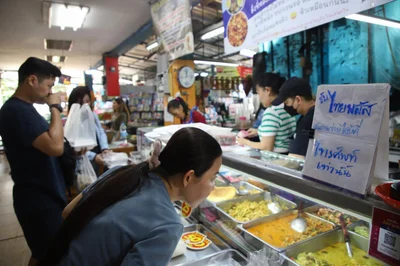
Shoppers browse dishes at a market in Bangkok. (Photo: Varuth Hirunyatheb)
The Thai Restaurant Association is asking the government to connect raw material wholesalers with restaurants to lower ingredient costs, rather than providing subsidies for each dish.
Thaniwan Kulmongkol, president of the association, met with the Commerce Ministry's Department of Internal Trade on Monday to provide feedback on the "40-baht Khao Kaeng scheme", a programme offering a dish of rice with one choice of kab khao (side dishes).
Last week, the scheme was put on hold pending further review, following a public debate.
She said the department is revising the measures and considering expanding the scheme to cover other single-dish menus such as noodles and Hainanese chicken rice.
Mrs Thaniwan said the subsidy model may help to temporarily reduce meal prices. However, once a restaurant reaches its quota or the scheme ends, prices are likely to return to previous levels.
She suggested that restaurants could consolidate their raw material orders into bulk purchases to negotiate lower prices with wholesalers, a strategy she sees as a long-term solution for reducing raw material costs.
She also said the government should subsidise the development of a centralised platform to connect all stakeholders for these bulk orders.
According to a Facebook post by Commerce Minister Suphajee Suthumpun, the 40-baht Khao Kaeng scheme is intended to ease the burden of rising food prices during the economic crisis.
The initiative proposes subsidising registered food vendors to enable them to offer meals at reduced prices. The exact price is still under discussion, and the 40-baht figure is cited as an example rather than a final decision.
Although the scheme is currently on hold, officials remain open to feedback from all stakeholders.
Mrs Thaniwan added that the current "Thai Chuay Thai Plus" co-payment scheme has increased sales for small vendors by around 20%. However, sales are expected to drop once the scheme ends in September.
She noted that medium-sized restaurants ineligible to participate in the co-payment scheme have been impacted. She urged the government to provide low-interest loans to help these businesses maintain cash flow until the industry's high season at year-end.
She added that if restaurants participate in the government's upcoming initiative to lower food prices, they should receive incentives in return. For example, they should have easier access to government loans in the future.