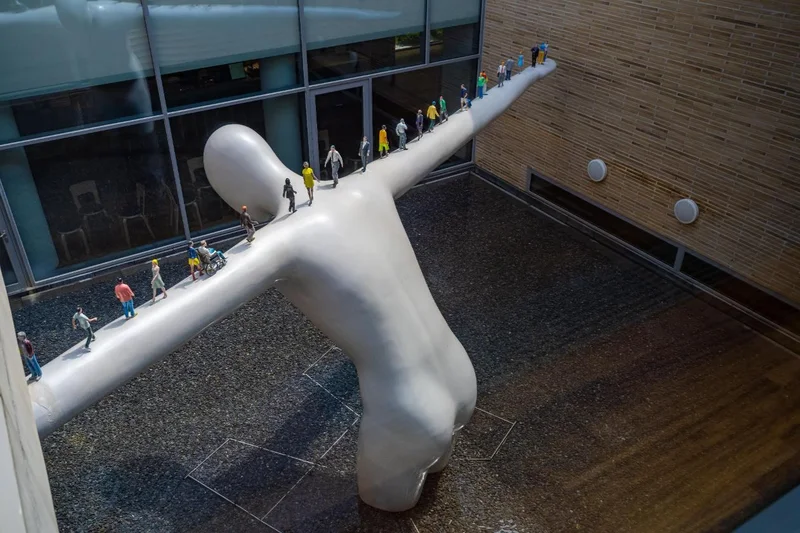
When August's suffocating heat settles over the concrete corridors of Korea’s capital, escaping the oppressive moisture usually means ducking into air-conditioned shopping malls or retreat-bound subway trains. Yet across the metropolis, an alternative summer migration is quietly taking shape. Over the past four years, a wave of newly opened, architecturally ambitious museums has cropped up across Seoul’s residential districts and historic neighborhood perimeters, offering shaded sanctuaries where high art and sleek architectural engineering converge.
Far from the overcrowded galleries of the central cultural core, these fresh institutions invite weary urbanites to cool down while contemplating everything from analog darkroom techniques to digital media installations and lingering water-droplet canvases.
Photography Seoul Museum of Art
Rising above the residential skyline of Chang-dong in northern Dobong District is the Photography Seoul Museum of Art, the nation’s first public institution dedicated entirely to the medium. Having opened its doors in May 2025, the facility celebrates its first anniversary with a design that acts as a physical metaphor for the camera itself.
Designed to evoke the opening and closing of a camera aperture, the building's striking, twisted-cube geometry captures light through layered exterior walls that shift from dark charcoal to subtle slate gray as the sun moves across the sky. After passing beneath a dramatically lifted exterior wall, visitors enter a soaring 30-foot-tall lobby.
Currently on view through Oct. 18 is a massive retrospective, "Martin Parr: We Are Martin Parr," chronicling the legendary British photographer’s sharp, humorous gaze on global consumer culture. On the third floor, visitors can sink into plush armchairs and thumb through a curated selection of 90 rare photobooks produced by Parr between 1982 and 2026. Upstairs, a quiet photo library offers public access to specialized databases and rare archival materials covering the rich history of Korean photography.
Seo-Seoul Museum of Art
Tucked inside the lush perimeter of Geumnarae Central Park in southwestern Doksan-dong, the Seo-Seoul Museum of Art represents the Seoul Museum of Art’s eighth branch. Opened in March as a dedicated venue for new media, the structure blends effortlessly into its public park surroundings.
Wrapped in hammered stainless-steel paneling, the exterior absorbs and diffuses the shifting seasonal colors of the surrounding trees. Floor-to-ceiling glass windows eliminate the boundary between the park’s green lawns and the interior, creating an open urban haven without perimeter walls. Below ground, Exhibition Hall 1 boasts soaring ceilings alongside a flexible space system that seamlessly converts from light-drenched glass enclosures to airtight darkboxes designed for immersive digital video works.
Though currently in a temporary installation transition, the museum will reopen on August 20 with "Kim Hee-cheon: Moles," a major solo exhibition examining modern digital environments, virtual reality and human perception.
House of Kim Tschang-yeul
High on the steep, quiet slopes of Pyeongchang-dong in northern Seoul sits the former home and studio of Kim Tschang-Yeul (1929–2021), the legendary master universally celebrated for his luminous, lifelong series of oil paintings depicting water droplets. First built in 1988 by architect Woo Kyu-sung with traditional Korean hanok motifs, the four-story residential residence was acquired by the district and reopened to the public in May 2026 as an intimate municipal museum.
Redesigned by architects Hong Jae-seung and Choi Soo-yeon, the sanctuary translates Kim's philosophical concept of "return" into physical spatial flows. Visitors slip off their shoes before walking through sunlit former living quarters that showcase retrospective works like "Kim Tschang-Yeul: Traces of Water Drops," which is running through Aug. 23 and features rare paper prints and drawings against floor-to-ceiling vistas of the Pyeongchang-dong valley.
In the subterranean studio levels, preserved almost exactly as the master left them, soft natural light spills from high skylights over stacks of oil paints, worn brushes, rolled canvases and early droplet sketches, offering a poignant glimpse into 30 years of quiet artistic meditation.
Museum Hanmi Samcheong
Near the terminus of Samcheong-dong’s historic alleyways, Museum Hanmi Samcheong — originally founded in 2003 as the Hanmi Photo Museum before relocating to its current location in late 2022 — stands as a premier platform for analog and experimental photographic media.
Designed by architect Min Hyun-sik to respect Samcheong-dong’s strict 26-foot building height restriction, the main hall features stylized gable roofs that conceal surprisingly vaulted interior spaces. At the center of the three interconnected building wings lies a tranquil water courtyard reminiscent of traditional Korean home layout patterns.
While the main hall showcases pioneering Korean contemporary photography in the exhibition "Every Moment Is a Budding Flower" (closing Aug. 9), an adjacent annex offers a cozy lounge and specialized library. Through Sept. 30, the annex hosts a special preview honoring the legendary American surrealist Jerry Uelsmann, showcasing his classic composite darkroom prints alongside rare photographs taken during his historic travels through Korea.
This article was published with the assistance of generative AI and edited by The Korea Times.